

























































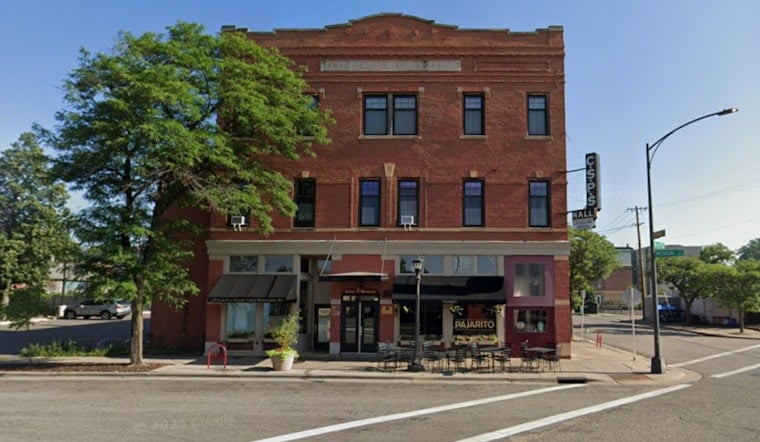
The family behind Tay Ho, the Vietnamese restaurant that fed St. Paul diners for 21 years before closing in May, has reopened under a new name and in a much bigger space. Pho Hay To debuted this month at 605 W. 7th St., inside the historic C.S.P.S. Hall, with 114 seats and a footprint twice the size of the original University Avenue restaurant.
According to the Minnesota Star Tribune, Tay Ho closed its original location in May, and its former building changed hands before the shutdown. Family member Lan Do had said the family was not planning to reopen, which makes Pho Hay To's August debut something of a reversal for regulars who feared the recipes were gone for good. The new restaurant sits roughly two miles from where Tay Ho once served St. Paul, according to the same report.
Pho Hay To retains the family's original recipes, including a bun bo hue the family had served for more than two decades, per the Star Tribune's reporting. The menu now includes three varieties of bun bo hue, with two new versions offering varying protein options, alongside build-your-own pho and bun bowls topped with brisket, chicken, shrimp, tofu or quail eggs. Bun bowls also come with egg rolls, grilled pork, shrimp, stir-fry chicken, beef and tofu as topping options.
A Bigger Menu to Match a Bigger Space
Beyond the classics, Pho Hay To has expanded what used to be occasional treats into everyday staples. Bun rieu, previously available only as a weekend special, is now served daily, the Star Tribune reports. The restaurant also offers a Vietnamese chicken, potato and carrot stew served with a baguette, plus rotating specials every few months, including garlic noodles.
Prices span the range typical of a full-service Vietnamese kitchen: banh mi runs $8 to $9, rice platters are $11 to $17, and noodle soups fall between $14 and $20, with noodle bowls priced at $16. On the drink side, the restaurant serves egg coffees, coconut cream coffees and iced fruit teas in peach, lychee, strawberry and mango flavors. Pho Hay To is also waiting on city approval for a liquor license and plans to roll out an Asian-inspired cocktail program soon.
A Historic Hall With Its Own Restaurant Lineage
Pho Hay To's new home carries its own layered history. C.S.P.S. Hall was built in 1887 by the Czech-Slovak Protective Society and was listed on the National Register of Historic Places in 1977, standing as the longest continuously operating Czech-Slovak hall in the United States and the oldest national hall in Minnesota, according to Sokol Minnesota. The building's upper floors still host Czech and Slovak cultural programming.
The ground-floor restaurant space itself has seen a string of tenants. For 16 years it was home to The Glockenspiel, a traditional German restaurant founded by restaurateur Dave Wildmo that opened in 2000, per a 2002 Pioneer Press report. Pajarito, a contemporary Mexican bistro opened in late 2016 by chefs Tyge Nelson and Stephan Hesse — both protégés of James Beard Award-winning chef Tim McKee — took over next, as Hoodline previously profiled the Mexican spot during its decade-long run.
Pajarito closed its St. Paul location in February, citing compounding pressures from summer road construction and a winter federal immigration enforcement surge, according to Bring Me The News. The outlet reported that Pajarito was among dozens of Twin Cities small businesses that temporarily closed or halted operations during Operation Metro Surge, a federal initiative that deployed more than 3,000 immigration enforcement agents across the metro area, and that several affected restaurants ultimately chose not to reopen. Pajarito's Edina location remained open despite the St. Paul closure.
From Little Mekong to West Seventh
Tay Ho's original restaurant sat along University Avenue in St. Paul's Little Mekong district, a corridor that took shape starting in the 1970s as Southeast Asian refugees settled in the Frogtown and Summit-University neighborhoods, according to Saint Paul Historical. The Asian Economic Development Association later formally branded the district to support neighborhood businesses like Tay Ho, which first opened there in 2005.
That history connects to a broader demographic picture: St. Paul is home to more than 2,500 Vietnamese residents, making Vietnamese the city's third-largest Asian ethnic subgroup after Hmong and Burmese, per Statistical Atlas data drawn from U.S. Census Bureau figures. Organized Vietnamese community infrastructure in Minnesota dates back to 1981, when the Vietnamese Community of Minnesota formed to assist refugees who resettled in the state after the fall of Saigon in 1975; the statewide Vietnamese population has since grown to more than 33,000 residents.
West Seventh Street, where Pho Hay To now operates, is one of the oldest commercial strips in Minnesota, evolving from industrial and working-class roots into a dense dining corridor that connects downtown St. Paul to the Fort Snelling area, according to a 2008 MPR News report. For the Tay Ho family, the move places two decades of recipes into a new neighborhood, inside a building that has already outlasted several restaurant eras of its own.
Pho Hay To is open 10 a.m. to 9 p.m. Sunday through Thursday and 10 a.m. to 10 p.m. Friday and Saturday, with parking available in a small lot next to the restaurant as well as on the street.



