

























































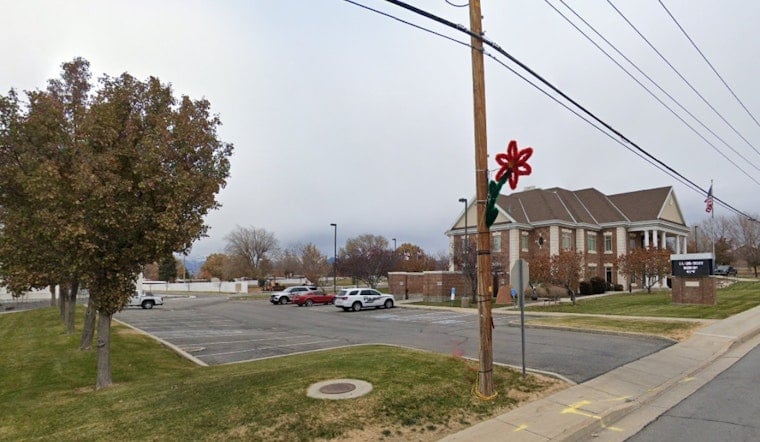
A massive memorial honoring Vietnam War veterans exposed to Agent Orange is taking shape at Sunset Veterans Memorial Park in Davis County, and the 78-year-old Air Force veteran leading the charge says it could be unveiled within weeks. Larry Kerr, who lives in nearby Syracuse and has battled the effects of Agent Orange from his own service in Vietnam, has spent years pushing the project forward, and now the physical structure — a large orange slab designed to hold black granite informational panels — is partially complete.
According to KSL News, Kerr launched the effort through the Utah Agent Orange Veterans Foundation, a nonprofit he co-founded in 2023 to build dedicated toxic exposure monuments and educate the public on herbicide-related illnesses, according to the Standard-Examiner. Kerr founded the organization after being diagnosed with head and neck cancer linked to his Air Force service in Vietnam. “We're just a bunch of old guys trying to get this done,” Kerr said, per the station's report.
A Long Road to Sunset
The project almost ended up somewhere else entirely. Organizers spent months trying to secure permission from the Layton City Council to place the memorial at Layton Commons Park, next to the existing Layton Vietnam Memorial Wall replica, before Layton officials declined to authorize the site, as reported by the Davis Journal. Sunset City stepped in, agreeing in August 2025 to host the memorial at its own veterans park instead.
Sunset Mayor Scott Wiggill has embraced the project since. “As a community we're just super excited,” Wiggill said. He described the memorial's scale in blunt terms: “This one is just marvelous. It's humongous,” calling it among the biggest monuments of its kind in the country, if not the largest. The dimensions back that up — the structure measures 8 feet by 10 feet, per the same account, and Wiggill envisions the site becoming a destination for people interested in military history.
Ground Broken, Panels Still to Come
Organizers officially broke ground on the memorial during a formal ceremony on November 15, 2025, following nearly two years of planning and public outreach documented by News From The States. The memorial will include two text displays covering the history of the Vietnam War and Agent Orange, recognizing veterans exposed to toxic battlefields more broadly. Kerr said he plans to complete the memorial within a matter of weeks and hopes to unveil it after that, possibly timed to Veterans Day on November 11.
The Sunset site sits in a corner of Davis County steeped in military history, bordering both Hill Air Force Base and the Hill Aerospace Museum. Hill Air Force Base is Utah's largest single-site employer, with more than 26,000 military and civilian personnel and an area retiree population of roughly 22,000 veterans, according to Hill Air Force Base Public Affairs.
What Agent Orange Did — and Still Does
Between 1962 and 1971, the U.S. Air Force sprayed at least 11 million gallons of Agent Orange over Vietnam as part of Operation Ranch Hand, the government's name for the herbicide spraying campaign meant to destroy enemy crops, defoliate trees and plants, and reduce enemy cover. The VA Public Health program notes the operation dispensed nearly 19 million gallons of military defoliants in total, exposing service members to TCDD, an extremely toxic byproduct classified as a human carcinogen.
Veterans began reporting cancer and other ailments in the late 1970s, and U.S. officials eventually recognized a link between Agent Orange exposure and numerous diseases, creating a compensation mechanism for those affected. Agent Orange exposure has been linked to the deaths of around 750,000 U.S. military veterans. Congress expanded that recognition further when President Biden signed the PACT Act into law on August 10, 2022, adding conditions such as hypertension and MGUS to the official Agent Orange presumptive list, per the U.S. Department of Veterans Affairs, which allows eligible veterans to receive disability compensation without proving a direct medical link to their service.
Bridging Vietnam and Modern Conflicts
The Sunset Memorial's design deliberately reaches beyond the Vietnam era. It also addresses exposure to burn pits and other toxic substances after 1990, connecting the herbicide legacy of Vietnam to the toxic-substance exposures reported by veterans of the Persian Gulf War and the Afghanistan War. That framing echoes a formal recognition delivered earlier this year: on February 12, Utah Representative Tyler Clancy presented an official House citation titled “In Recognition of Utah Veterans of the Vietnam War Affected by Agent Orange” on the floor of the Utah State Capitol, a ceremony attended by about two dozen veterans and advocacy leaders, according to the Davis Journal.
Utah's veteran community continues to face outsized health challenges beyond toxic exposure alone. Data from the Utah Department of Veterans and Military Affairs found that while veterans made up 5% of Utah's population in 2023, they accounted for 12% of all suicide deaths statewide that year, a disparity that has prompted state agencies to partner on suicide-prevention toolkits for military families. For Kerr and the small group of veterans behind the Sunset memorial, the slab rising in Davis County is meant to stand as a lasting marker of what herbicide exposure cost their generation — and a reminder that the toxic legacies of war didn't end with Vietnam.





