

























































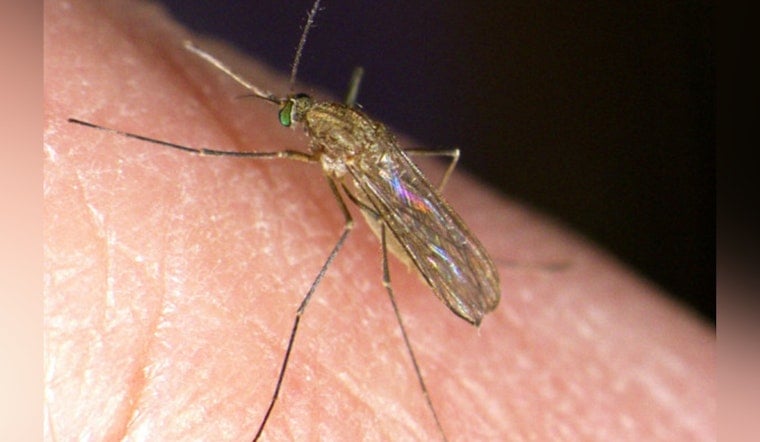
Sutter County Public Health has confirmed the county's first human case of West Nile virus this year, adding another name to a list of California counties watching infections climb far faster than usual. The confirmation comes as state officials report California has roughly double the number of human West Nile virus cases so far this year compared to the same point last year, with the virus now reported across 14 counties statewide.
The Sutter County case follows closely on the heels of a similar confirmation next door, where Yuba County confirmed its own first human case of West Nile virus last week, according to Action News Now. As of the end of last week, the California Department of Public Health had reported 30 human West Nile virus cases and three deaths statewide, the outlet reports. The virus is transmitted to humans and animals through the bite of an infected mosquito, and it is generally considered a risk from June through October.
Why This Summer Looks So Different
Epidemiologists point to an unusually mild winter that allowed more adult mosquitoes to survive, paired with record-breaking spring heat waves that sped up both mosquito breeding and the virus's replication cycle inside the insects, according to SFGATE. That combination helps explain why 2026 case numbers are running so far ahead of last year, when California recorded just 117 human cases and 11 deaths statewide — its third-lowest annual total in more than two decades, per The Intersection.
The jump has come with tragedy. California recorded three West Nile virus deaths in early August across Kings, Glenn, and Butte counties, with the Butte County fatality involving a patient between 80 and 90 years old, CBS News reports. Severe, neuroinvasive West Nile disease disproportionately threatens elderly and immunocompromised residents, and severe illness can last several weeks and, in some cases, result in permanent disability or death.
Chickens, Dead Birds and Mosquito Pools Sounded the Alarm Early
Long before Sutter County's case was confirmed in a person, local surveillance had already been flashing warning signs. The Sutter-Yuba Mosquito & Vector Control District uses seven sentinel chicken coops placed with local farmers across Yuba and Sutter counties, drawing blood samples weekly from April through November to catch virus activity before it reaches people, as CBS Sacramento reported in June. Sentinel chickens develop antibodies when bitten by infected mosquitoes without becoming seriously ill themselves, making them an early warning tool rather than a casualty count.
By July 30, that system had already picked up trouble: three dead birds in Yuba City and Live Oak, three infected sentinel chicken flocks, and multiple positive mosquito pools led district officials to classify virus activity as widespread across the valley floor, according to the district's own public updates. In California, *Culex tarsalis* and *Culex quinquefasciatus* mosquitoes are the principal species carrying the virus between birds, humans, and other mammals, per UC Berkeley Public Health, and they prefer to breed in stagnant water and bite most heavily at dawn and dusk.
A 23-Year History and a National Comparison
West Nile virus has been circulating in California since it was first detected in the state in 2003, and the California Department of Public Health has since documented more than 8,000 human cases and over 400 deaths statewide through this August. Nationally, the CDC reported 181 human West Nile virus infections across 30 states as of August 11, with neuroinvasive disease — the more severe form, including encephalitis and meningitis — accounting for 129, or 71%, of those cases.
Most people infected never know it. Roughly 8 out of 10 people infected with West Nile virus have no symptoms at all, while about 1 in 5 develop a mild to moderate fever illness with fatigue and body aches. Fewer than 1 in 150 infected people develop severe illness with neurologic symptoms, the category that can lead to hospitalization, lasting disability, or death.
Officials Urge Residents to Drain Standing Water
Sutter County Public Health Officer Gail Newel said the best way to prevent West Nile virus infection is to avoid mosquito bites in the first place. Stephen Abshier, with the vector control district, said residents need to remain vigilant in protecting themselves from mosquito bites, adding that virus activity and detections in the surveillance system continue to increase.
Regular landscape irrigation or unseasonable rain can create good mosquito breeding habitat, since mosquitoes lay their eggs directly on standing water. Officials are urging residents to inspect their yards for anything holding water and to drain all sources they find, including flowerpots, car tires, rain gutters, and pet bowls — a practice sometimes summarized as the “3 Ds” of prevention. As Hoodline reported this summer, vector control agencies also encourage residents to report neglected or green swimming pools, which can host thousands of breeding mosquito larvae and become neighborhood hot spots for virus amplification.
People spending time outdoors are advised to use an effective mosquito repellent, including proven options containing DEET, and to wear long sleeves and long pants when possible. Residents should also avoid being outside during dawn and dusk, when mosquito activity — and the risk of bites from virus-carrying mosquitoes — is at its highest.
Truck-Mounted Foggers Deployed to High-Activity Areas
In response to elevated virus activity, staff with the Sutter-Yuba Mosquito & Vector Control District will treat areas of high West Nile virus activity with truck-mounted foggers designed to reduce the adult mosquito population. District staff will also continue trapping mosquitoes for ongoing testing throughout the remainder of the season. Residents can view current spray areas on the district's website.
Formed in 1946, the Sutter-Yuba Mosquito & Vector Control District spans roughly 706 square miles across Sutter and Yuba counties and is funded primarily through local property taxes, receiving about two cents of every ad valorem property tax dollar collected in the district. With virus activity still climbing across the Sacramento Valley floor, officials say the surveillance network of sentinel chickens, dead bird reports, and mosquito trapping will remain the primary tool for tracking where the next human case might emerge.



