

























































A Tampa woman has become the first patient in West Central Florida to undergo a robotic-assisted nipple-sparing mastectomy, an eight-hour procedure that combined tissue removal and breast reconstruction into a single operation. Kim Kirtley, who had the surgery in July 2026, says her recovery has been smooth and that she never even touched her pain medication.
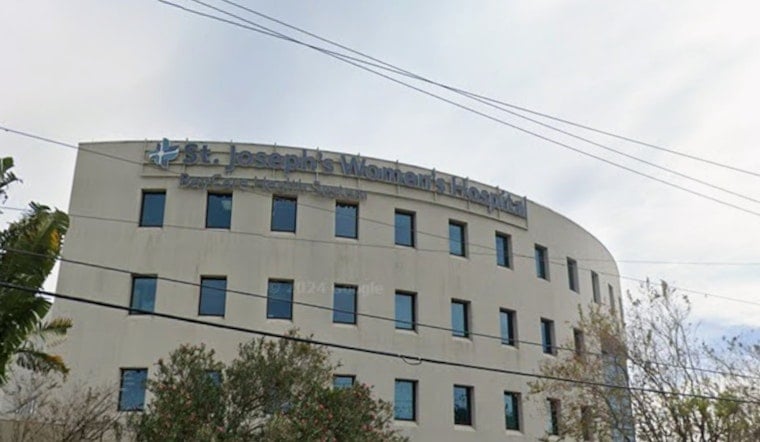
Kirtley's surgery was performed by BayCare Medical Group surgeons at St. Joseph's Women's Hospital in Tampa, according to FOX 13 Tampa Bay. Dr. Robert Gabordi, a BayCare Medical Group breast surgical oncologist and medical director of BayCare's St. Joseph's Hospitals breast surgery program, performed the operation, making it the first robotic-assisted nipple-sparing mastectomy in Tampa Bay. Per BayCare leaders, the health system is among the first in Florida — and the first in West Central Florida — to offer the procedure.
The technology behind the surgery is a single-port robot containing a camera and two or three robotic arms, which the surgeon controls to remove breast tissue with precision, the station's report notes. Gabordi said the technology allows for careful dissection and surgery under enhanced visibility, and the report describes robotic technology as providing greater visibility and dexterity than surgeons can achieve without it.
A Smaller Incision, A Bigger Recovery Win
Single-port robotic technology requires an incision as small as 2.5 centimeters, per the same account. That precision is possible because the approach uses carbon dioxide insufflation and a lateral incision near the axillary fold, which allows high-definition 3D visualization that helps preserve microvascular blood supply to the skin and nipple-areolar complex, according to Mayo Clinic. Preserving that blood flow matters because it reduces the risk of tissue death during recovery, a key concern in any nipple-sparing procedure.
For Kirtley, the difference showed up immediately after surgery. She said the procedure made her recovery simpler and involved less pain in her case, and she reported that she did not take any of her pain medication. “I feel fantastic,” she said, adding that she's excited about the future and the technology, per the FOX 13 report. Kirtley is now resuming her normal life under her doctor's guidance.
Reconstruction Happens the Same Day
Immediately after Gabordi completed the tissue removal, plastic surgeon Dr. Melanie L. Aya-Ay rebuilt Kirtley's breast in the same operation, according to BayCare Health System. Combining mastectomy and reconstruction into one surgical session means patients avoid multiple trips under general anesthesia. Gabordi is one of only three surgeons in Florida performing this specific procedure, FOX 13 reported.
BayCare's ability to bring the technology to Tampa was helped along by a $400,000 contribution from the St. Joseph's Hospitals Foundation, which supported acquisition of the single-port platform, BayCare Health System has said. The rollout followed a broader regulatory shift: in December 2025, the FDA granted 510(k) clearance to Intuitive Surgical's da Vinci SP Surgical System, officially expanding its cleared indications to include nipple-sparing mastectomy procedures in adult patients, according to the Regulatory Affairs Professionals Society. Before that clearance, robotic mastectomies in the U.S. were largely confined to investigational clinical trials.
Florida Emerges As an Early Adopter
Tampa isn't the only Florida city where patients can now access the single-port approach. Mayo Clinic Comprehensive Cancer Center introduced robotic nipple-sparing mastectomy at its Jacksonville campus in January 2026, adopting the technique across both its Minnesota and Florida locations following the FDA clearance. Sutter Health's Alta Bates Summit Medical Center in Oakland, California, completed a similar procedure in March 2026, which Sutter Health described as among the first known cases performed in a U.S. community medical center outside a clinical trial — evidence that BayCare's milestone fits a broader national pattern of regional hospital networks adopting advanced robotic breast surgery.
Even with FDA clearance allowing routine clinical use, larger questions about long-term outcomes remain open. Intuitive Surgical is sponsoring an active multicenter clinical trial, listed on ClinicalTrials.gov, tracking short- and long-term oncologic safety, local recurrence rates, and overall survival of the single-port robotic approach compared to conventional open techniques through roughly 2030.
Why Demand Keeps Climbing
The need for surgical options like this one is significant in Florida, where the American Cancer Society projects approximately 183,100 new cancer diagnoses across all sites for 2026, according to Florida Cancer Specialists. Nationally, the American Cancer Society estimates 321,910 new cases of invasive female breast cancer and 42,680 deaths in 2026, while the five-year relative survival rate for early-stage localized breast cancer has climbed above 99%.
Sixteen percent of all invasive breast cancer diagnoses occur in women under 50, and incidence in that younger group is rising by 1.4% annually, according to research highlighted by Florida Atlantic University. That trend is fueling demand for procedures that preserve both appearance and sensation alongside cancer removal — the exact benefits Kirtley says she experienced firsthand. Her case follows a similar milestone Hoodline reported earlier this month, when a surgeon cut a mastectomy scar to two inches at a different regional hospital.





