

























































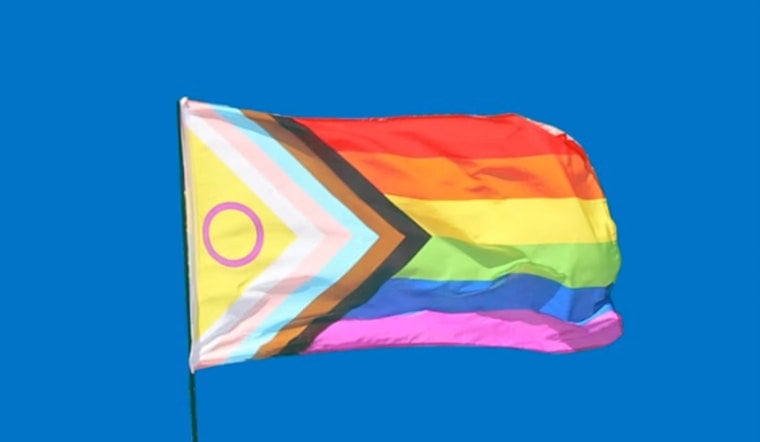
Texas is home to more than 2.2 million LGBTQ+ adults, according to a new analysis of federal survey data — a population large enough to rank second in the country, trailing only California. The finding, drawn from the Human Rights Campaign's review of the U.S. Census Bureau's Household Pulse Survey, arrives even as Texas lawmakers have spent recent legislative sessions pushing some of the most restrictive LGBTQ+ policies in the nation.
The Human Rights Campaign analyzed 2.4 million responses to the Household Pulse Survey and found that 2,243,590 Texas adults, or 12.54 percent of the state's adult population, identify as LGBTQ+, as reported by Chron. That places Texas among the top 15 states by percentage of LGBTQ+ adults and gives it the largest LGBTQ+ adult population in the South. Nationally, the group estimated 25.6 million U.S. adults, or roughly 12 percent, identify as lesbian, gay, bisexual, transgender or gender diverse.
Texas's two largest metro areas account for a substantial share of that total. The Dallas-Fort Worth-Arlington metro area has about 632,947 LGBTQ+ adults, or 13 percent of adults there, per the same Chron report. The Houston-The Woodlands-Sugar Land area follows with roughly 565,912 LGBTQ+ adults, just over 12 percent of the region's adult population.
Why the Numbers Look So Different From Older Surveys
The new figures dwarf earlier state estimates built on phone-based polling. A 2023 Williams Institute analysis of 2020-2021 Gallup tracking data put the LGBT share of Texas adults at around 5 percent — equating to roughly 1 million Texas adults, according to the Movement Advancement Project. Gallup, which first began measuring LGBTQ+ identification in 2012 when just 3.5 percent of Americans identified as such, has more recently found 9 percent of Americans identify as lesbian, gay, bisexual, transgender or something other than heterosexual — still notably lower than the Human Rights Campaign's 12 percent national figure.
The Human Rights Campaign has said its higher estimate stems from differing data sources and methodology rather than an actual jump in population, since Gallup surveys by phone while the Household Pulse Survey is conducted online. The organization has said online surveys may offer greater privacy on sensitive questions and contribute to higher disclosure, a pattern that shows up most among bisexual respondents and adults under 35. Nationally, 65 percent of LGBTQ+ adults identified as bisexual, 30 percent as lesbian or gay, and 5 percent as straight-identifying transgender or gender-expansive adults, according to Newsweek. The outlet also reported that 54 percent of LGBTQ+ adults nationwide are under age 35.
The Household Pulse Survey itself was an experimental online national survey of households, and one of the largest federal data collection efforts to ever gather information about Americans' sexuality and gender identities. It ran from 2021 to 2024 before the Trump administration stopped collecting data about Americans' sexual orientation or gender identities, according to Chron's reporting.
A Growing Population Amid Tightening State Law
The population figures land against a backdrop of aggressive legislative activity in Austin. During the 2025 session, Texas lawmakers introduced more than 200 anti-LGBTQ+ bills — the highest volume tracked by Equality Texas in any legislative session nationwide — and passed a dozen into law, including House Bill 229, which defines legal sex in statutory terms. Hoodline previously reported on the firestorm that bill ignited among LGBTQ+ advocates.
Texas Republicans have also passed laws curbing gender-affirming care for transgender youth, regulating bathroom usage for transgender Texans in public buildings, restricting which sports teams transgender athletes may join, and addressing how educators in state schools may teach about queer people. The state legislature has additionally targeted public displays of LGBTQ+ pride, per Chron's reporting. Not every legislative move has cut against the community, however: in May 2025, the Texas House voted 72-55 to pass House Bill 1738, repealing the state's unenforceable anti-sodomy law that had lingered on the books since the U.S. Supreme Court's 2003 Lawrence v. Texas ruling struck it down.
That legislative climate has coincided with some residents leaving the state. Texas has experienced LGBTQ+ residents departing for more supportive states, and a 2025 Plume survey found Texas had the highest percentage of transgender people leaving the state of any state surveyed. A 2023 analysis also found that 93 percent of Texas counties had fewer same-sex couples than the national average, with four counties reporting none at all.
Local Data Efforts Try to Fill the Gaps
Human Rights Campaign President Kelley Robinson framed the broader national numbers as evidence that LGBTQ+ Americans are not a niche constituency, saying the 25 million LGBTQ+ Americans represent a critical mass in almost every state. Robinson added that LGBTQ+ Americans are present throughout the country.
In Houston, researchers are trying to build a more precise local picture. Rice University's Kinder Institute for Urban Research is conducting a survey with local LGBTQ+ groups about the city's LGBTQ+ population, part of the Houston Area L.O.V.E. Survey launched in February with the Montrose Center and the Greater Houston LGBT Chamber of Commerce to gather baseline data across eight Greater Houston counties. The effort follows an October 2024 Rice University study that found Houston-area lesbian and bisexual adults were roughly three times more likely than heterosexual residents to report unmet mental health care needs in the prior year, citing cost, lack of provider information and social stressors as primary barriers.
Municipal policy in Texas tells a more mixed story than the statewide picture. Fort Worth earned a perfect score of 100 on the Human Rights Campaign's Municipal Equality Index for the eighth consecutive year in January 2024, far outpacing the state's average score of 60 among rated Texas municipalities, as Hoodline reported at the time. Separately, the Williams Institute at UCLA has reported that less than 1 percent of U.S. adults identify as transgender, while an estimated 3.5 percent of youth nationally identify as transgender; in Texas specifically, the Williams Institute previously estimated about 1.42 percent of youth identified as transgender.



