

























































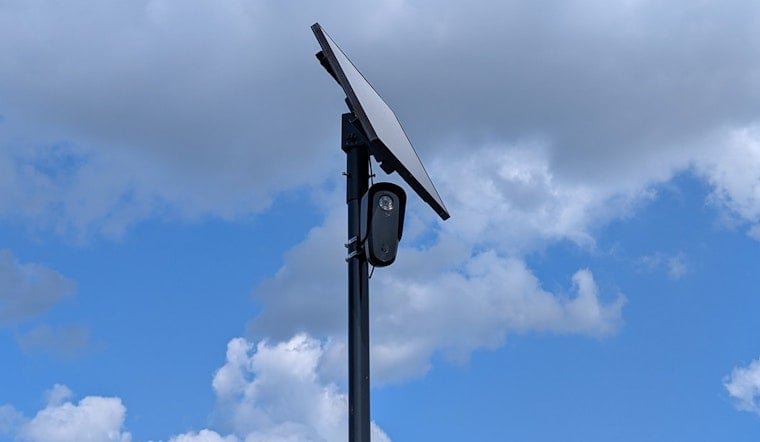
Wellsville, Kansas, a Franklin County community of fewer than 2,000 people, is cutting ties with Flock Safety, ending its license plate reader camera program after residents pushed back over surveillance concerns. Police Chief Danny Hackler announced the decision in a statement shared on social media, saying he wants community members to feel heard and respected.
According to KMBC, Hackler decided to terminate all agreements between the Wellsville Police Department and Flock Safety, and the department will remove staff authorization to use the camera system entirely. Wellsville has operated two Flock cameras since the city entered agreements with the company in October 2023, though the Flock Safety map shows three cameras in the area due to a camera location change, the outlet notes. One camera sits on First Street just west of Ash Street, while another is located at 10th Street and Main Street; a second camera was originally positioned on K-33 before being relocated. Once the contracts are terminated, the cameras will be covered.
Wellsville is not the first area city to abandon the camera system. Just days earlier, the Gardner City Council in neighboring Johnson County agreed to turn off its four Flock cameras and decided not to renew its contract, following resident concerns raised during public comment. As Hoodline previously reported, a Gardner resident flagged that more than 1,200 vendors had access to the local camera network's data, a detail that helped tip the council toward cancellation of its roughly $13,000 annual agreement, according to the Johnson County Post.
A Regional Pattern of Camera Shutdowns
Flock cameras have been used around the country for years as departments adopted the technology to help track stolen vehicles and locate missing persons. But people have increasingly expressed concerns about the cameras' overreaching surveillance capabilities and privacy implications, concerns that have now reached even the smallest of Kansas municipalities.
Those worries are not abstract. In 2024, the former police chief of Sedgwick, Kansas, admitted to misusing Flock's license plate camera database more than 160 times over four months to stalk his ex-girlfriend and her new partner, an episode documented by The Wichita Eagle. Nationally, an August investigation by The Washington Post found that at least 50 law enforcement officers have been charged with or accused of misusing automated license plate reader networks, including Flock's, to track ex-partners, romantic interests, and personal targets.
Legal Challenges Mount Statewide
The scrutiny extends into Kansas courts. In July, a civil rights lawsuit was filed against the City of Wichita in state court alleging that warrantless automated license plate reader dragnet surveillance violates Article 15 of the Kansas Constitution's Bill of Rights on search and seizure. The suit, filed by the Kansas Justice Institute on behalf of resident Mason Grimmett, was detailed by KCUR.
Under Kansas law, captured license plate data and the exact physical locations of ALPR cameras are exempt from public disclosure under the Kansas Open Records Act, per the Kansas Legislative Research Department. According to Kansas legislative materials, captured license plate data and records concerning the location of an automated license plate recognition system are exempt from disclosure under the Kansas Open Records Act. Cancellations have mounted in Franklin and Johnson counties.
Vendor Responds With Policy Changes
Facing pressure from municipalities nationwide, Flock Safety announced platform-wide changes this month, including cutting its standard data retention window from 30 days down to seven and rolling out automated audit alerts and suspicious-query detection by late 2026, according to reporting from FOX 4 KC. The company is also requiring officers to enter mandatory case codes before running plate lookups.
Still, some local governments are opting for full contract termination rather than waiting on technical fixes. A regional analysis in July found roughly 1,500 automated license plate reader cameras active across the greater Kansas City metro area, the majority supplied by Flock Safety, underscoring how dense the surveillance network remains even as individual cities like Wellsville and Gardner switch off their own units. Even so, cameras outside Gardner's control may continue operating as the local shutdowns spread.
Wellsville's move adds to a growing list of Midwestern communities walking away from Flock, following similar decisions detailed in Hoodline's coverage of St. Charles County's camera shutdown. The Wellsville Police Department, based at 704 E. 7th Street, is ending its Flock camera program.





