

























































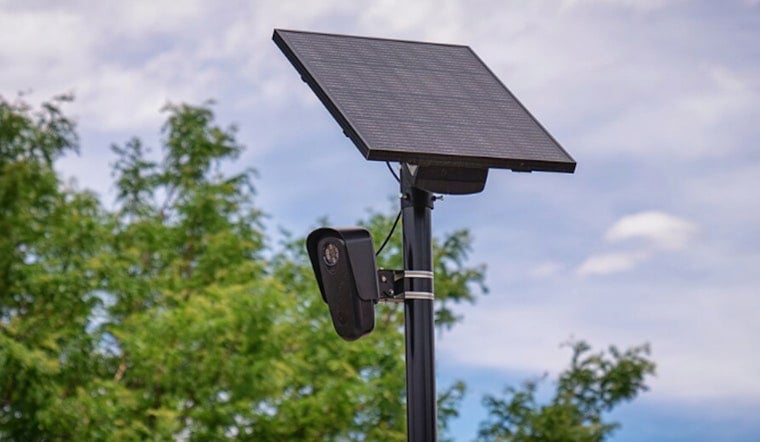
St. Charles County has switched off its entire network of Flock Safety license plate readers after discovering that a civilian employee used the system to track an ex-partner. County officials say the employee has been fired and the matter has been referred to an outside police agency for possible criminal investigation.
The discovery traces back to August 12, when a Flock Safety representative contacted St. Charles County Police Chief Kurt Frisz about a newly released vendor audit tool. According to KSDK, that conversation led department investigators to uncover on August 14 that the employee had been running personal searches through the license plate database, and the employee later admitted to using the system to keep tabs on an ex. As reported by the St. Louis Post-Dispatch, county leaders turned off the Flock readers entirely and announced new safeguards for handling license-plate data once the internal audit revealed the misuse.
The timing was not a coincidence. The vendor tool that flagged the abuse came just one day after Flock Safety CEO Garrett Langley publicly announced platform-wide updates on August 13, including automated audit alerts, mandatory case search codes, and automatic access lockouts for suspicious search behavior, according to ASIS International. Those changes arrived amid mounting nationwide backlash and a wave of municipal contract cancellations tied to officer misuse of the camera networks.
Not Missouri's First Flock Tracking Scandal
St. Charles County is not the first Missouri department to run into this problem. In January, the Joplin Police Department revealed that a former officer had conducted nearly 25 percent of all departmental Flock searches — almost 400 unauthorized license plate checks over 14 months — to track individuals, according to the Joplin Missouri Police Department. That case prompted an independent criminal investigation by the Missouri State Highway Patrol, and the officer was separated from the department after an internal affairs audit confirmed equipment policy violations.
The problem has proven far bigger than one county or one state. Hoodline has reported that more than 50 law enforcement officers across the United States have been accused or charged with misusing Flock Safety camera networks, primarily to track romantic partners or personal acquaintances, in a similar case out of Cherokee County. That same trend has driven more than 50 local governments to suspend or terminate their Flock contracts in 2026, with privacy advocates frequently pointing to gaps in oversight and state open-records exemptions as part of the problem.
Surveillance Was Already a Campaign Flashpoint
Automated license plate readers were already a contentious topic in St. Charles County politics before this scandal broke. Opposition to Flock cameras and government surveillance became a core pillar of former state senator Bill Eigel's platform against incumbent Steve Ehlmann during the 2026 St. Charles County Executive race, according to Real Talk 93.3 FM, with debate participants sharply divided over public safety benefits versus civil liberties.
The stakes were raised further by the county's technological investment in the technology. The department's Regional Information and Intelligence Center, which processes centralized surveillance and technology data including license plate readers, was named national Real Time Center of the Year by the National Real Time Crime Center Association in late 2025, per the St. Charles County Police Department. That center supports field officers and criminal investigations across the region, which made the decision to shut down the Flock system a notable reversal.
How Other Missouri Cities Are Handling Flock
Missouri's relationship with Flock cameras varies widely by jurisdiction. Neighboring St. Louis City took a statutory approach in April 2024, when its Board of Aldermen enacted Board Bill 185 to establish Community Control Over Police Surveillance rules, requiring board hearings and approval before law enforcement can deploy new tools like automated license plate readers, as Hoodline previously reported. Civil liberties groups pushed for that legislative check specifically to prevent unauthorized surveillance expansion.
Elsewhere in the state, the appetite for the cameras hasn't waned. Crowdsourced mapping data from DeFlock documented 91 automated license plate readers within a 25-mile radius of Jefferson City this month, with 80 of those devices — 87.9 percent — identified specifically as Flock Safety equipment. Jefferson City itself renewed its Flock contract despite a lone dissenter's privacy warning, illustrating how deeply the vendor's technology has embedded itself in Missouri municipal and county jurisdictions even as other departments pull back.
Vendor Rolls Out Shorter Data Retention Limits
Flock Safety's August platform overhaul also reduced the recommended default data retention period to 7 days, down from 30 days, according to Police1. Individual law enforcement agencies still retain authority to set their own retention windows and search parameters, but privacy advocates have pushed for strict time limits specifically to prevent long-term tracking of law-abiding drivers.
The wave of contract cancellations shows no signs of slowing elsewhere in the country. Local governing bodies in Gardner, Kansas, and Narragansett, Rhode Island, have voted in recent weeks to remove or shut down their own Flock cameras over data access and privacy concerns, often after residents raised alarms about vendor data sharing. St. Charles County's move to discontinue its own readers fits squarely within that nationwide pattern of municipal pushback against the surveillance technology.




.jpg)