

























































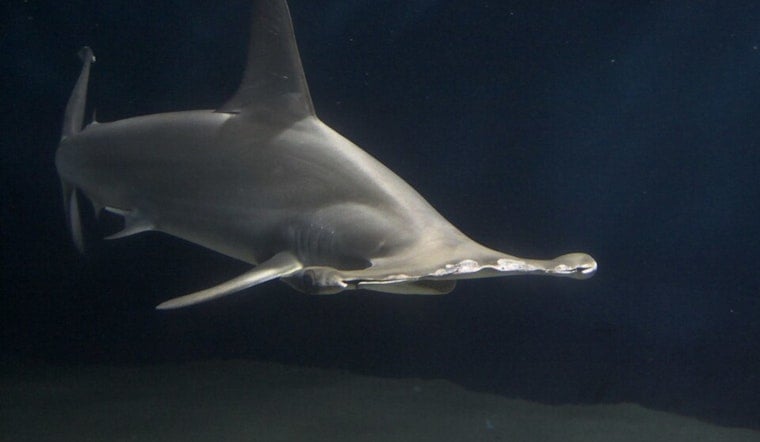
A 12-foot shark was hooked and released off Florida’s Treasure Coast Friday, while a second shark was found dead near Jupiter. It was a very Florida way to close out July: one giant fish briefly became the star of a beach video, while another turned into a wildlife-removal job.
At Normandy Beach on Hutchinson Island, Jensen Beach resident Kathy Green filmed fishermen struggling with the massive shark before they unhooked it and released it back into the Atlantic. According to WPBF 25 News, shark expert Jim Abernethy believed the fish may have been a great white, while a dead hammerhead was found just south of the Jupiter Beach Resort and removed by the Florida Fish and Wildlife Conservation Commission.
Those were separate events, and the great-white label remains tentative. The available reporting identifies Abernethy’s opinion rather than a formal species confirmation by wildlife officials, so the most accurate description for now is a possible great white caught and released off the Treasure Coast.
Hammerheads Are Regular Visitors Along Florida’s Atlantic Coast
Large hammerheads are not exactly out of place in this stretch of ocean. The Florida Fish and Wildlife Conservation Commission says great hammerheads use both open ocean and shallow coastal waters along Florida’s Atlantic coast, with some populations moving north during the summer.
Florida Rules Require Quick Release Of Protected Sharks
The species can matter legally as well as biologically. Florida’s prohibited-shark rules include white sharks and several hammerhead species, requiring those fish to remain in the water with their gills submerged and to be released without delay; if removing a hook would slow the release, anglers are directed to cut the hook or leader.
For swimmers, the videos do not mean a shark was hunting people. NOAA Fisheries says it is extremely unlikely for Atlantic beachgoers to encounter or be bitten by a shark, even though the animals are common in coastal waters.
So far, Friday’s story is about sightings, fishing and wildlife management—not a reported attack. The clips are a reminder that Florida’s nearshore waters can deliver a startling cast of characters, sometimes only a few miles apart.



