

























































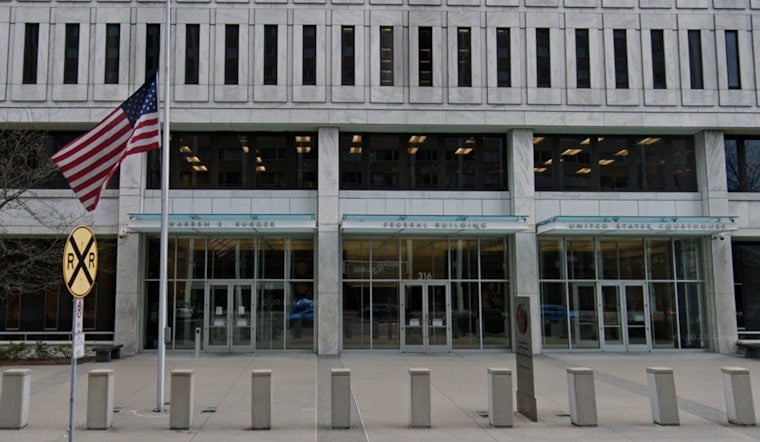
Two men who prosecutors say fraudulently claimed to run a child nutrition site feeding thousands of kids a day in St. Paul were sentenced to federal prison Wednesday, the latest defendants to fall in Minnesota's massive Feeding Our Future fraud case. Ahmed Abdullahi Ghedi received a sentence of more than five years, while Abdihakim Ali Ahmed was sentenced to four-and-a-half years, and both men were ordered to pay restitution.
According to KARE 11, Ahmed was sentenced to 54 months and Ghedi to 65 months in federal prison. As reported by CBS News, the two men were convicted of wire fraud and money laundering after claiming to feed thousands of children a day out of a St. Paul site. The U.S. Attorney's Office in Minnesota said Ghedi alone received $7.2 million from the federal child nutrition program through fraudulent claims, and prosecutors said Ghedi and others spent roughly $7.3 million on a car, property, and kickbacks.
A Scheme That Ballooned Into the Hundreds of Millions
The Feeding Our Future scheme involved an estimated $250 million in alleged fraud, and prosecutors have described it as the largest pandemic fraud case in the country. The organization was founded by Aimee Bock, who served as its executive director before a jury convicted her of conspiracy to commit wire fraud and conspiracy to commit federal programs bribery. Bock was sentenced to 500 months in prison — more than 41 years — in May, according to the Department of Justice, and ordered to pay $243 million in restitution after prosecutors said she orchestrated the defrauding of the federal child nutrition program.
Dozens of other people have been convicted in connection with the scheme, per the CBS News report, including Salim Said, who was convicted of multiple counts. The Justice Department says federal prosecutors have now charged at least 78 defendants and secured at least 69 convictions, cementing the case as the largest pandemic relief fraud prosecution in the country. The scheme traces back to nationwide emergency waivers the U.S. Department of Agriculture issued in 2020, which let for-profit restaurants join federal child nutrition programs and suspended mandatory annual site visits and meal observations meant to catch exactly this kind of abuse.
Related Sentencings Keep Piling Up
The Ghedi and Ahmed sentencings come just over a week after Lakeville resident Abdinasir Mahamed Abshir became the 23rd defendant sentenced in the case, receiving 78 months after a judge added time for confronting and attempting to intimidate a cooperating witness in a courthouse hallway, a case Hoodline previously covered. Abshir had admitted to receiving federal funds and paying more than $100,000 in kickbacks to a Feeding Our Future employee, according to the Justice Department.
The case has also produced an extraordinary attempt to corrupt the judicial process itself. In July, defendant Abdiaziz Shafii Farah was sentenced to 10 additional years after pleading guilty to bribing a juror during his 2024 trial by having $120,000 in cash delivered in a gift bag to the juror's home, the Justice Department said. The targeted juror reported the attempt to law enforcement, leading to federal bribery charges against five people.
Where Oversight Broke Down
Federal child nutrition disbursements to Feeding Our Future rose from about $1.4 million in 2019 to $4.8 million in 2020 and then to more than $140 million in 2021, before the FBI raided the organization's headquarters in early 2022, according to the Minnesota Office of the Legislative Auditor. A June 2024 special review by that office found the Minnesota Department of Education's oversight of the organization was inadequate and created opportunities for fraud by failing to act on warning signs dating back to before the pandemic.
State auditors noted the department failed to follow up on a 2018 review and approved site applications despite missing accounting documentation. Following the disclosure of the scandal, per MPR News, the Minnesota Department of Education created an internal Office of Inspector General and a dedicated General Counsel's office to reform agency oversight, though state education leaders have disputed allegations of lax oversight and maintained that primary responsibility rests with the convicted fraudsters.
Before either man was named in FBI search warrants in early 2022, Ghedi and Ahmed had each contributed the maximum $2,700 campaign donation — $5,400 total — to U.S. Rep. Ilhan Omar, whose campaign later donated that money to local food charities once the investigation became public, according to KARE 11's earlier reporting. With dozens of defendants already convicted and the case still working its way through federal court, Wednesday's sentencings mark another chapter in a prosecution prosecutors say remains the largest pandemic relief fraud case in the nation.





