

























































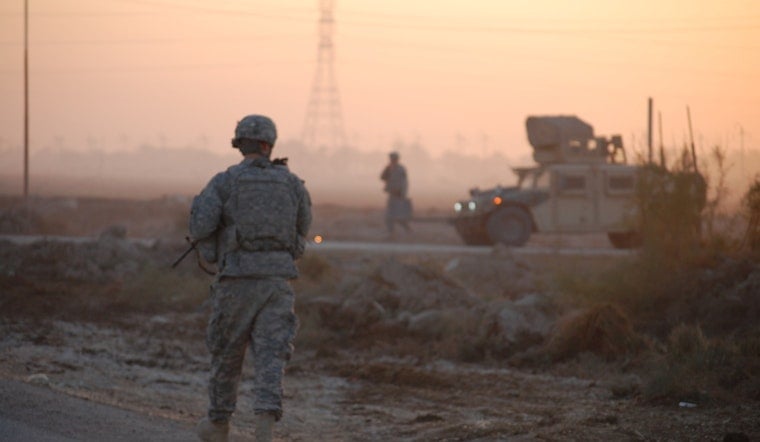
The United States is on pace to pull all of its remaining forces out of Iraq by September 30, officials say, closing the book on a military mission that began in 2014 when the Islamic State group seized a wide swath of territory across Iraq and Syria. The U.S. has maintained about 2,500 troops in the country for training and counter-ISIS operations, though a U.S. official declined to say exactly how many personnel remain or where they will be redeployed once the pullout is complete.
As reported by KTSM 9 News, U.S. troops pulled out of bases in most areas of Iraq in 2025, consolidating remaining forces in the country's semi-autonomous northern Kurdish region. That drawdown accelerated further about three weeks before August 12, when U.S. troops and military equipment began withdrawing from Erbil, according to two Iraqi Kurdish officials who spoke on condition of anonymity because they were not authorized to comment publicly, the outlet reported. Bases in the Kurdish region had come under regular attack, per the same account.
The exit marks the second time American forces have wound down a major campaign in Iraq. The U.S. previously completed a total withdrawal of combat troops in December 2011 under President Barack Obama, ending the original eight-year Iraq War, according to Responsible Statecraft. American forces returned to Iraq in 2014 at Baghdad's invitation after Islamic State militants overran large areas of the country, a presence that at its peak during counterinsurgency operations in 2007 had swelled to more than 170,000 troops.
A Deadline Set in 2024, Now Nearly Complete
The framework guiding this final withdrawal traces back to September 2024, when Washington and Baghdad agreed to wind down the much smaller U.S.-led coalition operations against the Islamic State group. Under that joint agreement, according to the U.S. Department of State, coalition operations supporting counter-ISIS efforts in neighboring Syria were set to continue running out of bases in Iraq through September 2026, which explains why a logistical footprint persisted in Kurdistan even after federal Iraq sites emptied out.
That transition was structured by the bilateral U.S.-Iraq Higher Military Commission, established in January 2024 and co-chaired by U.S. Central Command and Iraqi military leadership to assess ISIS threats and Iraqi force readiness, per the U.S. Department of Defense. The Pentagon formally announced the scaling back of its Iraq mission on September 30, 2025, under Higher Military Commission guidelines, and by January 18, 2026, Iraqi military authorities announced that coalition forces had completed a full evacuation of bases and headquarters across federal Iraq, placing those sites under sole Iraqi command.
Officials Meet as Al-Zaidi Affirms the Deadline
Iraqi Prime Minister Ali al-Zaidi met with Adm. Brad Cooper in Iraq on Wednesday, and al-Zaidi affirmed September 30, 2026, as the fixed and final date for ending the Global Coalition to Defeat ISIS military mission and completing the departure of its forces, per KTSM's report. Iraqi security forces, including the Peshmerga and other Iraqi Kurdistan region security forces, will lead the fight against terrorists in the country going forward, officials said. Al-Zaidi's rise has already drawn Washington's attention this year — Hoodline reported on his Washington invite from President Donald Trump back in May, and the relationship has since expanded into energy deals, including Chevron's memorandums of understanding over the West Qurna 2 and Nassiriya fields.
The United States and its coalition partners achieved what officials describe as tremendous success in defeating ISIS, and the end of this presence marks the close of a chapter that began with the 2003 invasion against Saddam Hussein. Combined Joint Task Force – Operation Inherent Resolve was established in August 2014 after ISIS seized nearly 42,000 square miles across Iraq and Syria, growing into a coalition of more than 30 nations that ultimately liberated 110,000 square kilometers and 7.7 million people, according to the Department of Defense. Coalition military operations largely wound down after the Islamic State lost territorial control in 2021.
The Toll and the Unresolved Militia Question
The 12-year campaign came at a steep cost. Operation Inherent Resolve resulted in 93 U.S. military fatalities and an estimated $115 billion in Defense Department funding between 2014 and 2026, according to WarCosts.
Even as the military footprint disappears, a central tension remains unresolved. Al-Zaidi has set September 30, 2026, as the deadline for non-state armed groups in Iraq to surrender their weapons, saying such groups will have no justification to carry arms once foreign troops withdraw. But some powerful Iran-backed militias have said they have no intention of giving up their weapons, and some Iraqi militias have justified their continued existence by pointing to the U.S. military presence itself. Per KTSM's reporting, the Iraqi government is unlikely to meet its own deadline for disarming those groups.
That standoff is rooted partly in law: Iraq's Parliament passed Law No. 40 in November 2016, granting paramilitary groups formal legal status within the country's security apparatus and placing the Popular Mobilization Forces under the command of the prime minister, according to the Library of Congress. That legal embedding is a key reason militias have resisted disarmament even as Baghdad pushes to consolidate state control. The KTSM report was authored by Qassim Abdul-Zahra and Abby Sewell.





