

























































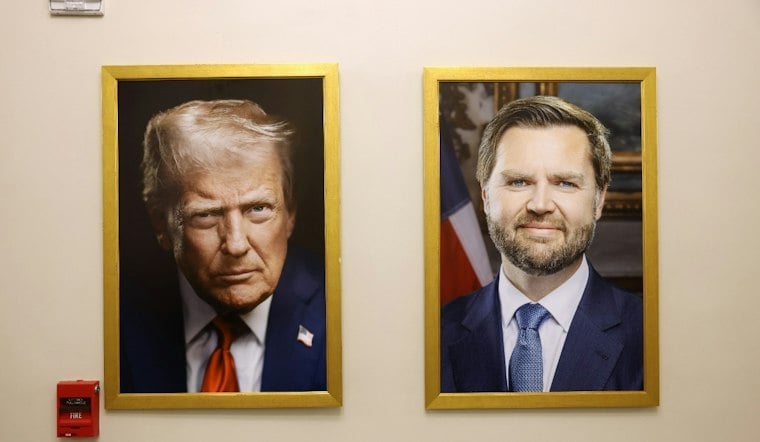
Vice President JD Vance is now openly calling for an end to the Iran War, a reversal that puts him at odds with President Donald Trump just over a week after Democrats swept control of Congress. The shift marks a striking turn for a vice president who spent much of the year defending the administration's military campaign, and it is drawing scrutiny over how far he can push back without breaking from the president who put him on the ticket.
A rift is opening up between Trump and Vance over the war, according to NPR, where Ayesha Rascoe discussed the dynamic with Susan Glasser, a staff writer at The New Yorker, in a segment. On November 4, in the wake of Democrats winning both the House and Senate, Vance wrote on X that “the reason we lost is the war,” and said an earlier recommendation to end the conflict had been “sound advice,” as reported by Reuters.
Trump responded by agreeing with Vance's read on the political fallout while still standing behind the war itself. “We stopped them from having a nuclear weapon,” Trump said, according to the same Reuters report, defending the military action even as his own vice president called for it to end. Democrats had secured control of both chambers of Congress that Tuesday, per Reuters, handing Republicans a defeat that Vance tied directly to the ongoing conflict.
From Chief Negotiator to Sidelined
Vance's reversal comes just months after he served as Washington's chief negotiator in talks with Tehran, a role that produced a short-lived memorandum of understanding with Iran in June, according to Al Jazeera. That agreement briefly paused the fighting and resumed shipping through the Strait of Hormuz before it collapsed, the outlet reported. Now, Trump has told Vance to redirect his attention toward alleged corruption within the Democratic Party instead, according to the same Al Jazeera report, effectively pulling him out of the diplomatic lane he once occupied.
The pivot stands in sharp contrast to where Vance stood earlier this year. Back in March, he joined the administration's effort to sell the U.S.-Israel war with Iran to the American public, arguing there was “just no way that Donald Trump is going to allow this country to get into a multi-year conflict with no clear end in sight and no clear objective,” per NPR's earlier reporting on his role. That March report also noted Trump's stated objectives for the war had already shifted away from regime change toward four narrower goals, including destroying Iran's missile capabilities and its navy.
Polling Shows Disapproval of Trump's Handling
The political ground beneath Vance's reversal has been shifting for months. A Pew Research Center survey conducted from September 28 to October 4 found 65% of U.S. adults disapproved of how Trump was handling the military action in Iran, while 33% approved, up from 61% disapproval in a March Pew survey taken shortly after the war began.
A Vice President Walking a Thin Line
Vance's own social media posts earlier in the year show how much ground he has shifted since. In one X post, he wrote that “President Trump will not get the United States into a years-long conflict with no clear objective” and insisted “Iran can never be allowed to obtain a nuclear weapon,” a stance that now sits uneasily alongside his November call to end the fighting altogether. NPR's framing of the moment, that Vance “walks a thin line with Trump,” captures the balancing act facing a vice president trying to read the midterm results without openly breaking from the president he serves.



