

























































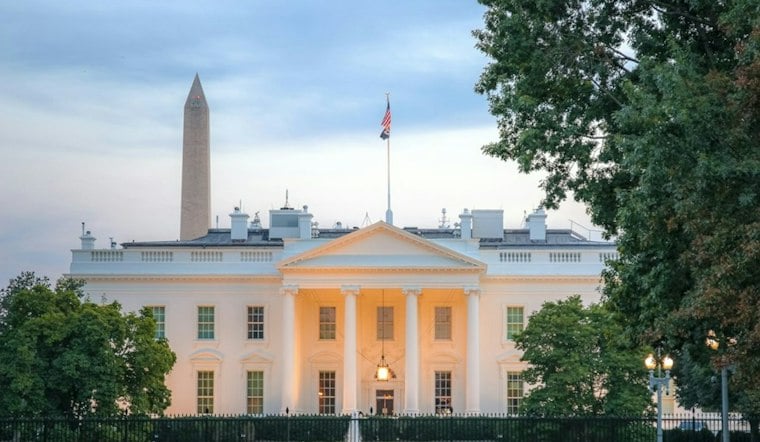
Israel's Mossad director Roman Gofman is in Washington for talks with senior Trump administration officials, including a meeting with CIA Director John Ratcliffe, as Prime Minister Benjamin Netanyahu presses President Trump to resume the war against Iran. One source said Gofman is also expected to travel to Miami to meet White House envoy Steve Witkoff. Three sources with knowledge of the matter said the visit concerns the war in Iran.
The trip was first reported by Axios, whose Barak Ravid wrote that Gofman — described as one of Netanyahu's closest confidants — is meeting with top U.S. officials even as Trump has rejected Netanyahu's pressure to return to combat. The Mossad, the CIA and the White House all declined to comment on the visit, according to the outlet. Per a U.S. official, Trump and Netanyahu discussed the Iran war as recently as November 5.
This is not Gofman's first trip to Washington on this subject. Back in July, Axios reported that Gofman had visited Washington two weeks earlier for talks about the Iran war and Iran's nuclear program — his first visit to Washington since taking office that June. An Israeli source said at the time that one purpose of that visit was to coordinate with the White House on negotiations with Iran over a nuclear deal, and Gofman met with Ratcliffe and White House officials then as well.
Trump Sides With Gulf Allies on a Waiting Game
Trump has sided with Saudi Arabia, Qatar and the UAE in favor of continuing the naval blockade and economic pressure campaign against Iran while exploring a possible deal, rather than resuming military strikes, according to the Axios report. Trump has said he could end the conflict immediately but is proceeding more civilly at the request of the nations he is seeking to protect. He has also said Saudi Arabia and several Gulf states prefer the current waiting period because Iran is disintegrating.
That stance echoes comments Trump made to reporters covered by Ynet, who quoted him saying that, “At this point ... taking the military action doesn't seem to be a very necessary thing,” even as he indicated U.S. forces remained ready. The outlet also reported a broader policy split: the Trump administration wants to exhaust the possibility of reaching an agreement with Tehran, while Netanyahu believes the nuclear threat cannot be permanently eliminated without the fall of the Iranian regime.
A diplomat cited by the Financial Times, and relayed by Ynet, said Netanyahu calls the U.S. president every day and urges him to resume the strikes, while regional leaders have pushed Trump to prioritize negotiations instead. Netanyahu has also urged Trump to resume attacks on Iran.
A Coalition Crisis Complicates the Picture
Netanyahu's push comes as his political position has deteriorated. He lost his parliamentary majority after Israel's October 27 election, and President Isaac Herzog subsequently tasked former military chief Gadi Eisenkot with forming a new government. According to Al Jazeera, Eisenkot's four-party alliance won 48 seats in that election while Netanyahu's right-wing and religious bloc secured 53 — leaving both short of the 61 needed for a majority. Al Jazeera reported Eisenkot has 28 days, with a possible 14-day extension, to build a coalition of at least 61 of the Knesset's 120 seats.
CNN offered a different count of where support currently stands: as of November 11, the network reported Netanyahu had only 46 lawmakers behind him, far short of a majority, while Eisenkot had 67 seats backing him — though CNN noted not all of those parties have agreed to work together. Eisenkot may still be unable to form a government, and if he succeeds, Netanyahu would be removed from power. Netanyahu continues to serve as caretaker prime minister in the meantime, per The Jerusalem Post, which also reported that Netanyahu and Eisenkot met for two hours on November 12, with Eisenkot briefed on the security and diplomatic challenges facing Israel and both sides agreeing to keep exchanging updates as necessary.
Fears That War Could Be Used as Political Leverage
Sources say Israeli opposition leaders are concerned that Netanyahu may attack Iran, or provoke Iran into attacking Israel, in order to undermine Eisenkot's coalition-building effort. A source close to Eisenkot said the current situation does not call for immediate military action against Iran. Ynet reported that senior figures in the emerging parliamentary majority have accused the caretaker prime minister of pressing for military action against Iran without U.S. backing, and that Netanyahu has encountered resistance from IDF Chief of Staff Lt. Gen. Eyal Zamir and other senior defense officials. The same report said the United States is aware of Netanyahu's intentions and has blocked him from proceeding on at least one occasion.
Accounts of a recent weekend phone call between Netanyahu and Trump diverge sharply. Ynet described the call as confrontational and quoted a source calling it a screaming conversation; Netanyahu's office strongly disputed those accounts, calling the reports “fake news, complete nonsense” and insisting the conversation went well.
The Times of Israel, citing Channel 12, reported that Netanyahu and Gofman had sought to carry out an unspecified operation against Iran on the eve of the October 27 election.
Gofman Amid Israel's Political Uncertainty
Beyond the Washington trip, Gofman's role comes as Israel struggles to form a new government following the October 27 election.
With Netanyahu continuing as caretaker prime minister, whether the current standoff over Iran resolves through diplomacy, renewed conflict, or a change of government in Jerusalem remains an open question as Gofman's talks in Washington continue.



