

























































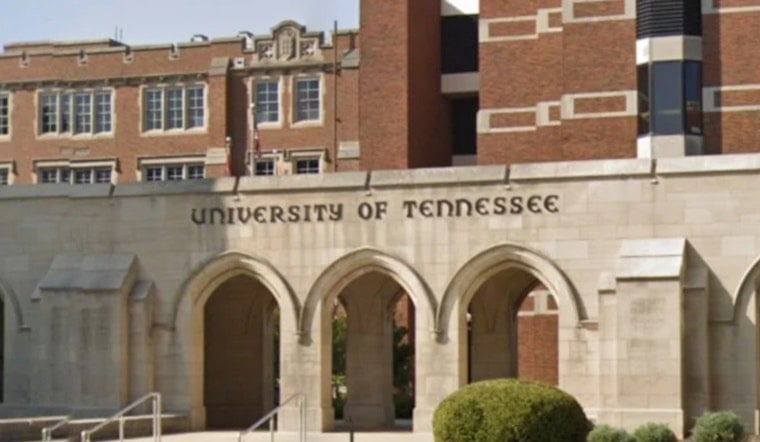
UT Knoxville is betting that a carefully chosen wave of star faculty can turn East Tennessee into an even bigger research machine. The university has hired eight scholars whose work spans artificial intelligence, quantum devices, cancer treatment, advanced materials, health data and even insects that turn waste into resources.
The new recruits are part of a preeminent hiring initiative aimed at helping UT become one of the nation’s top public research universities without a medical school, according to the Knoxville News Sentinel. The group includes Shaundra Daily, Kimberly Powell, Graham Thomas, Laurent Capolungo, Jeffrey Tomberlin, Deep Jariwala, Carolyn Anderson and Orlando J. Rojas.
The arrivals are staggered rather than one giant academic moving day. Thomas and Powell began at UT this month, Daily and Capolungo are expected in August, Rojas is slated for October, Jariwala for January 2027 and Tomberlin for February 2027, while Anderson begins her joint appointment Saturday.
Eight Hires, Five Big Research Lanes
The portfolio is deliberately broad. Daily, who came to UT from Duke, studies artificial intelligence and human-centered technology; Thomas researches digital health and advanced analytics tied to weight, eating and physical activity; and Powell focuses on precision health, aging populations, health data and telehealth.
On the science-and-industry side, Capolungo is joining the Tickle College of Engineering after work at Los Alamos National Laboratory on materials and structures under extreme conditions. Tomberlin, recruited from Texas A&M, brings expertise in forensic science and black soldier flies, including ways to convert waste into useful resources, according to the university’s faculty recruitment initiative.
That mix lines up with UT’s stated innovation gateways: advanced materials and manufacturing, artificial intelligence, energy and the environment, future mobility, and health and wellness. In other words, the university is not simply collecting impressive résumés; it is trying to build research teams around problems that Tennessee officials and employers already view as strategic.
Oak Ridge Is The Not-So-Secret Weapon
Three of the hires also deepen UT’s unusually close relationship with Oak Ridge National Laboratory. Jariwala is joining UT and ORNL as a Governor’s Chair for quantum devices, while Anderson will work on radiopharmaceutical therapies and the use of radioisotopes in cancer treatment, according to Oak Ridge National Laboratory.
Rojas, who is coming from the University of British Columbia, will hold a joint appointment focused on circular biomaterials made from agricultural, forest and other renewable resources. The university says his work will connect agriculture, materials science and advanced manufacturing, a combination that could make the research useful well beyond campus laboratories.
The Money Behind UT’s Academic Reboot
The hiring spree has a significant private-financing engine behind it. Dee and Jimmy Haslam’s $130 million investment in UT includes $30 million dedicated to recruiting world-renowned faculty across the university, according to UT Knoxville.
The faculty push is arriving alongside other signs of research momentum. UT recently won a $20 million National Science Foundation grant to build ATHENA, an AI-powered materials-discovery hub, and its Knoxville Quantum Accelerator is expected to add up to 10 faculty members in quantum hardware and software over the next four years, according to the university’s research announcements.
The Eight Professors Are Probably Just The Opening Act
UT leaders have said they want to recruit dozens more scholars through 2030, making this cohort less a finished lineup than the first major proof of concept. The strategy also includes new research districts tied to the campus, Oak Ridge and the Peninsula at UT Research Park, according to the Knoxville News Sentinel.
For Knoxville, the practical stakes are bigger than a few new names on faculty webpages. More high-level researchers can mean larger grants, new laboratories, stronger graduate programs and partnerships that turn university discoveries into companies, treatments and technologies — provided UT can keep supplying the space, staff and funding needed after the recruiting headlines fade.





