

























































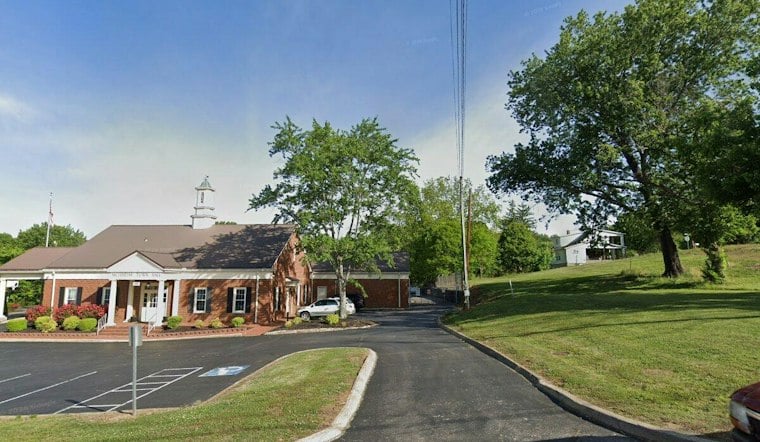
Mosheim's Planning Commission hit the brakes on a proposed data-center zoning ordinance Thursday night, voting instead to table the measure while town officials sort out whether a moratorium makes more sense. More than 30 residents packed the small boardroom at Mosheim Town Hall to hear Conor Franklin lay out rules for an industry that, as of now, has no actual project on the table in Mosheim.
According to WGRV, commissioners voted to table the ordinance pending further discussion with the town attorney regarding a possible moratorium. Franklin told the crowd that the town's current zoning ordinance simply has no language addressing the industry at all. “We don't have any definitions or anything governing the uses of data mining centers at all in our zoning ordinance in Mosheim,” he said, per the outlet's report.
No requests or applications have been made to build such a facility in Mosheim to date, the station reported — meaning the whole debate is, for now, a preemptive one. Still, the proposed ordinance that officials drafted ran more than 25 pages, an indication of how much ground town leaders felt they needed to cover before any developer ever shows up with blueprints.
What the Shelved Ordinance Would Have Done
The draft ordinance proposed rules for data centers in Mosheim. Facilities would have been split into low-density and high-density tiers based on a 10-megawatt energy-usage threshold, with anything drawing more than 10 megawatts needing a special exception from the town's Board of Zoning Appeals.
Beyond the power-use split, the ordinance set standards covering minimum lot sizes, building setbacks, structure heights, landscaping, visual screening, lighting, utilities, and noise. It also would have regulated on-site power generation, fuel storage, cooling systems, vibration limits, and future facility expansions — and required any applicant to go through a formal application, administrative review, and planning-board site-plan approval before breaking ground.
A Moratorium Floated From the Floor
Not everyone in the room wanted more rules written right away. One property owner told commissioners they would support data centers conditionally, if developed correctly, arguing that the town's existing infrastructure problems already cause more environmental harm than a hypothetical data center ever could, according to the same WGRV account.
The debate also turned to whether officials should take more time before adopting a framework.
With no definitions or provisions governing data centers in Mosheim's current zoning ordinance, tabling the measure would leave the town without a specific regulatory framework in the meantime. Officials were also weighing a possible moratorium.
Mosheim Isn't Alone in the Debate
Mosheim's hesitation mirrors a wave of similar fights playing out across East Tennessee. Greeneville's Municipal Planning Commission recently recommended a temporary six-month data-center moratorium to its City Council, according to a separate WGRV report.
Elsewhere, local governments have gone further. As WPLN reported, nine Tennessee cities and counties have passed construction moratoriums since the fall, with five approved in just the past few weeks, including one- to two-year pauses in Cedar Hill, Washington County, Grundy County, Johnson City, Jonesborough, and Bristol. McMinnville enacted an 18-month moratorium after a planned 25-megawatt, 96,000-square-foot data center was announced there without first seeking local permit approvals, the station noted.
Johnson City has taken a dual-track approach, adopting Ordinance 4914-25 in 2025 to place data centers in its I-2 Heavy Industrial District under specified conditions, according to a report from wheninyourstate.com, while also extending its broader moratorium on new heavy-industrial development to December 3, 2026, as it prepares additional noise-and-vibration amendments. Georgia's Floyd County took a regulatory path similar to Mosheim's draft plan, limiting data centers to its Heavy Industrial zoning district and requiring buildings to sit at least 600 feet from an existing home, with a 300-foot buffer next to residential or agricultural land, per wrganews.com. That county also capped noise at 65 decibels during the day and 55 decibels overnight at residential property lines.
Why the Stakes Feel Bigger Than One Town
The scramble to write rules before a shovel ever hits dirt reflects a broader surge in demand. Data-center electricity consumption across the Tennessee Valley grew roughly sevenfold over five years, reaching 9.2 million megawatt-hours in 2025, according to a report from ThinkTennessee. By July 2025, the Tennessee Valley Authority had received 11,000 megawatts in data-center requests — five times its existing demand — and planned, operational, or under-construction facilities in the state already represented 2,177.5 megawatts, or 5.3% of TVA's net summer capacity, the report found.
For now, Mosheim's planners have no application to review and no deadline forcing their hand. But with the town attorney set to weigh in on whether a moratorium is even legally workable, the question of how — or whether — Mosheim regulates data centers remains open.





