

























































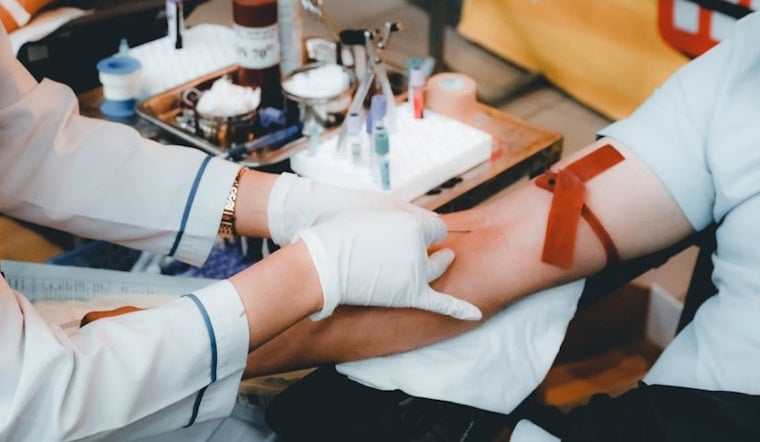
Blood donations across Utah sank to a four-year low this summer, and a local physician says the shortfall could soon force hospitals to make hard choices about who gets treated first. Blood is needed somewhere in the United States every two seconds, and when supplies run thin, low reserves can delay trauma care, surgeries, and other transfusion-dependent treatments.
The drop is part of a broader emergency. According to FOX 13 News Utah, the American Red Cross has declared a national blood supply crisis, only the second such crisis declared in the organization's history. Dr. Mike Woodruff, an emergency medicine physician who now serves as Executive Medical Director of Regence BlueCross BlueShield of Utah, told the station that blood cannot be manufactured in a laboratory and must be donated. Someone in Utah needs a blood transfusion every few minutes, per the same report, and newborn babies, cancer patients, trauma victims, and people with blood diseases all depend on a steady supply.
Why Summer Hits Utah's Blood Supply So Hard
The timing is not a coincidence. Mobile and community blood drives generate roughly 60% of all whole blood collections for regional centers, according to ARUP Blood Services, which means school and university breaks predictably drain the pipeline just as regular donors travel for vacation. ARUP acts as the sole supplier of blood products for University of Utah Health Hospitals and Clinics and the Huntsman Cancer Institute, requiring about 75 donors a day and 2,200 units of whole blood a month to keep hospital shelves stocked.
To fight the seasonal slump, ARUP rolled out a Donation to Destination incentive program this summer, offering concert tickets, gift cards, and passes to local attractions to donors who show up, as reported by TownLift. The strategy reflects a national pattern of blood centers leaning on creative promotions to stabilize supply during the summer months, a trend also visible in seasonal shortage coverage from other markets, including Hoodline's own reporting on an O-negative supply crunch in Oklahoma.
Type O Runs Out First, and Why It Matters
Not all blood types face the same pressure. Type O typically runs out first during a shortage, the FOX 13 report notes, because Type O negative lacks the A, B, and Rh(D) antigens that can trigger a transfusion reaction, making it the universal donor type that can be given to patients of any blood type. That makes it the first choice for trauma situations when there is no time to test a patient's blood type; Type O positive can be given to male patients, while Types A and B are also needed to keep shelves balanced during a shortage.
A single severe trauma patient can require up to 100 units of blood in emergency care, and roughly 1 in 5 hospitalized patients needs a transfusion at some point, according to the American Hospital Association. Red blood cells help patients who lost blood during surgery or trauma and can be refrigerated for up to 42 days, giving hospitals a narrow window to restock before supplies expire.
Plasma and Platelets Fill Different Roles
Whole blood donations are separated into three main components after collection: red blood cells, plasma, and platelets, each serving a distinct purpose. Plasma, the liquid portion of blood made mostly of water and proteins, makes up about 55% of blood and serves patients with severe burns, liver failure, and heavy bleeding; it can be frozen for up to a year, and plasma-derived proteins are also used to manufacture life-saving medications for people with rare diseases.
Platelets help blood clot and serve cancer patients receiving chemotherapy, people with severe blood disorders such as hemophilia, and organ transplant patients, but they have a shelf life of just 5 to 7 days at room temperature, making them especially vulnerable to shortages. Nonprofit centers also supply liquid plasma for direct emergency transfusions used in trauma and shock situations, unlike commercial plasma donation centers, which process plasma offsite to isolate specific proteins, immunoglobulins, and clotting factors and typically pay donors cash for visits up to twice a week.
What It Takes to Donate in Utah
Utah donors must be at least 18 years old, though 16-year-olds may donate with parental consent. Donors must weigh at least 110 pounds and feel healthy on the day of donation. Every unit of donated whole blood undergoes 11 mandatory laboratory screening tests, including nucleic acid testing for HIV and hepatitis DNA, before it can be cleared for clinical use, according to ARUP Blood Services' safety standards, and all donors are screened before donating.
The process itself is not the ordeal some people imagine. Dr. Woodruff, who recently donated blood himself, told FOX 13 that donation is more manageable than many people expect. Whole blood donation takes about an hour; donors can return to their normal day afterward, and whole blood can be given every 56 days again. A single donation can potentially help three patients, since it is typically separated into its parts.
Eligibility rules have also widened in recent years. The U.S. Food and Drug Administration updated its donor eligibility guidance in 2023 to use individual risk-based questions for all potential donors, eliminating blanket deferral policies based on sexual orientation, a change aimed at expanding the donor pool while maintaining safety standards.
Where Utahns Can Give
Utahns looking to donate can schedule appointments through ARUP Blood Services, a nonprofit center, at utahblood.org, or through the American Red Cross, also a nonprofit, at redcrossblood.org. ARUP serves the Huntsman Cancer Institute and the University of Utah, while the Red Cross of Utah supplies blood products to nearly 45 hospitals statewide and accounts for roughly 40% of the total U.S. blood supply nationwide. Whole blood donated at nonprofit centers goes directly to patients, often within days, offered through volunteer donation programs rather than paid commercial collection.
The gap between eligibility and action remains stark nationally: about 62% of Americans are eligible to donate blood, but only around 3% do so in a given year, according to the American Red Cross. Total Red Cross donor numbers have fallen roughly 40% over the past two decades, a decline that has already triggered national emergency declarations when donor counts hit 20-year lows. With Utah's own supply now at its lowest point in four years, Dr. Woodruff's message to residents was straightforward: blood cannot be reproduced, so it has to be donated.





