

























































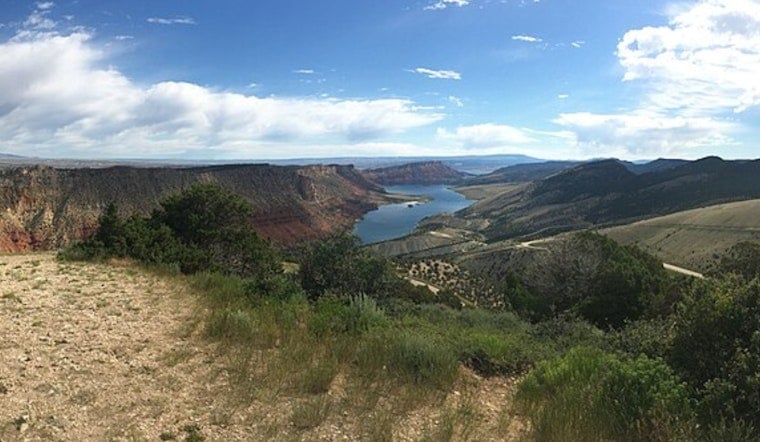
Thousands of climbers have descended on a steel cable course bolted to the cliffs of Ashley Gorge outside Vernal since it opened to the public in April 2026, according to figures cited by Uintah County. The attraction, billed as North America's largest via ferrata, has become an unexpected draw for a rural Utah town better known for oil fields and dinosaur bones than vertical adventure sport.
Jason Johnson drove down from Layton with his wife and four friends after seeing an online video of the course, according to KSL.com. Johnson grew up in Vernal himself, and he told the outlet that guides, other climbers nearby, and proper equipment make the course feel safe enough for him to attempt. The course itself uses a fixed steel rope line along with rebar rungs and steps bolted into the rock, a climbing style that KSL notes traces back to World War I, when Italian and Austro-Hungarian soldiers built similar routes through the Dolomites to move troops across the mountains.
A 3-to-4-Mile Course Built Without Local Tax Dollars
The Ashley Gorge Via Ferrata stretches roughly 3 to 4 miles, per the same KSL account, and the broader course specs are even more staggering: more than 5,000 feet of installed steel cable, about 900 vertical feet of climbing, a skybridge and a skyladder, according to Field Mag. Depending on which route a climber picks, the full experience can take anywhere from 4 to 10 hours.
None of it was funded by local taxpayers. The nonprofit Access Utah Foundation received roughly $800,000 in state funding in 2022 to build a public via ferrata, then partnered with Uintah County Economic Development to settle on the Ashley Gorge site, with additional backing from the Utah Outdoor Recreation Grant, according to information published by Ashley Gorge Via Ferrata. Uintah County leaders viewed the course as a potential tourism draw from the start, KSL reports, and the foundation says its mission is to open up new outdoor opportunities across Utah.
Free Access, but Commercial Guides Need a Permit
Unguided access to the course is free for anyone who completes a required Uintah County liability waiver, though commercial outfitters must be certified and permitted through the county's Community Development Office before leading paying groups, per the course's own site. Amber Toler, owner of Dyno Outfitters, began running individuals and groups through the course in fall 2025 ahead of its public opening, and she told KSL that many people are coming to Vernal, enjoying the course, and hopefully staying to explore other attractions. Dyno Outfitters and other companies rent out climbing gear, and KSL notes that visitors often pair a day on the via ferrata with whitewater rafting or trips to nearby state parks.
Not everyone is using the right equipment, though. Some visitors have shown up with improvised safety gear, KSL reports, and Jasmynn States, operations director at Dyno Outfitters, said that just because something is attached to the wall does not mean it is actually safe. Improper gear during a fall can injure internal organs, kidneys, the spine, and the pelvis, according to the same report — a risk explained by the engineering behind certified equipment. Under the international EN 958:2017 standard, energy-absorbing via ferrata lanyards are built for climbers weighing 40 to 120 kilograms and are designed to deploy tear-webbing absorbers that cap fall impact forces at 6 kilonewtons, according to Telemark-Pyrenees. Standard climbing slings and other improvised rigs lack that shock-absorbing feature, transferring the full force of a fall directly onto the body.
A Water District Sounds the Alarm
The course's popularity has also opened a rift between tourism boosters and the utility that protects Vernal's drinking water. The via ferrata sits adjacent to Ashley Springs, the primary culinary water source for roughly 30,000 residents, and in July 2026 the Ashley Valley Water & Sewer Improvement District publicly raised concerns about the course's impact on that supply, according to a statement from the Ashley Valley Water & Sewer Improvement District. The district warned about risks from human waste contamination and unauthorized access near drinking-water intake facilities.
Uintah County officials responded with a press statement maintaining that drinking water protection and public recreation can coexist safely, as reported by Basin Now. The land itself is governed by the federal John D. Dingell, Jr. Conservation, Management, and Recreation Act of 2019, which transferred the parcel to Uintah County with instructions that the Ashley Springs area be managed as protected open space while still permitting non-motorized public recreation. That dual mandate — protect the water, allow the climbing — is precisely what the county and the water district are now wrestling with in public.
Federal Land Managers Weigh In on Traffic
The dispute isn't just local. In April 2025, the Bureau of Land Management's Vernal Field Office opened a 30-day public comment period on a proposal to authorize a right-of-way for a new parking lot and access trail near the water plant, aiming to organize vehicle parking and keep visitors on designated paths away from sensitive infrastructure, according to the agency. That process reflects a broader challenge facing the site: as climber traffic grows, so does the pressure on the same corridor that feeds the region's water system.
The stakes for Vernal go well beyond one canyon. Utah's outdoor recreation economy generated $9.75 billion in value-added activity in 2024, accounting for 3.3% of state GDP and supporting more than 75,000 jobs, according to data released by the U.S. Bureau of Economic Analysis and cited by the Utah Division of Outdoor Recreation. Non-resident visitors spent $13.7 billion in the state in 2025, a trend that drove a 2.8% year-over-year increase in county transient room tax revenues that help rural governments fund recreation infrastructure, per the Kem C. Gardner Policy Institute. Nationally, the outdoor recreation industry added $1.3 trillion to GDP in 2024 and employed 5.2 million people, surpassing the economic output of agriculture and mineral mining, according to figures reported by KSL.com.
For now, the course keeps drawing hikers, climbers and curious out-of-towners like Johnson, and Toler says the boost to hotel stays is already visible around Vernal. Whether the county and the water district can settle their differences over access and contamination risk near Ashley Springs remains an open question, one that will likely shape how — and how much — the via ferrata continues to grow.





.jpg)