

























































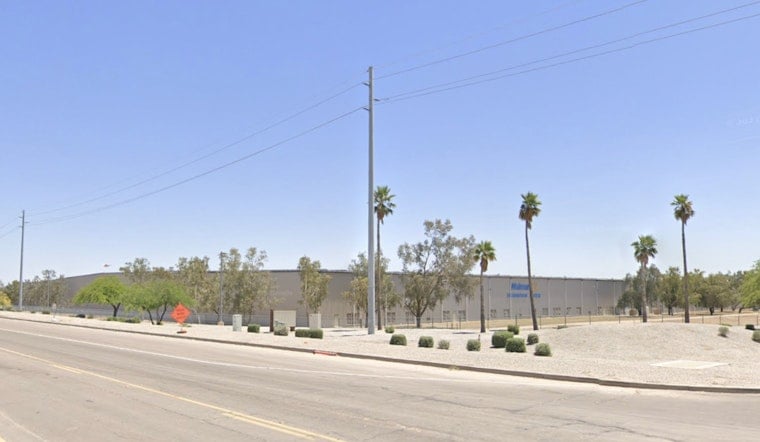
Walmart has closed on roughly 38 acres at the northeast corner of State Route 85 and Southern Avenue in Buckeye, paying $11,818,700 for a parcel that sits just down the road from a distribution center the retail giant has run for nearly 25 years. The deal, finalized on July 30, adds another major player to one of metro Phoenix's fastest-growing logistics corridors.
According to ABC15 Arizona, the site was sold by Scottsdale-based Cardinal Capital Co. LLC, which had worked to rezone the property as a planned area development known as AZ85. Vizzda data cited in the report pegs the purchase price at roughly $311,000 per acre. Planning documents tied to the transaction were submitted to the City of Buckeye, and the acquired parcel sits adjacent to other AZ85 land that Cardinal Capital has planned as a future light industrial park.
AZ85 spans a total project size of 144 acres and, per the same report, is designed to target warehousing, e-commerce, and manufacturing users. Conceptual site plans reviewed for the project show different options for building configurations and sizes across the development, though it remains unclear whether Walmart intends to expand its existing Southern Avenue operations, build a specialized fulfillment center, or use the land as a staging yard.
A Corridor Already Anchored by Walmart
Walmart's move onto this stretch of Southern Avenue is not a first for the company in Buckeye. As Supply Chain Dive has reported, Walmart already operates a distribution center at 23701 W. Southern Avenue that has been in service for nearly 25 years, giving the retailer deep operational roots in the immediate area before this latest purchase.
The Buckeye deal also follows a much larger move by the company just months earlier. In December 2025, Walmart acquired a 1.28-million-square-foot industrial facility at Luke Field in Glendale for $152.2 million, a transaction that Real Estate Daily News ranked as the second-largest industrial building sale in metro Phoenix history. Statewide, Walmart now operates 124 retail units and four supply chain facilities across Arizona, employing 37,856 associates, according to Walmart Corporate.
Why Developers Keep Circling State Route 85
Walmart is far from the only company betting on this stretch of the West Valley. Hoodline has reported that Indianapolis-based Scannell Properties paid over $32 million in June for roughly 130 acres off State Route 85 to revive a stalled multi-building business park. Two months earlier, Burlington Stores broke ground on a nearly 2-million-square-foot automated distribution hub inside Buckeye's Westpark 360 industrial park, with the facility slated to open in 2028.
The appeal of the corridor traces back to infrastructure as much as available land. State Route 85 is the planned alignment for the future Interstate 11, which is intended to link Interstate 10 and Interstate 8 into a north-south freight route connecting metro Phoenix, Southern California, and Mexico, according to AZBEX. That future freeway status has already drawn other logistics tenants: in February 2024, Buckeye's Planning Commission approved Old Dominion Freight Line's rezoning of nearly 160 acres along State Route 85 for a 200-dock-door freight terminal projected to create 300 to 350 jobs.
A City Built for Growth
Buckeye's population boom underpins much of this industrial demand. The city gained 5,968 residents between July 2024 and July 2025, making it Arizona's third fastest-growing city and pushing its total population to approximately 132,000 in 2026, per state demographic estimates reported by InBuckeye. That growth has coincided with a broader stabilization in the region's industrial market: metro Phoenix industrial vacancy dropped to 13.1% in the third quarter of 2025, according to Cushman & Wakefield, as six-month new warehouse deliveries slowed and Southwest Valley completions fell below 1 million square feet for the first time in six years.
Whatever Walmart ultimately builds on its newly acquired acreage, the purchase reinforces a pattern that has defined Buckeye's commercial real estate market for the past two years: national retailers and logistics firms racing to lock down land along a corridor that is still being built out but is already considered one of the West Valley's premier freight destinations.





