

























































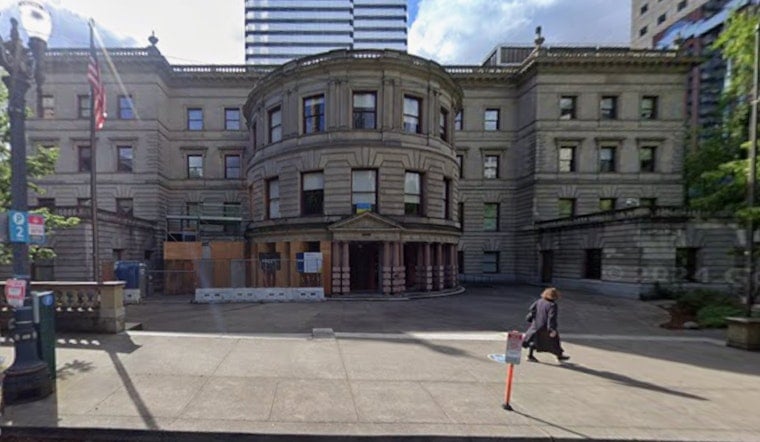
An 8-foot Sasquatch sculpture is about to become Portland's newest downtown landmark, standing watch outside City Hall as the centerpiece of a citywide scavenger hunt built entirely around Bigfoot lore. The towering figure, unveiled on September 8, kicks off Geek Week PDX's first-ever Sneaky Sasquatch PDX art hunt, which sends 31 original Sasquatch sculptures — ranging from that massive city hall installation down to a two-inch miniature — into small businesses, community centers and public parks across the city.
The hunt is part of Geek Week PDX, a celebration of Portland's nerd culture that runs September 11 through September 20, according to KOIN. Organizers have released clues for tracking down each sculpture, and the search spans the full ten days of festival programming. David Raycroft, who holds the festival's tongue-in-cheek title of chief goblin wrangler, said the sculptures are scattered throughout the city in small businesses, community centers and public spaces like parks.
None of the participating locations were paid for hosting a sculpture — they simply donated their space, just as the artists behind each Sasquatch donated their time and materials, per the station's report. There's no corporate sponsor bankrolling the hunt at all. The idea for the scavenger hunt itself came from the artists, who pitched the concept to festival organizers before building out all 31 interpretations of the Pacific Northwest's most famous cryptid.
The Artists Behind the Giant Bigfoot
The 8-foot centerpiece sculpture was created by Moni Sears and Rick Sears, the husband-and-wife team behind Goblin Art, a studio whose work has previously appeared at the Portland Winter Light Festival, the same account notes. Moni Sears founded Goblin Art in 2000 as a mask-making enterprise, producing more than 1,000 pieces through 2015 for clients that included the 2006 film The Wicker Man and Iron Maiden's 2003 album Dance of Death, according to Goblin Art. In 2019, the Searses pivoted the studio toward giant puppets and public art built from recycled materials, a shift reflected in the Sasquatch project's construction.
The sculptures lean on a waste-stream design philosophy, built primarily from recycled cardboard boxes, paper bags and reclaimed paper fiber, as detailed by Wildland Roots. That eco-conscious approach traces back to 2015, when Sears stepped away from commercial mask production to develop sustainable, place-based community art methods — a philosophy now stretched across all 31 Sasquatch interpretations scattered around Portland.
Why Sasquatch, and Why Now
Oregon's affinity for cryptid lore runs deep, and organizers leaned into it rather than inventing a new mascot. The state is home to the world's only historic Bigfoot Trap, built in 1974 in the Rogue River–Siskiyou National Forest, and to the North American Bigfoot Center, a museum that opened in Boring, Oregon, in 2019, according to Travel Oregon. That regional folklore gave Geek Week PDX a mascot with built-in cultural resonance rather than a generic pop-culture icon.
The hunt also fits a broader pattern taking shape in Portland this year, where citywide sculpture trails have become a favored tool for neighborhood engagement. Earlier this year, LAIKA's Follow the Crows art trail installed 30 six-foot-tall crow sculptures around the city, including at Portland City Hall, to raise money for OHSU Doernbecher Children's Hospital, as Hoodline previously reported. Both projects use the same City Hall focal point to anchor a hunt that spreads visitors into neighborhood business districts.
A Festival That's Grown Fast
Geek Week PDX started from nothing in 2024, when founder David Raycroft launched it after moving to Portland and discovering nearly 200 small businesses catering to pop culture, a history detailed by the Portland Tribune. That same year, the Portland City Council passed a formal civic proclamation declaring an official Geek Week in September, giving the young festival municipal recognition. Raycroft had previously created the Geek Guide map and launched the BabbleBuy app before building the festival itself.
By 2025 the event had grown to 70 events citywide; this year it's expanding to 101 nights of programming across ten days and establishing ten Adventure Hubs that concentrate activity in neighborhood clusters, according to the Woodburn Independent. Organizers are projecting between 25,000 and 30,000 participants this year, a jump of 25 to 50 percent over last year's estimated 20,000 attendees. Even at that scale, Raycroft has noted the festival still reaches less than 10 percent of the greater Portland region's estimated 300,000 pop-culture enthusiasts.
Much of that growth rides on Rose City Comic Con, which serves as Geek Week's official kickoff and draws roughly 50,000 attendees annually to the Oregon Convention Center. Hoodline reported this week on the con's role as the festival's anchor event in a piece on a comic documentary premiere tied to the convention. Geek Week was structured specifically to stretch that convention crowd's spending across ten days and dozens of local businesses rather than a single weekend.
Neighborhood Businesses Cash In
Local businesses are building their own programming around the festival, including TPK Brewing Co., which is hosting 70 tabletop Dungeons & Dragons sessions alongside a special event menu, according to The Southeast Examiner. Festivities across the ten days are mostly free, and typically include costume parties, trivia nights and gaming tournaments in addition to the Sasquatch hunt. Between the neighborhood hubs, the convention crowd and 31 hand-built Sasquatches waiting to be found, Portland's geek economy is betting that Bigfoot can pull foot traffic the crows already proved works.


