

























































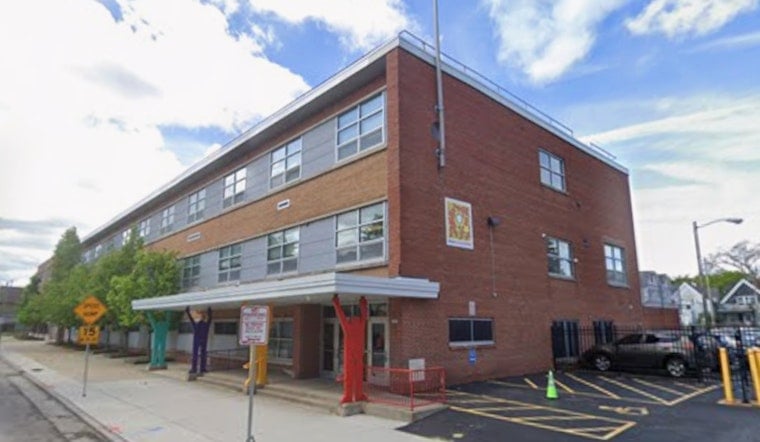
More than 4,100 shootings occurred within 500 yards of Milwaukee schools between 2017 and 2025, according to a new investigation, placing the city second among large U.S. cities for its school-adjacent shooting rate — trailing only Baltimore and ranking worse than New York, Los Angeles and Chicago. The analysis found Milwaukee College Preparatory School's 36th Street campus experienced more nearby shootings than any other school studied in the city.
The findings come from a joint investigation by TMJ4 News and The Trace, a national nonprofit newsroom focused on gun violence in America, which examined 275 Milwaukee schools — public, private and charter — reported by TMJ4 journalist Jenna Rae and photojournalist Ariel Campos. The two outlets defined a school-adjacent shooting as gunfire within 500 yards of a school, a radius The Trace has said corresponds to roughly four city blocks and the distance within which gunshots remain clearly audible to students and staff inside classrooms. Milwaukee's rate came in at 80.9 shootings per 100,000 residents, and the shootings averaged 460.8 per year across the period studied, with any shooting falling within multiple school radii counted only once.
A 36th Street Family Braces for K4
R'Tianna Williams, a 24-year-old Milwaukee resident, lives with her four-year-old son Carter directly across the street from Milwaukee College Preparatory School's 36th Street campus — the school that topped the list for nearby shootings. Carter is preparing to start K4 this fall at a preschool that also appears on the school-adjacent shooting list, according to the investigation.
Williams told TMJ4 she has taught Carter what to do when he hears gunfire nearby: duck or get inside immediately. The 36th Street campus is part of a four-campus, tuition-free charter network founded in 1997 that serves more than 2,000 Milwaukee scholars and reports a 96% high-school graduation rate, according to Milwaukee College Prep. It's a K-8 school, meaning even its youngest students share a block with the highest shooting count the investigation found.
Most Gunfire Happens After the Bell
The investigation found that more than 63% of the recorded shootings occurred outside school hours, with the bulk falling between 6 p.m. and 6 a.m. the following day. Even so, at least 60% of the schools studied experienced 10 or more nearby shootings during the period, and about 42% saw more than 20. That pattern echoed an incident this past April, when pre-dawn gunfire and a car crash rattled the block outside Dr. Benjamin Carson Academy of Science on Milwaukee's northwest side around 3:30 a.m. — as Hoodline previously reported, no students were on campus and normal operations continued uninterrupted.
Reggie Moore, who directs Community Safety Policy and Engagement at the Medical College of Wisconsin and previously led Milwaukee's Office of Violence Prevention, said gun violence ripples outward through a community, touching not just victims but everyone who hears the shots. Moore, who helped launch Wisconsin's first statewide Community Safety Fund — a $10.5 million public health investment in violence prevention — now works to educate policymakers at the local, state and federal level and continues to push for investment in community-based prevention programs.
City and School Leaders Respond
Milwaukee Public Schools Superintendent Brenda Cassellius said she wants the number of school-adjacent shootings to be zero, so children feel safe simply traveling to and from class. Cassellius and Milwaukee Police Chief Jeffrey Norman jointly described neighborhood violence as a community-wide problem, and both pointed to gun safety and responsible firearm ownership as pathways to reducing violence near schools.
Any gunfire within 1,000 feet of a school already falls under the federal Gun-Free School Zones Act of 1990, which bars unauthorized individuals from knowingly possessing or discharging a firearm in that zone and carries felony penalties, with exceptions for state-licensed concealed carry holders. In Wisconsin, prosecutors can also charge reckless gunfire under Statute § 941.30(1), which classifies discharging a firearm with utter disregard for human life as First-Degree Recklessly Endangering Safety — a Class F felony punishable by up to 12.5 years in prison and fines as high as $25,000, a standard Hoodline has previously detailed in coverage of gunfire striking a Milwaukee storefront.
A Citywide Drop Doesn't Erase the Neighborhood Toll
The multi-year totals sit uneasily alongside more recent citywide numbers. Milwaukee Police Department mid-year figures released in July showed homicides down 30% to 51 victims through the first half of 2026, compared to 71 during the same span in 2025, with non-fatal shootings falling 27% as well — even as police officials noted personal disputes remain the leading catalyst for weapon violence. For full-year 2025, the department reported overall violent crime down 22% and property crime down 15% from 2024, though citywide homicides ticked up slightly to 141 victims from 132 the year before.
Nationally, the scale of the problem is far larger than Milwaukee alone. More than 188,000 shootings occurred within 500 yards of K-12 schools across the country between 2014 and 2023, an average of roughly 57 shootings per day near school grounds that affected more than six million students in 2023 alone, according to The Trace. That backdrop has shadowed Milwaukee's own violence-prevention efforts this year, including Milwaukee Peace Week, where Mayor Cavalier Johnson's office noted that 12 Milwaukee Public Schools students died from gun violence between July 2025 and this past May, a toll Hoodline covered as the city launched youth-focused programming.
The Milwaukee Board of School Directors, under Cassellius, approved a $1.6 billion budget for the 2025-2026 school year that includes tax levy funding for a new northwest side community recreation center and expanded extracurricular programming intended to keep youth engaged outside of school hours. Whether that investment reaches families like Williams and Carter's remains to be seen, but for now, the routine of teaching a four-year-old to duck at the sound of gunfire remains part of daily life on 36th Street. TMJ4 has described the report as the first installment in an ongoing investigative series and says it plans to examine the neighborhoods most affected, the impact on children and families, links between gun violence and academic performance, and local violence-response efforts in future installments.


