

























































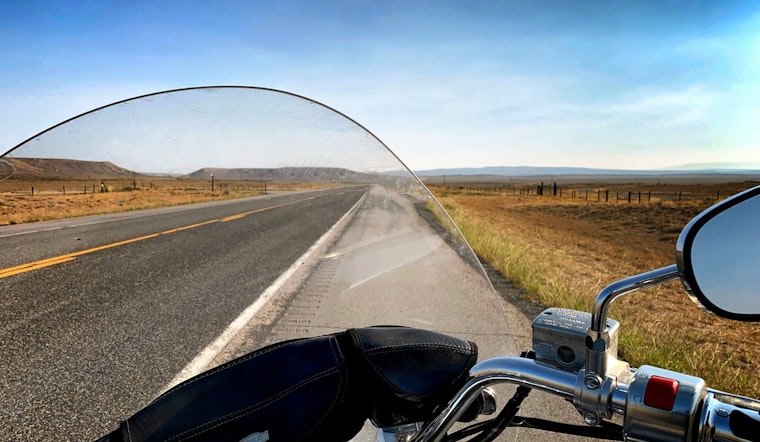
Richard Williams is 75 years old, riding a 1980 Honda Gold Wing motorcycle nearly 5,000 miles across the country, and he is doing it for children he will likely never meet. His journey stretches from Portland, Oregon, to Portland, Maine, between August 24 and mid-September, and it carries the weight of a loss that has shaped his entire life.
Williams, who lives in Fort Shaw, Montana, lost one of his twin sons before birth to uncontrolled bleeding, according to Cat Country 102.9. His surviving son, Trevor, was diagnosed with severe Hemophilia A at age five, and doctors at the time warned that Trevor might not survive into adulthood. That early scare, and the loss that preceded it, turned Williams into a lifelong advocate for people living with bleeding disorders. As he crossed South Dakota this week, he joined AM Extra live from the road to talk about the ride, as reported by KOIN.
Riding in the Footsteps of a Pioneer
Williams is completing his route as part of Save One Life's Wheels for the World campaign, a fundraising effort that traces back to 2012. The campaign was founded by Barry Haarde, a Texas cyclist who lived with hemophilia, HIV, and Hepatitis C, and who became the first person with hemophilia to bike across America. Haarde raised more than $250,000 for Save One Life across six coast-to-coast rides before he died in 2018, per HemAware's account of his story.
This year marks Save One Life's 25th anniversary, and organizers expanded Wheels for the World to allow non-biking transportation such as motorcycles, wheelchairs, and stationary bikes, opening participation to people across at least 25 U.S. states who may not be able to ride a traditional bicycle. That policy change is what made it possible for Williams to take part on his vintage Gold Wing rather than a bicycle.
Grassroots Stops Along the Route
Along the way through the Western states, Williams held community stops and benefit events in Helena, Montana, and Oacoma, South Dakota, drawing local music jams and media appearances that helped raise funds for the cause. The koin.com report notes that access to lifesaving treatment in some countries is almost nonexistent, and that such treatment is financially out of reach for many families — a gap Williams says he is trying to help close as he rides.
A Global Treatment Gap
The disparity Williams is riding to address is stark. Roughly 75% of people living with hemophilia worldwide reside in developing countries where routine clotting factor treatment is scarce or unaffordable, according to data compiled in a study hosted on PMC, and untreated hemophilia can lead to permanent joint disability or death. A 2026 study found that of an estimated 850,000 people living with hemophilia globally, only about 272,000 have been officially identified and diagnosed, leaving hundreds of thousands without access to care.
A separate global study by the World Federation of Hemophilia found that severe hemophilia diagnosis in low-income countries is delayed by up to 40 years compared with wealthier nations — a gap that matters enormously, since early diagnosis in childhood is crucial to preventing internal joint hemorrhages.
Where the Money Goes
Donations from Wheels for the World support Save One Life, a nonprofit founded in 2001 by Laureen A. Kelley, herself the mother of a child with hemophilia, to provide direct financial aid, sponsorships, and educational scholarships to affected families in developing countries. The organization now operates across 14 developing nations. Through its Project SHARE initiative, launched in 2002, Save One Life has donated more than 180 million units and 11,000 milligrams of donated blood-clotting factor to patients in more than 80 developing countries, collecting unused clotting medications from U.S. treatment centers and patients to send abroad.
Williams' final fundraising total won't be known until he reaches Maine, and it remains unclear exactly which international programs will receive the funds raised along his route. What is clear, as he rolls east on a motorcycle nearly as old as some of the treatments he's fighting to make available, is that his ride is personal in a way few fundraising campaigns are — carrying forward both his son's survival and the memory of the twin he lost.



