

























































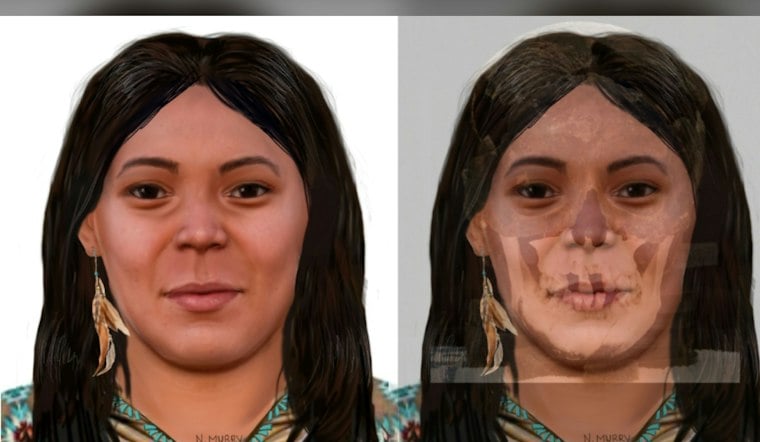
Cowlitz County has identified a woman who died in a 1991 Interstate 5 crash near Kalama as Mary Ellen “Mollie” McCullough. For 35 years, she was known as Helen Doe. McCullough was 34, originally from Ohio and living in Indiana; her remains have now been returned to her family.
Identification After Decades
The Cowlitz County case file records that the woman was a passenger in a semi-truck that caught fire in the 1991 crash. FOX 13 Seattle reports that Washington State Patrol identified her as Mary Ellen “Mollie” McCullough, born March 26, 1957, in Cambridge, Ohio.
The crash occurred May 14, 1991, on southbound I-5 near Kalama, killing both McCullough and the truck's driver, 26-year-old Lester Harvel of Missouri, according to the county's account. Investigators later found that the trucking company had no record of an authorized passenger. They believed Harvel may have picked her up as a hitchhiker or at a rest stop.
A Cold Case Reopened, Then Reopened Again
Investigators revisited the unidentified-person case in 2014. FOX 13 Seattle reports that Trooper Stacy Moate and investigator Greg Wilcoxson worked on it, and that McCullough's remains were exhumed so investigators could seek DNA from her bones or teeth. The Puyallup Tribe of Indians helped fund that effort.
The DNA profile developed from the exhumation did not match anyone in the FBI's CODIS database. A KOIN report at the time described the case as unresolved. The Cowlitz County coroner later sent a bone sample to forensic genealogy lab Othram, which developed a more advanced profile in May 2022. FOX 13 Seattle reports that analysis indicated European ancestry, with further analysis suggesting Scottish, Irish and English roots. The profile was uploaded to FamilyTreeDNA, where users can opt in to law-enforcement matching.
Tracing DNA Leads to Relatives
FOX 13 Seattle reports that genealogist Renee Kerr helped trace relatives and build a family tree, while Moate made at least 60 or 70 calls to follow leads. On August 6, 2026, Moate reached Michael McCullough, Mollie's brother, and asked whether he knew of a female relative who had gone missing in the 1990s.
Additional DNA testing confirmed Michael McCullough was the unidentified woman's brother, according to the station. The family said Mollie had left home in 1991 to catch a ride in Florida and never contacted them again. She was absent from her grandmother's funeral in 1993 and her mother's funeral in 1994, with her family unaware of what had happened to her.
Identification and Return Home
Washington State Patrol Chief John Batiste credited Moate, other investigators, forensic scientists and the agency's Missing and Unidentified Persons Unit with the identification, FOX 13 Seattle reports. The investigation involved the Cowlitz County coroner, the King County Medical Examiner's Office, Crime Stoppers, the Puyallup Tribe of Indians and the station. Leads also resulted in additional DNA evidence being entered into other investigations, according to the same report. The McCullough family plans to cremate Mollie and return her ashes to Cambridge, Ohio.
Part of a Broader Statewide Push
Cowlitz County says it has now identified six of its eight previously unidentified decedents since 2023, a track record tied to a broader statewide investment in cold-case science. The Washington Legislature approved $500,000 in 2024 to fund DNA testing and genetic genealogy on the state's backlog of unidentified remains, according to The Seattle Times, which reported that 163 unidentified remains statewide were still awaiting further testing. Under that funding plan, forensic genetic genealogy money becomes available only if initial DNA testing fails to produce an identification, with individual DNA testing costing roughly $2,500 and genealogy work running around $8,000, though costs vary.
That state effort builds on a forensic genealogy grant program the Washington Attorney General's Office launched in 2020 with $292,275 in federal Department of Justice funding, according to KNKX. By July 2022, the office had granted about $120,000 to assist nearly two dozen cold-case investigations, including the identification of Wendy Stephens, a Denver woman who disappeared in 1983 and whose remains were found near Seattle-Tacoma International Airport. KNKX also reported that two Washington rape cases solved through forensic genealogy produced the program's first convictions. Similar science has cracked cases well beyond the state — in February 2026, the DNA Doe Project partnered with San Bernardino County investigators to identify Terrance Lee Ronco as a man killed in a 1974 crash, according to NBC Los Angeles.
How Genealogy Grants and DNA Searches Differ
The grant program described by The Associated Press, in a report republished by U.S. News & World Report, was reserved for sexually motivated cold cases with no active leads or DNA hits in criminal databases. That is a distinct scope from efforts to identify unidentified remains. The National Human Genome Research Institute explains that investigative genetic genealogy examines more than half a million genome-spanning SNPs, while CODIS uses 13 to 20 designated microsatellites; the approaches are not interchangeable database searches. A separate Washington identification followed a similar use of forensic evidence but involved a different case: The Daily Chronicle reported that skeletal remains found on the Quinault Indian Reservation in November 2006 were identified as Clarence Edwin “Ed” Asher after evidence was submitted to Othram in 2025.





