

























































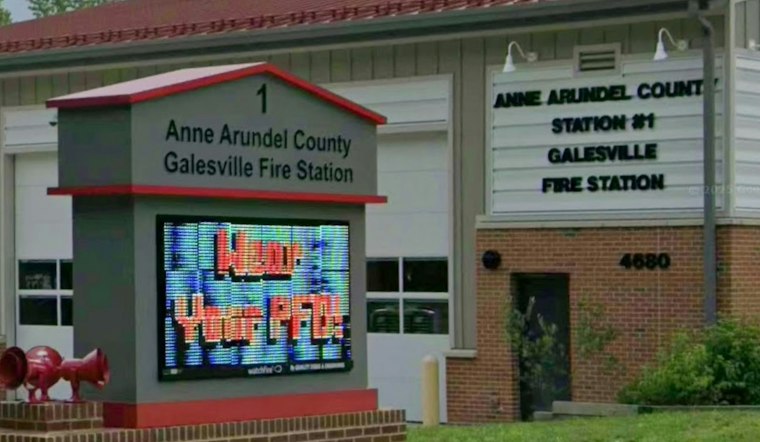
Emmett Petri's rescue illustrates how a family's immediate actions and emergency-dispatch instructions can bridge the minutes before paramedics arrive. The seven-year-old was eating burnt ends with his family on August 17 when meat lodged in his throat and he went into cardiac arrest. Weeks later, Emmett and his family returned to the Galesville fire station to reunite with the responders involved in his rescue.
According to CBS News Baltimore, Emmett's father, who had military training and CPR experience, first tried to clear the obstruction. After Emmett's mother, Sherri Petri, called 911, dispatcher Angie Reslie instructed the family to begin CPR and remained on the line until help arrived.
Paramedics arrived in about four minutes and found Emmett without breathing or a pulse. Paramedic Cory Polidore cleared his airway and began ventilating him; Emmett regained a pulse and began breathing before being flown to Johns Hopkins Hospital.
A Chain of Survival That Rarely Ends This Way
What happened inside the Petri home reflects the emergency-response chain often called the chain of survival. Preliminary research presented at the American Heart Association's Resuscitation Science Symposium in November 2025 found that starting CPR within five minutes of a child's cardiac arrest nearly doubles the chances of survival compared with delayed resuscitation. Because the findings were preliminary, they provide context rather than a definitive prediction for any individual case.
For broader context, the American Heart Association reports that survival to hospital discharge was 9.1% in 2021 U.S. data for EMS-treated, nontraumatic out-of-hospital cardiac arrests among adults. That figure does not specifically describe children or choking-related arrests.
Choking itself is a significant public health hazard among children. The National Safety Council ranks choking as the fourth leading cause of unintentional injury death in the United States, and federal health research cited by the council indicates food-related choking sends more than 10,000 children age 14 and younger to emergency rooms every year.
How the Dispatcher's Training Made the Difference
Reslie's real-time coaching followed a structured protocol. Telecommunicator CPR, or T-CPR, is a system built around structured verbal coaching that helps callers begin chest compressions immediately, before paramedics ever reach the scene.
A U.S. Fire Administration-hosted report notes that emergency dispatch programs can function as a first response by giving callers life-saving instructions before crews arrive. A telecommunicator-CPR protocol published by the Medical College of Wisconsin directs dispatchers to use a specific cardiac-arrest pathway when the arrest may have been caused by choking. Those materials describe the framework for dispatcher coaching, but do not establish Anne Arundel County's exact caller script or provide an evaluation of this particular call.
Maryland's broader EMS system has also incorporated pediatric high-performance CPR: The Emergency Medical Services for Children Innovation and Improvement Center reports that it was added to the state's EMS protocols by 2018.
The sequence executed by the Petri family also lines up with established first-aid guidance. Mayo Clinic first aid guidelines state that if a choking person loses consciousness during back slaps or the Heimlich maneuver, rescuers must immediately lower them to a flat surface, check the mouth for obstructions, and begin CPR. Polidore later credited the combination of chest compressions, the Heimlich maneuver, and back slaps with Emmett's survival, per the CBS Baltimore report.
The choking protocol itself has a decades-long history. Dr. Henry Heimlich introduced abdominal thrusts in 1974, and the American Red Cross adopted its combined “5 and 5” protocol, alternating five back blows with five abdominal thrusts, in 2006, according to Red Cross historical accounts.
From the Ambulance to Johns Hopkins
Once stabilized, Emmett was flown to Johns Hopkins Hospital, where he spent about 48 hours in the pediatric intensive care unit before making what his family described as a fast and full recovery.
Weeks after the emergency, the Petri family returned to Galesville Volunteer Fire Company, where the first responders received the department's Gift of Life Award. The Office of EMS Quality Assurance reserves the honor for personnel who help resuscitate a cardiac arrest patient and restore the patient to good health.
A Family's Gratitude, and a Career Suggestion
Sherri Petri said her gratitude was beyond words. The reunion allowed the family and responders to mark Emmett's recovery after an emergency that began with a choking episode and quickly became a cardiac arrest.



