

























































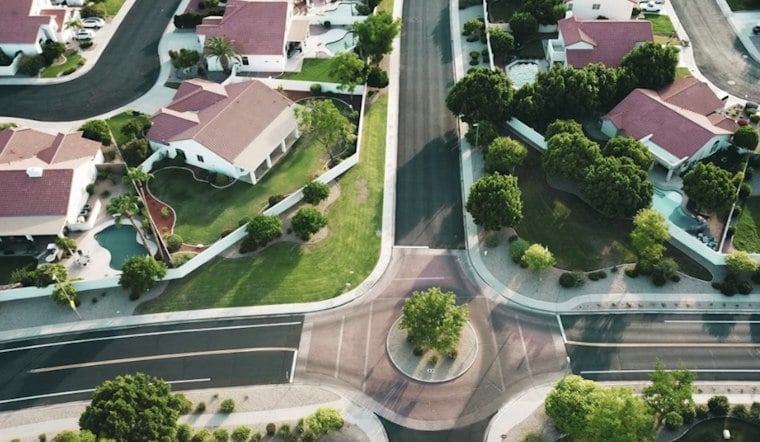
Arizona's Hispanic homeownership rate has climbed more than 10 percentage points over the past decade, narrowing a gap that has long separated Latino families from the state's overall housing market. Yet even as that economic distance shrinks, a new national survey finds Hispanic Americans nearly evenly divided over whether the American dream is still achievable at all.
According to ABC15 Arizona, Hispanic household incomes in the state continue to trail the overall Arizona median, but they are growing at a faster pace than that broader benchmark, and the gap between Hispanic and overall economic measures is closing. Hispanic homeownership still trails the state's overall rate as well, the station reported, even as it posts double-digit percentage-point gains. State-level figures from the National Association of Hispanic Real Estate Professionals put Arizona's Hispanic homeownership rate at 58.9%, compared with 67.8% for the state's population as a whole.
That local trend mirrors a bigger national shift. Hispanic owner-occupied households grew by 441,000 in 2025 to reach a record 10.2 million nationwide, driving nearly 140% of net U.S. homeownership growth even as non-Hispanic homeownership contracted, per the same NAHREP report. Federal mortgage disclosure data analyzed in that report also found that 8.2% of Hispanic home purchase loans in 2024 went to buyers under age 25, compared with 6.2% for non-Hispanic buyers, suggesting younger Latino adults are buying homes at higher rates than their peers despite elevated interest rates.
Arizona's Growing Economic Footprint
Arizona's Hispanic population reached 2,192,253 in 2024, or 30.6% of the state's 7.15 million residents, according to U.S. Census Bureau estimates. That population carries significant economic weight: Hispanic residents hold $72 billion in annual purchasing power in Arizona and accounted for 276,000 of the 400,000 new workers added to the state's workforce in recent years, according to the Arizona Hispanic Chamber of Commerce's DATOS report as reported by KJZZ.
Those numbers help explain why the housing gains matter beyond individual families — Hispanic buyers are increasingly shaping Arizona's broader housing and labor markets rather than simply catching up to them.
A Dream Split Down the Middle
Despite that economic momentum, Hispanic Americans nationally remain nearly evenly split on whether the American dream is still achievable, per the Pew Research report cited by ABC15. More than 1 in 4 Hispanic Americans said the American dream does not exist at all, while roughly 1 in 5 said they have already achieved it.
Pew Research Center's National Survey of Latinos, conducted in October 2025 and released this September, surveyed 4,923 Hispanic adults nationwide with a margin of error of plus or minus 1.7 percentage points. The bilingual survey, administered online and by phone across all 50 states, found that 57% of U.S. Latinos feel their standard of living is higher than their parents' was at the same age, and 53% expect their children's standard of living to be better than their own.
That optimism, however, is not evenly distributed. Among Hispanic immigrants, 70% report a better standard of living than their parents, compared with just 49% among U.S.-born Hispanics, according to Pew's findings. The gap points to a generational divide in how distance from the immigration experience shapes economic outlook — foreign-born Latinos tend to measure their progress against conditions in their country of origin, while U.S.-born Latinos measure themselves against domestic milestones that have grown harder to reach.
What the Dream Actually Means
When Pew asked Latinos in open-ended questions to define the American dream, 59% cited financial or economic factors: 36% specifically named financial security, 31% pointed to economic opportunity, and 14% identified homeownership as the defining marker. Among those who still believe the dream exists, 43% told researchers that achieving it is harder today than it was for their parents' generation, while 30% said it is easier.
That tension between personal progress and generational difficulty runs through housing markets well beyond Arizona. Hoodline has previously reported on how California renters wait years longer than the national average to buy a home, and how rising housing costs have pushed long-standing Hispanic communities out of neighborhoods they helped build. Arizona's narrowing homeownership gap suggests one region bucking that broader affordability squeeze, even as national sentiment data shows many Latino families still see the dream as further out of reach than it was for their parents.





