

























































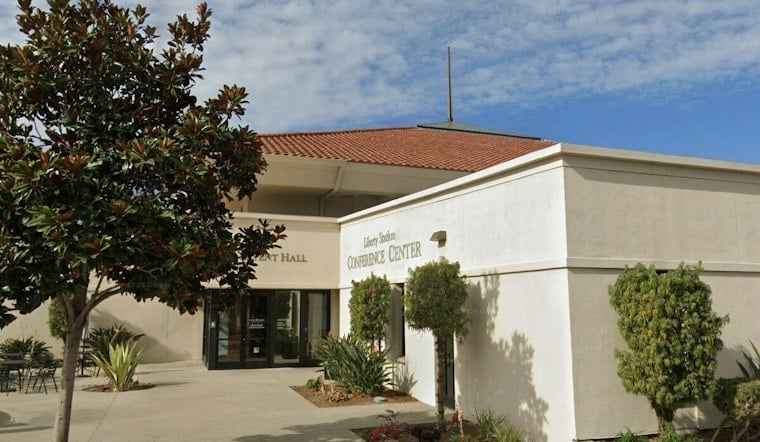
Former Coronado Mayor Richard Bailey and San Diego Deputy City Attorney Nicole Crosby squared off Monday night in Point Loma over how San Diego should be run, clashing on everything from who should keep the lights on to who should rebuild the Ocean Beach Pier. The two are the last candidates standing for the San Diego City Council District 2 seat being vacated by termed-out Councilmember Jennifer Campbell, and their debate exposed a wide gulf on the basic structure of City Hall itself.
The forum, held at the Liberty Station Conference Center and sponsored by the Point Loma Association with the local League of Women Voters chapter coordinating, according to The San Diego Union-Tribune, drew out sharp differences between a longtime Republican-turned-independent executive and a Democratic prosecutor running on public-safety credentials. Bailey, who served 12 years in elected office, including four years on Coronado's city council and eight as mayor, changed his voter registration from Republican to independent in February just before entering the D2 race, according to Times of San Diego. Crosby is the other candidate. The two are competing for the District 2 seat.
A Fight Over Who Should Run City Hall
Bailey's central pitch is structural: he wants San Diego to abandon its strong-mayor system, in place for the last two decades, and return to a city-manager form of government. He attributed recent City Hall mistakes partly to what he described as limited leadership or management experience among the mayor and the nine council members overseeing a $2.2 billion organization, arguing the city needs professional, competent and accountable leadership instead. Crosby countered that voters themselves approved the switch to a strong mayor and defended the current system as the one San Diegans chose.
Voters actually made that choice twice. San Diego first adopted the strong-mayor structure on a trial basis through Proposition F in November 2004, then made it permanent when Proposition D passed with 60.47% support in June 2010, according to Voice of San Diego. That same 2010 measure also created the city's ninth council district and set a two-thirds threshold for overriding mayoral vetoes.
Staffing Cuts and a Disputed Baseline
Bailey also proposed shrinking city staffing back to 2015 levels, a move he said would flip a $100 million structural deficit into an annual $300 million surplus. Crosby pushed back hard, arguing that 2015 expenses were artificially low because of Proposition B, the 2012 pension reform measure that instituted a citywide pay freeze and eliminated pensions for most new hires. She said Bailey's staffing plan would require reckless cost-cutting and privatization of many city services.
Crosby's objection lines up with the pension measure's legal history. Proposition B was later invalidated by the courts, and the City Council voted in February 2022 to approve unwinding it for more than 4,000 affected employees at an estimated cost of up to $80.7 million plus 7% interest penalties, KPBS reported. The reform had replaced pensions with 401(k)-style plans for non-police hires without the labor negotiations normally required.
Power Grid and Immigration Divide
On utilities, Crosby said public power should be seriously considered, suggesting the city taking over electricity supply to residents could lower customer bills. Bailey rejected the idea outright, saying he would trust only one agency less than SDG&E to run a utility company.
Immigration enforcement produced another clear split. Crosby opposes warrantless federal immigration raids and searches, saying San Diego police are not here to do the bidding of the federal government. Bailey supports federal agents enforcing federal immigration law in noncooperating cities, counties and states, though he also criticized the Trump administration's immigration enforcement as too heavy-handed.
Liberty Station and the Pier Money Problem
The candidates disagreed over Liberty Station, where lease extensions and a proposed NTC Aquatic Center remain flashpoints, per the San Diego Aquatics Center Council. Crosby said San Diego should never voluntarily give up control of Liberty Station, while Bailey argued privately operated portions of the site are in better shape than city-controlled sections and proposed extending the current lease long enough to fund an aquatics center.
Crosby also proposed turning Montgomery-Gibbs Executive Airport into a large housing development; she says the airport causes noise and air pollution.
On the Ocean Beach Pier, estimated to cost $170 million to $190 million to rebuild, potential funding sources include public-private partnerships and grants.
Bailey's rental-tax plan runs up against existing commitments, however. Measure C, passed by voters in 2020 to raise hotel and short-term rental taxes up to 13.75%, took effect in May 2025 and is projected to generate $82 million in fiscal year 2026, but 59% of its initial revenues are already designated for convention center funding and 41% for homelessness services, according to Inside San Diego. The pier was permanently closed in October 2023 because of its deteriorating condition, then damaged by severe winter storms two months later. It remains stuck in environmental review, with a public draft not expected until spring 2027 and construction bidding not targeted until 2028 or 2029, Hoodline previously reported, with the city facing an estimated funding gap of $160 million to $190 million.
With the pier closure already reshaping community life in Ocean Beach — including a displaced pancake breakfast — the structural disagreements aired Monday night are likely to keep defining the race through the November runoff.



