

























































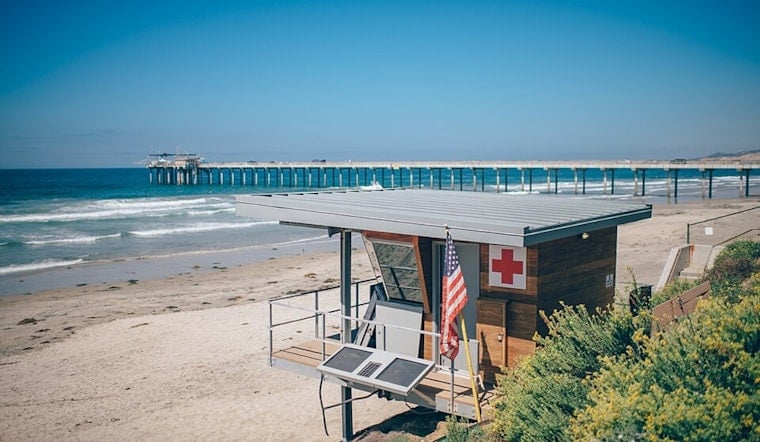
Nearly three years after storm damage forced San Diego to permanently close the Ocean Beach Pier, the city says the replacement project remains stuck in the permitting and environmental review phase, with construction still not expected to begin until early 2029. The Ocean Beach Pier Renewal project requires a comprehensive environmental impact report under the California Environmental Quality Act, a process that typically takes two to five years to complete.
The city says the draft environmental review, initially expected to be circulated around this time in 2026 per its own project schedule, is now anticipated to be ready for public review in spring 2027, according to Times of San Diego. That timeline has left longtime Ocean Beach advocates frustrated. Denny Knox said planning for the replacement feels like it is moving in slow motion, though she said she still expects the pier to be rebuilt within a reasonable time frame.
Ralph Teyssier, a structural engineer and former member of the now-disbanded Ocean Beach Pier Task Force, was more pointed. He said the environmental impact report should have been released a couple of years earlier, and that the city is only kicking the can down the road. Teyssier, who wrote a letter to the city asking about the draft environmental review timeline, said the public overwhelmingly wants a new pier.
A Landmark With Deep Roots in San Diego Surf History
The pier has personal resonance for the Teyssier family: Leonard Teyssier built the original structure, which broke ground in early 1965 and was completed in July 1966. At the time, it was the longest concrete pier in the world, extending 1,971 feet into the ocean as a free public sport fishing pier. The following year, it hosted the 1966 World Surfing Championship, the first time the United States had hosted a world surfing contest, according to background compiled by the City of San Diego.
By 2018, a consultant study determined the existing pier had reached the end of its serviceable life after 60 years of storm and high-surf damage, with consultants concluding that continually repairing the structure would cost more in the long run than replacing it outright. That warning proved prescient: in the five years leading up to the pier's permanent closure, the city spent roughly $1.7 million on temporary structural and railing repairs while the pier remained closed about 30% of the time due to storm damage, according to KPBS.
The pier was permanently closed in October 2023 due to its deteriorating condition, and two months later, severe winter storms broke off a major support bracket pile that plunged into the ocean, further degrading the structure. It has remained closed indefinitely ever since, and under San Diego Municipal Code §63.20.16, swimming, wading, surfing, or skin diving within 75 feet of any city-owned fishing pier is prohibited, enforcing a safety buffer around the damaged landmark.
Community Input Shaped an Ambitious, Costly Vision
San Diego began formal public workshops and concept development for a replacement pier in 2023, and by 2024 the city had completed extensive community outreach, revealing a preferred replacement design concept. That 18-month outreach effort included five public workshops held between April 2023 and October 2024, along with pop-up events across San Diego County, as documented in the city's task force white paper.
The preferred design raises the pier's deck elevation by roughly 10 feet and swaps the original 18-inch support piles for 24-inch piles spaced 40 to 50 feet apart, engineering meant to withstand future sea-level rise and severe wave action. The concept also reimagines the pier's layout entirely, replacing the simple linear structure with interconnected pathways, a surf viewing deck, an elevated “braid” walkway, a roof deck terrace over retail space, and an outboard plaza.
The Real Obstacle Is Money, Not Design
Even with a finalized design, the project's biggest hurdle remains financial. The city estimates the total cost to rebuild the pier at between $170 million and $190 million, covering everything from public engagement through final construction. So far, only $8.4 million in state funding has been secured, leaving a gap of more than $160 million that must be filled through federal, state, or private sources.
The city's project team is exploring state and federal grants as well as a public-private partnership as potential funding sources. Mayor Todd Gloria has also worked with federal lawmakers to pursue relief through proposed legislation originally introduced as the Ocean Pier Revitalization Act of 2024 and later renamed the American Pier Revitalization Act, though that federal funding path remains pending.
Margaret Virissimo said the city must treat the pier replacement as a priority, calling for a firm funding strategy, enforceable deadlines, regular public progress reports, and clear accountability. Nicole Crosby said the pier is a treasured part of the district that has been neglected. The project must also secure site and coastal development permits and coordinate with the California Coastal Commission, the Department of Fish and Wildlife, the U.S. Army Corps of Engineers, and the Regional Water Quality Control Board before construction can move forward.
What Comes Next
With environmental review now approaching two years in the process, final design documents and construction bidding are anticipated to begin sometime in 2028 or 2029, with construction itself slated to start in early 2029. The project moved through environmental review and regulatory permitting steps in 2025 and 2026, a stretch during which the shuttered pier has become an unlikely wildlife draw, hosting a mass gathering of brown pelicans that Hoodline covered in December.
The site has also drawn scrutiny for other reasons, including a county water-quality advisory near the pier this spring and a death investigation on the sand at the pier's base in June. For now, Ocean Beach residents are left waiting on a rebuild that carries broad community support but no clear path to the roughly $160 million still needed to make it happen.





.jpg)