

























































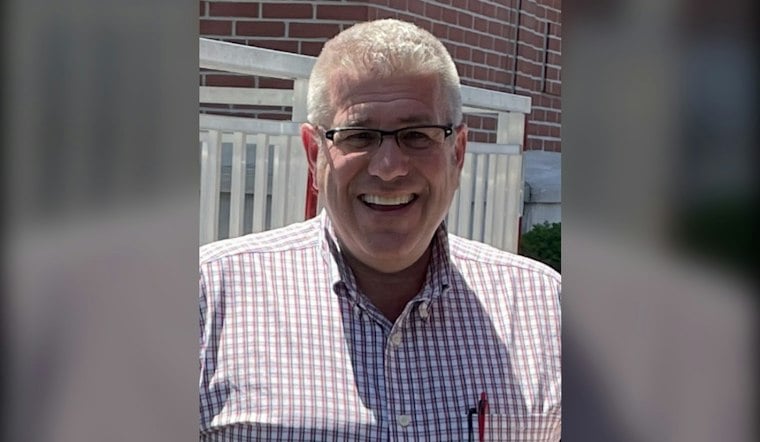
Darren Bailey stood in Norridge and did what he's done since launching his second campaign for Illinois governor: renewed his promise to repeal the SAFE-T Act on day one, calling Chicago a hellhole and insisting he doesn't trust the reporting on falling crime numbers. The Republican nominee's warning that shootings seemed to be growing and that more people were getting hurt collided head-on with statistics showing homicides and shootings have actually dropped in the city in recent years.
A Repeat Pledge, A Familiar Target
According to the Chicago Tribune, Bailey has continued attacking the SAFE-T Act throughout the governor's race, and he told the Norridge crowd that almost anyone who commits almost any crime is free to walk. He said he does not object to ending the practice of keeping people jailed simply because they can't afford bail, but argued the broader law has gone too far. Bailey, who is endorsed by Donald Trump and lost the 2022 governor's race by nearly 13 percentage points, said he was ready to stop some of the political rhetoric he had been part of even as he leaned into fresh attacks on the law.
Just days earlier, at the Belmont CTA station, Bailey pledged a “day one” repeal of the criminal justice law, according to loopnorth.com. He attributed an estimated 1,600-officer shortage in the Chicago Police Department directly to the SAFE-T Act and Springfield Democrats, warning it has battered police morale and undercut enforcement.
What the Chicago Numbers Actually Show
The Tribune's reporting, drawing on Chicago crime statistics recorded through September 20, 2026, found the city has reduced homicides by 49% and shootings by 49% over the past four years, along with a 42% drop in robberies and a 24% decline in burglaries. Those declines sit within a broader debate over how to interpret Chicago's crime trends.
The broader debate also weighs public safety against the consequences of pretrial release.
Two Violent Cases Bailey Points To
Bailey's warnings draw on specific incidents that have shadowed the law's rollout. Chicago police officer John Bartholomew was fatally shot in April, and Alphanso Talley, who was on electronic monitoring for unrelated robbery-related charges, was accused of shooting Bartholomew and wounding another officer. In a separate case, Lawrence Reed, who was on electronic monitoring in an aggravated battery case, was accused of setting a woman on fire on a CTA Blue Line train. Illinois House Republicans issued a release attacking the end of cash bail following those incidents.
What the Law Actually Does
The SAFE-T Act, a 2021 Illinois criminal justice overhaul, abolished cash bail statewide and passed the Illinois House 60-50 and the Illinois Senate 32-23 in January of that year. Its Pretrial Fairness Act component, which took effect September 18, 2023, requires judges to decide detention based on danger to the community or flight risk rather than ability to pay, and it bars pretrial detention for charges deemed nondetainable. The broader SAFE-T Act additionally includes body-camera requirements for officers, an easier path for anonymous complaints, an end to sworn-affidavit requirements for complainants, and a more comprehensive officer decertification system.
In Cook County, more than 177,000 defendants were released before trial as of September 2023, and 94% of those released were not charged with any new violent or person crimes, with slightly more than 80% facing no new misdemeanor or felony charge at all. Defendants made their scheduled court dates in 85% of cases. Bond hearings under the new system now last about four times longer than the former three- or four-minute hearings, and the Tribune reports they have become more evidence-intensive and deliberative.
Researchers Split on Statewide Impact
The data on jail populations tell a mixed story depending on which window researchers examine. Statewide pretrial jail bookings fell 17.5% between summer and fall 2023, compared with an expected historical decline of roughly 11.5%, and average daily populations fell 14% versus an expected 3% decline, according to Loyola University's Center for Criminal Justice. That translated to roughly 3,000 fewer jail admissions statewide from October through December 2023 and an estimated 1,500-person reduction in the average daily jail population. The booking decline was 8 percentage points larger than expected in rural counties, compared with 3 points in Cook County.
The statewide impact of the law remains a subject of debate.
Loyola professor David Olson, who researched the law's pretrial provisions, is studying whether recidivism rates changed under the Pretrial Fairness Act. He found no apparent change in the likelihood of being charged with another crime after release while awaiting trial, though he said new arrests for violent crimes were already very low before the law took effect.
A Prosecutor Calls for Changes
DuPage County State's Attorney Robert Berlin says the SAFE-T Act is mostly working as intended but should be changed. Berlin is pushing for judges to have more discretion to detain defendants charged with offenses currently deemed nondetainable and for tougher consequences for defendants who skip court.
State Sen. Elgie Sims, the Chicago Democrat who was chief Senate sponsor of the SAFE-T Act, told Capitol News Illinois he thinks the law is working, though not perfect, and said fear can cause people to act in ways they otherwise would not. Sims said he was unaware of any changes planned for the law during the fall veto session, which Illinois lawmakers have scheduled for three days in mid-November and three days in early December. Gov. JB Pritzker has signaled openness to changes to the Pretrial Fairness Act, and Capitol News Illinois reports that top Democrats, including Pritzker and House Speaker Emanuel “Chris” Welch, say they would consider narrowly targeted changes if a forthcoming judicial report determines they're needed — a far cry from Bailey's call for outright repeal.
Statewide, the statistical case for the law's effect on court appearances remains murky. The failure-to-appear rate hovered around 17% before the law and has been about 15% since, a difference researchers describe as statistically very similar — hardly the dramatic shift either side of the debate tends to invoke on the campaign trail.





