

























































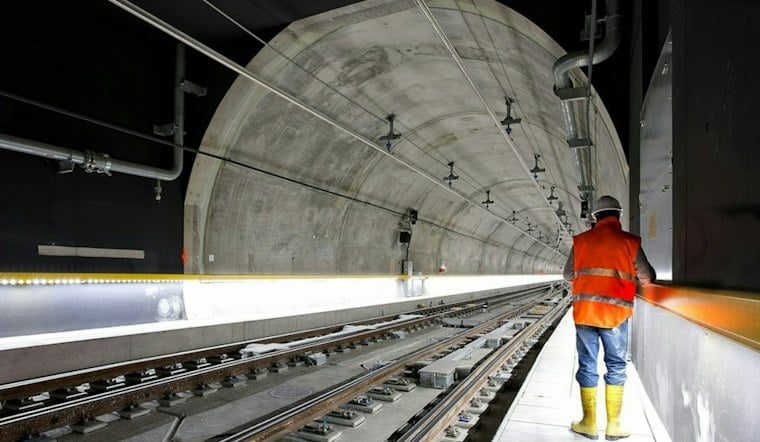
A BART Inspector General investigation found that the Transbay Tube retrofit proceeded with inadequate quality-control testing for its anchor bolts, forcing the agency to abandon the original fastening design and remove more than 8,000 installed bolts. About 7,500 unused or rejected bolts and roughly 72,000 pounds of steel were discarded, according to the BART Office of the Inspector General.
The central control failure was not simply that bolts failed in the field. The report found that quality-assurance testing covered only three of 8,030 anchors and included only one of the two bolt types ordered by the contractor. The limited testing meant BART did not have a reliable basis for determining whether the supplied fastening system met project requirements before widespread installation.
A procurement decision preceded the inspection plan
The investigation traced the problem to a 2018 decision allowing the retrofit contractor to substitute Korean-made steel for the originally specified U.S. material, subject to requirements for chemical composition, welding and quality control. The bolts were manufactured nearly a year before BART received the detailed inspection and testing plan, according to NBC Bay Area’s account of the report.
That sequence left the agency without an opportunity to review the proposed welding processes and related controls before production was underway. BART ultimately required a different anchoring system that eliminated the welded connection. The Inspector General’s findings did not establish that the Korean steel itself was inferior, and BART has said the original design was not inherently flawed; the replacement approach was selected to satisfy the seismic requirements without the failed connection method.
The cost was concentrated in one project
Replacing the anchors added more than $2 million to the project, about twice the original fastening-system budget. The original anchors had cost more than $1 million to manufacture, while the redesigned system added roughly another $1 million, according to NBC Bay Area’s reporting on the investigation.
Those figures should be distinguished from the size of BART’s overall seismic program. The Transbay Tube work was performed under a specifically awarded $313 million contract, including a $267 million base contract and options, awarded in 2016 to Shimmick Construction and California Engineering Contractors Joint Venture, according to BART. The separate systemwide Earthquake Safety Program was completed in 2024 with a $1.457 billion budget, according to BART.
Why the retrofit mattered
The Transbay Tube retrofit was one component of a long-running effort to protect BART’s regional rail infrastructure from a major earthquake. The tube, which links San Francisco and Oakland beneath the bay, was designed to remain a critical transportation connection during a disaster. BART’s broader earthquake program was funded and carried out across multiple facilities, so the bolt replacement costs should not be read as the cost of the entire seismic initiative.
The project also had an operational constraint: crews performed much of the work overnight so daytime passenger service could continue. That construction strategy made the quality-control breakdown especially consequential because a defect in a component installed in a difficult-access environment could require extensive removal and rework rather than a simple shop-floor correction, according to the project description from GFT Inc..
What the investigation does—and does not—show
The report documents a breakdown in procurement timing, inspection planning and testing coverage. It does not establish that the substitute country of origin caused the failures, nor does it show that the replacement anchors failed. BART said the replacement system was installed without failure and welcomed the Inspector General’s oversight, according to NBC Bay Area.
The findings also do not, by themselves, demonstrate a systemwide pattern across BART’s earthquake work. They identify a specific project-control failure: material was ordered and manufactured before the agency had received the information needed to evaluate the contractor’s quality-control process. Whether BART has changed its procurement sequencing, testing requirements or contractor-accountability procedures beyond this project remains a separate question from the documented cost and rework.




