

























































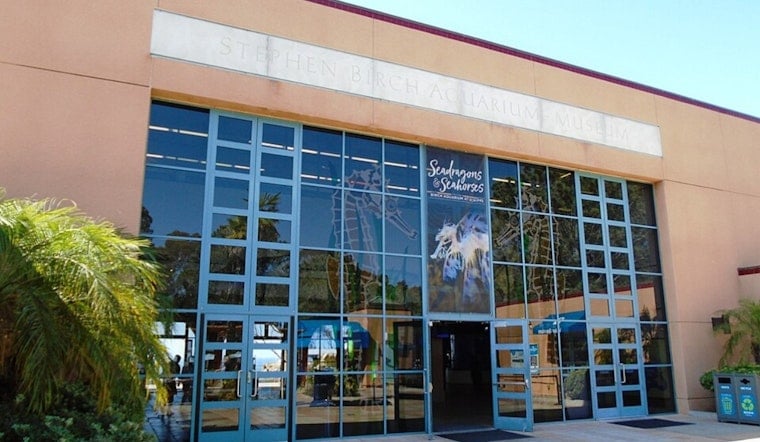
Birch Aquarium at Scripps has released 223 endangered mountain yellow-legged frogs into the San Jacinto Mountains, splitting the effort into two separate creek-site releases this summer. Researchers with the La Jolla facility let go of about 74 frogs near Idyllwild in early August, then returned a few weeks later to release another 149 at a second creek site. The frogs had spent months growing behind the scenes at the aquarium after arriving as tadpoles from the San Diego Zoo Wildlife Alliance in 2025.
According to Fox 5 San Diego, the effort marks Birch Aquarium's second successful reintroduction, bringing the total number of frogs the aquarium has helped return to the wild to more than 440. The releases were carried out in partnership with the California Department of Fish and Wildlife, the U.S. Fish and Wildlife Service, the U.S. Forest Service, and the U.S. Geological Survey, alongside the San Diego Zoo Wildlife Alliance. Researchers told the station they have already spotted frogs from earlier releases thriving in the wild, and they plan to continue monitoring the newly released frogs as part of the long-term recovery program.
A Species Once Nearly Wiped Out
The mountain yellow-legged frog's Southern California population has been federally listed as endangered since the U.S. Fish and Wildlife Service placed it on the list on July 2, 2002, with a final federal recovery plan published in December 2018, according to the Federal Register. Before major reintroduction programs began, wild adult populations in the region had plummeted by roughly 98 percent, leaving fewer than 200 adult frogs in the wild, as reported by Mongabay. A principal driver of that collapse is chytridiomycosis, a disease caused by the aquatic fungal pathogen Batrachochytrium dendrobatidis, which thickens frog skin, prevents normal respiration and hydration, and can be fatal, per the same outlet's reporting.
Birch Aquarium joined the regional frog recovery initiative in 2024 and completed its first-ever species reintroduction in August 2025, releasing 220 aquarium-reared frogs into the San Bernardino Mountains as part of a 350-frog release at Bluff Lake alongside the San Diego Zoo Wildlife Alliance and UCLA, according to Hoodline's earlier coverage. The aquarium has since built on that work with its March 2026 exhibit “Imagine Wild: Mountain Yellow-legged Frog,” an interactive display that replaced a previous marine exhibit at the La Jolla facility and features live frogs raised by aquarium staff, as reported by The Coast News.
Part Of A Much Bigger Statewide Push
The San Diego Zoo Wildlife Alliance began its conservation breeding work in 2006 and has since produced and reintroduced over 10,000 frogs and tadpoles into Southern California mountains, according to the alliance. That program has supplied tadpoles to partners like Birch Aquarium. In August 2026, the San Diego Zoo Wildlife Alliance and partner agencies released more than 3,000 mountain yellow-legged frogs and tadpoles into the San Bernardino and San Jacinto mountains, marking one of the largest single-year reintroduction efforts in the program's history, per The Times of India.
Scientists have also turned to bio-banking to protect the species' genetic diversity. Researchers at the San Diego Zoo Wildlife Alliance have collected and cryopreserved sperm samples from male mountain yellow-legged frogs, a technique that could enable future artificial reproduction without harvesting additional wild individuals, according to a report shared by the San Francisco Zoo.
Full Recovery Still Years Away
Despite the milestones, the species still faces extinction, and recovery has not yet occurred. A long-term goal is to establish 25 frog populations numbering a few hundred to a thousand individuals each, though IUCN assessments indicate full species recovery in the region is unlikely within the next decade because of threats including non-native trout, drought, and wildfire. Non-native trout introduced for sport fishing prey heavily on native tadpoles, which requires habitat restoration teams to clear fish from target streams before frogs can be released.
Birch Aquarium's role fits into that longer arc as a partner that raises frogs from tadpoles, while the San Diego Zoo Wildlife Alliance has a major breeding role. Still, the aquarium's researchers say they've already seen encouraging signs, spotting frogs from prior releases thriving in the wild as they continue monitoring this summer's newest arrivals in the San Jacinto Mountains.


