

























































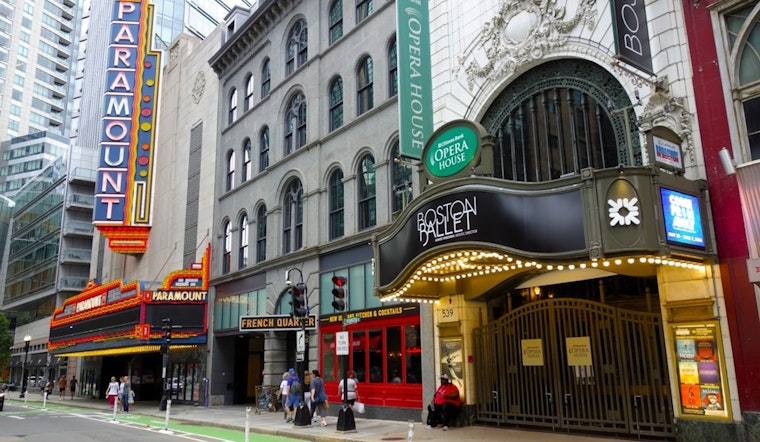
Boston Ballet opens its 2026-27 season Thursday at the Citizens Opera House with a double bill pairing a satirical send-up of modern dance criticism against a spiritually charged meditation on human ascent, marking the 25th year that Mikko Nissinen has led the company as artistic director. The program, called the Fall Experience, runs September 10 through 20 and features Alexander Ekman's “Cacti” alongside Akram Khan's “Vertical Road,” two works that together capture the range Nissinen has pushed the company toward since taking over in September 2001.
A Quarter-Century Building a Company's Identity
Nissinen arrived in Boston after serving as artistic director of Canada's Alberta Ballet from 1998 to 2001 and dancing for a decade as a principal with San Francisco Ballet, according to Boston Ballet. He officially assumed the Boston post five days before September 11, 2001, per the same account. In the years since, as The Boston Globe reports, Nissinen has said touring is critical to Boston Ballet's identity as a global arts organization, and he has described his mission as making the company the ballet troupe of the future.
One of Nissinen's earliest moves toward that goal came in 2005, when he appointed Finnish choreographer Jorma Elo as Boston Ballet's Resident Choreographer, a pivotal step in modernizing the repertoire, according to Boston Ballet. That contemporary foundation eventually grew to include a landmark partnership with choreographer William Forsythe, which the company established in May 2016, designating Boston Ballet as Forsythe's primary American home after four decades of creating primarily in Europe. That relationship has produced world premieres including “Playlist (EP)” in 2019 and “Blake Works III” in 2022, and per the Globe, Forsythe now considers Boston Ballet his home company.
Two Contrasting Works Anchor the Fall Program
“Cacti,” which Ekman originally created in 2010 for Nederlands Dans Theater 2 in The Hague, was built as a satirical work mocking how audiences and critics attempt to overanalyze modern dance, according to Nederlands Dans Theater. The piece is set atop and amid resonant wooden platforms and features 16 dancers alongside an onstage string quartet, per the Globe's reporting. Second soloist Daniel Rubin is featured in the piece's pas de deux, the Globe notes, and Boston Ballet previously performed “Cacti” at the Théâtre des Champs-Élysées in Paris.
Akram Khan's “Vertical Road” offers a starkly different tone. Khan originally premiered the work on September 16, 2010, at the Curve Theatre in Leicester, England, with a score by Nitin Sawhney drawing on Sufi spirituality and the poetry of Rumi, according to the Akram Khan Company. The work examines humanity's spiritual ascent from gravity to grace, the company's account states. Per the Globe, Khan has said the piece explores humans trying to make sense of a lost world, and Nissinen has called “Vertical Road” one of the most profound pieces of art. Boston Ballet has also performed a reimagined 2023 version of the work at New York City Center, according to the Globe.
The Globe reports that Khan's inspiration traced back to a chance encounter in Australia with a taxi driver from the same village in India as Khan's family — a driver who had reportedly spent 35 years searching for Khan's father.
Touring as a Statement of Ambition
Boston Ballet resumed international touring after a 16-year hiatus, according to the Globe, and Nissinen has said touring remains critical to the company's standing as a global arts organization. On its most recent trip to Paris, more than 200 people traveled with the company, per Nissinen's account relayed by the Globe. The company has toured to the UK, Spain, Korea, Canada, Finland, Washington, D.C., Los Angeles, Paris, and New York, the Globe notes.
Vony Sarfati, CEO of Productions Internationales Albert Sarfati, which created the “Transcendanses” dance series, told the Globe that “this company is full of fire and passion.” Sarfati has supported Boston Ballet's greater international exposure, according to the same report.
Scale Behind the Curtain
Nissinen's programming is backed by significant institutional muscle. Boston Ballet operates as one of the largest nonprofit arts organizations in the country, with an annual operating budget of roughly $45 million and a school that educates more than 5,000 students annually, according to Brex. Executive Director Ming Min Hui, who co-leads the company alongside Nissinen, has noted the organization employs more than 600 total staff members. Hui joined Boston Ballet in 2015 through a Harvard Business School leadership fellowship after beginning her career in investment banking at JPMorgan Chase, and later served as Chief Financial Officer before becoming Executive Director, per Boston Ballet.
According to the Mass Cultural Council, state funding for arts and culture reached a record high in an update published March 20, 2025.
That scale traces back to a much smaller beginning. Boston Ballet was founded in 1963 by E. Virginia Williams as the New England Civic Ballet, becoming the first professional company of its kind in New England with early backing from George Balanchine and the Ford Foundation, according to En Face Magazine. The company was among the first regional troupes authorized to perform Balanchine's works, the outlet notes.
A Repertoire Built on Three Pillars
Over his 25 years, Nissinen has brought 32 ballets by Balanchine and 10 works by Jiří Kylián into the company's repertoire, giving Boston Ballet the largest Kylián holdings of any North American ballet troupe, according to Boston Ballet. Per the Globe, Nissinen has committed the company to a three-pronged repertoire spanning classical masterpieces, 20th-century neoclassical works, and progressive new creations — a mix that also includes new work from Kylián, Elo, Forsythe, and Crystal Pite. The company's winter program will present Pite's “Emergence,” the Globe reports, following the sold-out run of all 10 performances of her earlier piece “Seasons Canon.”
The Globe also credits Nissinen with elevating the standard of dancing throughout the company and strengthening its commitment to inclusivity among both dancers and audiences. Performances of the Fall Experience take place at the 2,600-seat Citizens Opera House, which originally opened in 1928 as the B.F. Keith Memorial Theatre, designed in French and Italian styles by architect Thomas W. Lamb, and underwent a massive restoration before reopening in 2004, according to the Boston Opera House historical record.





