

























































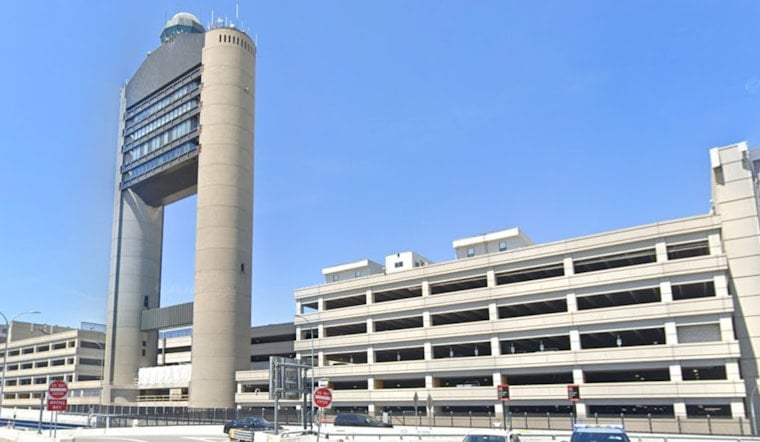
A life-size, hyper-realistic AI hologram named Amelia is now greeting travelers at Boston Logan International Airport around the clock, guiding them to gates, restaurants, shops, lounges and baggage claim through natural conversation rather than a static screen. The service marks the debut of Amelia as an around-the-clock concierge built to handle the repetitive questions that clog up staff time during a traveler's busiest moments.
Proto Hologram and HoloMedia AI have collaborated on similar airport services, according to Travel Daily News, and Boston Logan is introducing the service to travelers. Amelia operates as a self-contained unit with an integrated touchscreen and, notably, requires no external hardware to run. The hologram provides verbal directions, 3-D maps and TSA wait-time information.
How Amelia Talks to Travelers
Amelia communicates in up to 40 languages, though her core language support centers on English, Spanish and French, per the same report. She's designed to supplement airport staff during peak periods and service gaps rather than replace them.
Accessibility features built into the unit include high-contrast displays, closed captioning, WCAG-compliant mapping and wheelchair-accessible positioning, the article notes. Those design choices track with federal standards under the Air Carrier Access Act and Section 508 of the Rehabilitation Act, which require self-service airport kiosks to meet strict physical approach dimensions and screen-reader guidelines, according to the Federal Register.
A Growing Field of Airport Holograms
Proto Hologram describes its platform as one for embodied AI, and the company says it has used its spatial-computing systems in settings including malls, award shows and hospitals. The technology is now being used at Logan in the Boston area. Proto Inc., the hardware maker behind Amelia, was founded in 2018 by David Nussbaum and is a Los Angeles company, according to TheWrap. Nussbaum has said AI should enhance rather than replace workers.
HoloMedia AI, the software partner behind Amelia's conversational framework, is led by CEO Glenn E. Smith, whose company specializes in 3D holographic marketing and AI concierge wayfinding platforms for busy commercial spaces, per DMZ Toronto. Smith has discussed holographic technology as a way to help people navigate airport journeys.
Boston isn't the first hub to try this kind of deployment. LaGuardia Airport's Terminal B introduced a similar hologram concierge named Bridget in May 2026, built through the same Proto Hologram and HoloMedia AI collaboration and stationed near the terminal's food hall, according to New Atlas. Miami International Airport took a different vendor route in April 2026, launching four geo-aware AI hologram chatbots built by Mappedin, Satisfi Labs and Hypervsn that speak 40 languages and plug into the airport's website and WhatsApp tools, with each unit costing roughly $50,000, as reported by Local 10 News.
From Video Loops to Real Conversations
Earlier airport hologram installations, including a non-AI installation at JFK Terminal 4 and Jacksonville International Airport's holographic mayor, which debuted in December 2024, relied on pre-recorded video loops that couldn't field custom questions from passengers, New Atlas reports. Hoodline covered Jacksonville's holographic mayor when it debuted in December 2024, one of the pre-conversational units that preceded the current wave of real-time AI avatars now appearing at Logan, LaGuardia and Miami.
Municipal airport chatbot installations have run around $50,000 apiece, according to TIME. Aviation analysts have noted a broader split forming in airport navigation technology, with Western airports favoring visible humanoid avatars like Amelia and Bridget while Asian hubs such as Guangzhou lean toward ambient biometric systems and glassless 3D screens that operate without a kiosk at all, per New Atlas.
Part of a Bigger Logan Overhaul
Boston Logan's substantial passenger traffic helps explain the push for automated tools that can absorb repetitive wayfinding questions during peak crunches.
The hologram's arrival comes amid efforts to modernize Logan. The initiative points to an airport investing in digital upgrades to improve the passenger experience.




