

























































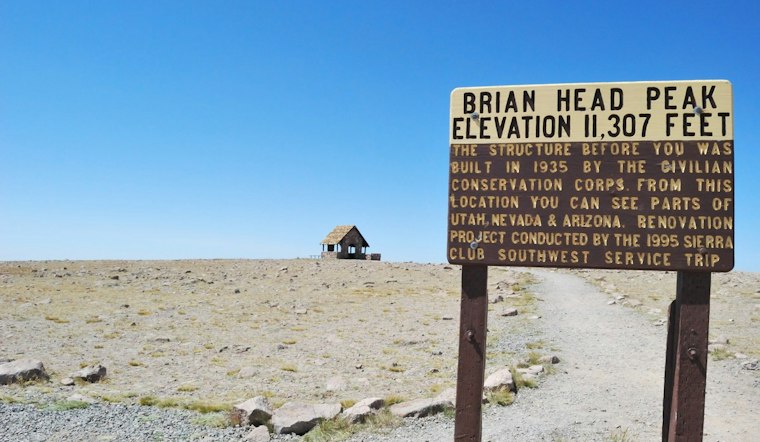
A stone fire lookout perched atop Brian Head Peak in Iron County has been rebuilt nearly four years after a violent windstorm tore the roof off the historic structure, and the community gathered on the summit last Wednesday to celebrate its completion. The shelter, built in the early 1930s by Civilian Conservation Corps Camp F-16 near Duck Creek, once helped keep watch over wildfires across the region before becoming a beloved overlook for hikers and sightseers.
The damage was first reported after high winds ripped the roof from the stone walls in November 2022, according to KSL News. Locals who noticed the destruction alerted U.S. Forest Service officials, and the agency subsequently sought help rebuilding the structure, which sits at 11,312 feet above sea level with nearly 1,700 feet of elevation gain from the base of the peak, per the same report. A separate account from KSL News indicates the damage was discovered when a local hiker reached the summit and documented that the roof had been blown completely off the stone walls, with extreme wind gusts common at such elevations on the Markagunt Plateau.
The restoration took two years and drew together an unusual mix of partners: the Forest Service, HistoriCorps, the Zion Forever Project, Visit Cedar City, the town of Brian Head and private donors, the KSL report notes. Zion Forever Project, which has assisted in conservation efforts in the greater Zion area since the 1920s, began its partnership with Dixie National Forest in 2024. Brian Head Town Manager Bret Howser told the outlet the roof was ripped off by severe wind, and that crews used the same building techniques originally employed by the CCC workers to preserve the structure's historical authenticity.
A Depression-Era Structure Built for $30 a Month
The original lookout, also known as the Peak House or Brian Head Overlook, was constructed during the 1930s. The Civilian Conservation Corps employed millions of young men nationally during the 1930s to build infrastructure on public lands, and the Brian Head shelter was designed to blend into the landscape.
This was not the lookout's first brush with the elements. Sierra Club volunteers renovated the structure in the 1990s during a Southwest Service Trip, a repair documented on official Forest Service signage at the site before the recent damage occurred, per a historical account on Fine Art America. The pattern underscores just how punishing conditions can be at nearly 11,300 feet, where the same forces that make the summit spectacular also make it hard on stonework and shingles alike.
Volunteer Crews Repointed Masonry, Replaced the Roof
Much of the hands-on labor fell to HistoriCorps, a nonprofit preservation group that hosted four weeklong volunteer sessions in September and October 2025 in partnership with the Zion Forever Project and Dixie National Forest. Those crews took part in restoration sessions and roof-replacement efforts, according to a report from KSL News. The rebuilt structure was reinforced with stronger materials intended to help prevent similar wind damage in the future, and it is once again open to the public.
Howser said he plans to restore spotting scopes and other valley-viewing equipment at the site, and he intends to add historical signage so visitors can learn about the lookout's origins. The Zion Forever Project is still seeking volunteers and donors to help complete remaining aspects of the project.
A Landmark Tied to a Region of Public Lands
Brian Head Peak is the highest point on the Markagunt Plateau and in Southern Utah, with views that stretch into Arizona and Nevada on clear days, according to background from the National Park Service. The peak sits within Dixie National Forest, a nearly 2-million-acre expanse stretching 170 miles across southern Utah.
The mountain is known as Brian Head, according to town history compiled by Brian Head Town. At the base of the peak, Brian Head Resort operates a ski area.



