

























































Broadview Heights voters will decide the fate of seven proposed charter amendments on November 3, including a measure that would cap how long a mayor or council member can serve — a direct response to Mayor Sam Alai's nearly two-decade run in office. The ballot package also includes a requirement that the city maintain at least two fire stations, a higher spending threshold for mayoral purchases, and language updates removing masculine pronouns from the city's governing document.
The Charter Review Committee placed six of the amendments on the ballot, while the Broadview Heights City Council added a seventh — the mayoral term-limits measure — on its own, according to Cleveland.com. Councilman Joe Price introduced that amendment on June 1, and council approved placing it on the ballot by a 5-2 vote the same day. As the site notes, the measure would limit the mayor to three consecutive four-year terms, or 12 consecutive years, while excluding any terms or years already served before the amendment takes effect.
Alai is currently serving his fifth consecutive four-year term after winning elections in 2007, 2011, 2015, 2019, and 2023, and he previously served as Council President from 2005 to 2007, according to the City of Broadview Heights. Because the term limits would apply only prospectively starting in 2027, Alai said he would be retired before the amendment could ever affect him, even after three additional future terms, the same report indicates. Price, for his part, said term limits give residents more choices and argued that complacency can set in without them, adding that many highly qualified community members could serve honestly and admirably.
A Veto Threat That Never Materialized
Before the July council vote, Alai had publicly said he would veto charter amendments establishing mayoral term limits or altering the composition of the Charter Review Committee, according to reporting by Scriptype. Under Ohio law, mayors have 10 days to sign or veto council legislation, but Alai ultimately did not veto the term-limits measure, allowing it to move forward to voters.
Not every council member supported putting the term-limits question before voters. Jennifer Mahnic and Brian Wolf both voted against placing the mayoral term-limits amendment on the ballot, per the Cleveland.com account. Mahnic said she opposes term limits in general, while Wolf argued that adding the measure independently disrespected the work of the Charter Review Committee, which had recommended term limits for council members but had not recommended them for the mayor.
The council does have the authority to place charter amendments on the ballot on its own with a supermajority of five votes, separate from the committee's recommendations. Council members had no choice but to place the committee's six recommended amendments before voters, but the seventh, mayoral term-limits, was added at council's own initiative. The council term-limits amendment mirrors the mayoral version, also capping council members at three consecutive four-year terms or 12 consecutive years and excluding time served before the amendment's effective date.
Fire Station Requirement Follows 2022 Levy Defeat
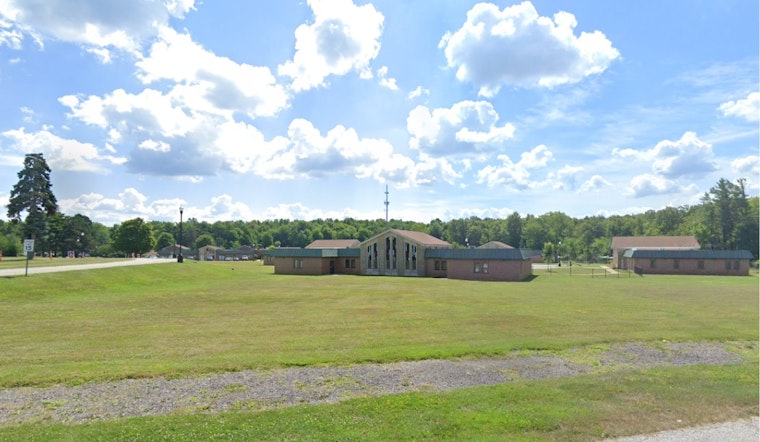
One of the more consequential committee-driven proposals would require the city to maintain at least two fire stations, each housing at least one fire truck and at least one ambulance. Charter Review Committee member Robert Boldt recommended the requirement, and it comes amid lingering concern over the condition of Broadview Heights' northern fire station on East Wallings Road, which serves the northern end of the city and has been described as aging.
The city's southern station, at the intersection of Broadview and Oakes roads, has also been characterized as aging, according to the Cleveland.com report. Committee member Tom Pavlica said he was concerned the East Wallings Road station might eventually be declared unsalvageable, and he wanted a documented guarantee that a new Broadview and Oakes station would accompany any renovation or rebuilding of the East Wallings facility. Fellow committee member Jennifer Mahnic said she would not favor having only one fire station serving the entire city.
Alai, for his part, said he never proposed eliminating the East Wallings Road stations, and Pavlica said residents, not city officials, should ultimately decide who holds office and how the city is run. The debate traces back to 2022, when Broadview Heights voters rejected a ballot levy meant to fund fire station construction. Alai stated in October 2023 that the city would instead pursue county grants and cost-saving measures rather than bring another fire facility tax measure before voters, according to Scriptype. The Broadview Heights Fire Department currently operates two active stations — Station 1 at 3591 E. Wallings Road and Station 2 at 9455 Broadview Road — according to the city's own website.
Higher Spending Limit for the Mayor's Office
Another amendment would raise the threshold for mayoral purchases the city council doesn't have to separately approve. Existing city code caps unapproved mayoral purchases at $10,000 and requires council authorization for contracts of any amount, but the new measure would let the mayor make purchases or sign contracts of $25,000 or less without council sign-off. That cap would rise 3 percent annually starting in 2028, meaning the mayor would be able to approve purchases up to $25,750 starting in January 2028, per the Cleveland.com report.
A separate amendment would require city tax levies to appear only on November ballots during municipal elections, a change from the city's current ability to place levies on the ballot at any election. The shift comes as the neighboring Brecksville-Broadview Heights City Schools district faces its own budget strain — Hoodline previously reported that the district's cash reserves are projected to fall to $134,066 by 2030 without new operating revenue, underscoring how tax-levy timing resonates with local voters. A final amendment on the ballot would simply replace masculine pronouns throughout the charter with gender-neutral language.
What Voters Will See in November
An eighth proposal, which would have expanded the Charter Review Committee from 9 to 12 members, failed to make the ballot after a 4-3 council vote fell short of the five-vote supermajority required to advance it independently, according to Scriptype's account of the July proceedings. That leaves seven measures for Broadview Heights residents to consider when they head to the polls on November 3 in the suburban Cuyahoga County city of roughly 19,600 residents.
Ohio law requires that municipal charter amendments submitted by a legislative authority be published in a newspaper of general circulation once a week for two consecutive weeks, beginning at least 15 days before the general election, under Article XVIII, Section 9 of the Ohio Constitution and Ohio Revised Code Section 731.211. That publication requirement, along with formal notice to the county board of elections, will govern how the city informs residents of the ballot language before they cast their votes this fall.





