

























































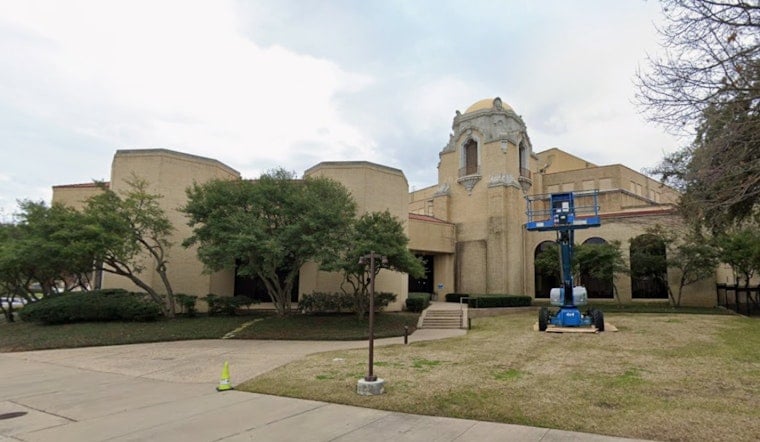
Broadway Dallas is bringing a darker, stripped-down version of The Sound of Music to Fair Park Music Hall this month, trading the sugary nostalgia of the beloved 1965 film for a version that leans harder into the political stakes of 1938 Austria. The touring production runs September 8-20 at the historic venue on 909 1st Ave., with tickets priced between $37 and $238.
The production traces back to director Jack O'Brien, who launched this touring version in September 2015 at the Ahmanson Theatre in Los Angeles with the explicit goal of stripping away what Broadway In Portland described as nostalgic “varnish” in favor of the story's darker political undertones. O'Brien has said the approach was a chance to uncover, in his words, a deeper and richer human drama than audiences may expect from a show often remembered as pure whimsy. As The Dallas Morning News reports, that darker framing is central to how Broadway Dallas is presenting the show to North Texas audiences this month.
A Musical Built On A Real Family's Flight
The Sound of Music is a Rodgers and Hammerstein musical based on the true story of an Austrian singing family's escape from the Nazis, centered on a widowed Austro-Hungarian navy submarine captain raising seven children. The stage story follows the captain falling in love with a governess who was studying to become a nun, and his real-life refusal to accept a commission after Germany annexed Austria, having opposed the Nazis outright. The musical's famous climax depicts the family's escape across the Alps, a dramatic set piece that has defined the show's ending for decades.
The historical record, however, tells a somewhat different story. According to the National Archives, the real von Trapp family actually left Austria by train in broad daylight in 1938 before making their way to Italy and eventually the United States, rather than trekking over the mountains under cover of night. Crossing the Alps from Salzburg, as the musical depicts, would have actually led the family into Nazi Germany rather than away from it. The dossier of historical accounts also notes that Maria Kutschera married Captain Georg von Trapp in November 1927, more than a decade before the family's 1938 flight, according to the National Archives, rather than in the shadow of the annexation as the musical stages it, per the Smithsonian Magazine. After settling in the United States, the family purchased a 660-acre farm in Stowe, Vermont, in 1942 and opened a 27-room guest lodge in 1950 that remains family-operated today as a 2,600-acre resort, according to the von Trapp Family Lodge & Resort.
Seventy Years Of Do-Re-Mi
The Sound of Music premiered in 1959 and has endured for almost 70 years, powered by a score that includes Do-Re-Mi, My Favorite Things, Sixteen Going on Seventeen, and Climb Ev'ry Mountain. The original Broadway production opened November 16, 1959, at the Lunt-Fontanne Theatre starring Mary Martin and Theodore Bikel, running for 1,443 performances before closing in June 1963, according to Rodgers & Hammerstein. That original run won five Tony Awards, including Best Musical, and the cast album spent 16 consecutive weeks at No. 1 on the Billboard stereo chart and 109 weeks in the Top 10, making it the highest-charting cast album in Billboard history.
The show also marked the final theatrical collaboration between composer Richard Rodgers and lyricist Oscar Hammerstein II, whose last lyric for the musical was Edelweiss. Hammerstein died of stomach cancer at age 65 on August 23, 1960, just nine months after the Broadway premiere. The 1965 film adaptation, starring Julie Andrews and Christopher Plummer, went on to win five Academy Awards and cemented the story's place in popular culture, while jazz saxophonist John Coltrane later transformed My Favorite Things into a 14-minute modal jazz classic. A live NBC broadcast in December 2013 titled The Sound of Music Live! drew more than 44 million television viewers, according to 313 Presents, underscoring the property's staying power well before this touring production hit the road. The musical is also set to receive its first Broadway revival since 1998, planned for 2027.
A Century-Old Hall With A Rebranded Presenter
Fair Park Music Hall itself carries plenty of history. The venue originally opened on October 10, 1925, as the Fair Park Auditorium, built in Spanish Baroque style with a seating capacity of 3,420, according to Wikipedia. It gained air conditioning in 1954 and underwent major renovations in 1972 and 1999, giving the century-old hall a modern backbone beneath its original architecture, as Hoodline has previously reported on Fair Park's tour history.
Broadway Dallas, the nonprofit presenting this run, operated for decades under the name Dallas Summer Musicals starting in 1941 before officially rebranding in March 2022 to better reflect its year-round theatrical programming, per PaperCity Magazine. The organization originally launched as Opera Under the Stars in Fair Park, a far cry from its current slate of national touring productions. That rebrand has continued to shape its programming choices in North Texas, including this stripped-down staging of a story that, despite its Hollywood-friendly reputation, was built from the start on real anti-fascist resistance.





