

























































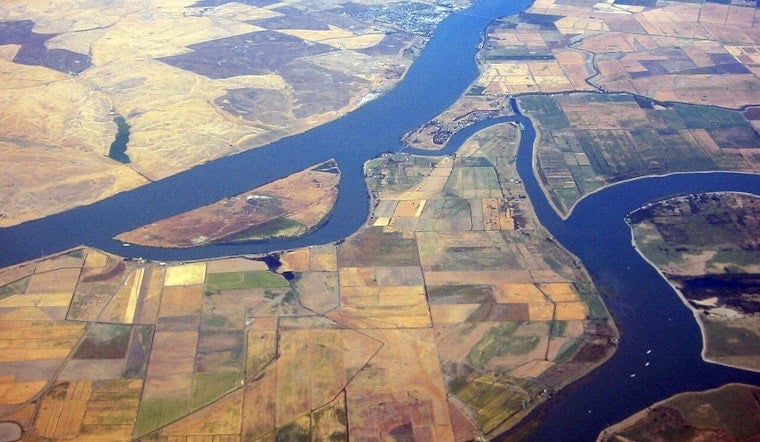
California lawmakers have secured $158.2 million to shore up the aging levees and canals that keep freshwater flowing to 27 million people, businesses and farms across the Central Valley, the Bay Area and Southern California. The package, negotiated by the California Legislative Delta Caucus, targets some of the most vulnerable pressure points in the Sacramento-San Joaquin Delta and the State Water Project, from centuries-old levees to an invasive mussel species now clogging waterways. Governor Gavin Newsom is expected to sign the budget bill that contains the funding.
The deal includes $90.2 million to protect the Delta and fortify its aging levees, according to the Manteca Bulletin. That figure breaks down into $75 million for levee repair, flood protection and climate resiliency, plus $15.2 million for the Sacramento-San Joaquin Delta Conservancy, which is tasked with reducing climate-change risks to Delta communities, fish, wildlife and natural resources. U.S. Rep. Jerry McNerney, who co-chairs the Delta Caucus, said in comments cited by the Manteca Bulletin that California's water wars may finally be over, adding that groups from north and south, environmental organizations, and state water contractors all supported the projects protecting the state's water supply and the Delta.
Levees Built in the 1800s Still Guard the System
The Delta's critical levees date to the 1800s and do not meet U.S. Army Corps of Engineers safety standards, leaving them at risk of breaching, per the same account. That vulnerability is structural and widespread: roughly 65 percent of the Delta's 1,115 miles of levees are classified as non-project levees, built by local reclamation districts or private landowners rather than to federal standards, according to the Water Education Foundation. Those non-project levees were historically built from dredged river mud, making them generally less stable than federal flood-control structures.
The stakes go well beyond the Delta's own footprint. A 2025 Delta Stewardship Council estimate reported by CalMatters found that without substantial levee repairs over the next 25 years, more than $10 billion in regional assets and nearly $2 billion in annual economic activity would be exposed to flooding risk. Full Delta levee improvements are estimated to cost about $3.24 billion, according to the Manteca Bulletin, meaning the new state funding covers only a fraction of the total need.
Jersey Island Deal Aims to Block Saltwater Intrusion
Perhaps the most strategically significant piece of the package is $5 million approved by the California Legislature to acquire Jersey Island in the western Delta and repair its levees. The 3,570-acre island in Contra Costa County has been owned by the Ironhouse Sanitary District, which used it for recycled wastewater application and cattle grazing, and it was under purchase consideration by local water providers before the state stepped in, according to updates from the Diablo Water District. State officials say acquiring the island can ease pressure on its levees, guard against saltwater intrusion, and enable restoration of critical wetlands.
The concern is not abstract. A Jersey Island levee failure could threaten water quality and water access for millions of Californians, per the Manteca Bulletin's reporting. Modeling published by the California Department of Water Resources in August 2025 found that a catastrophic levee failure on western Delta islands would draw ocean saltwater deep into the estuary, contaminating drinking water for two-thirds of Californians and halting State Water Project diversions for months or years. Freshwater runoff from 40 percent of California's land mass mixes daily with ocean tides inside the Delta, making the western islands a key choke point for the entire system.
Sinking Aqueduct Adds to the Repair Backlog
Land subsidence is compounding the levee problem. Over-pumping of groundwater has led to significant land subsidence along the California Aqueduct, and the budget includes up to $68 million to repair the State Water Project's aqueduct and canals, according to the Manteca Bulletin. State Water Project subsidence repairs are estimated to cost about $3 billion over 20 years, and subsidence threatens to reduce the project's water-carrying capacity by 87 percent by 2040 if left unaddressed.
The physical damage is already visible. Satellite radar measurements analyzed by the U.S. Geological Survey and reported by dMedia found that sections of the California Aqueduct near Corcoran sank more than 2 feet between 2015 and 2016 alone, deforming concrete canal walls and restricting flow capacity, as severe droughts pushed growers to pump underground aquifers heavily. A California Department of Water Resources technical report released in January 2026 put the cost of repairing accumulated subsidence damage along the aqueduct and San Luis Canal at $3.9 billion over the next decade.
Golden Mussel Threat Gets $6 Million Response
The budget also sets aside $6 million to address an invasive golden mussel infestation in the Delta, a push championed by Assemblymember Rhodesia Ransom, who represents D-Stockton. The mussel was first detected in North America in October 2024 at the Port of Stockton, likely arriving via ballast water from international shipping vessels, according to the California Department of Fish and Wildlife. The species attaches to hard surfaces in dense layers that can clog water intake pipes, alter aquatic food webs and foul boat motors.
State wildlife officials have already moved on the regulatory front: in August, the California Department of Fish and Wildlife initiated emergency rulemaking mandating inspections, vessel protocols and potential quarantines for watercraft launched in mussel-infested Delta waters for four or more consecutive nights, as detailed by Maven's Notebook. Hoodline previously reported on a mussel-crusted boat stopped at Folsom Lake under similar inspection protocols, and earlier covered Sacramento County's emergency declaration talks over the infestation.
Funding Traces Back to a Voter-Approved Climate Bond
The money comes from Proposition 4, the $10 billion climate bond California voters approved in November 2024. According to the Legislative Analyst's Office, the measure allocates $3.8 billion specifically for drought, flood and water supply projects, while requiring that 40 percent of total bond funds benefit low-income or environmentally disadvantaged communities. Both state water contractors, which receive water from the State Water Project, and the environmental group Restore the Delta supported the budget's funding allocation, per the Manteca Bulletin.
That alignment is notable given California's long-running water fights. CalMatters has reported that state funding for Delta levee and aqueduct maintenance arrives amid an ongoing debate over the proposed $20.1 billion Delta Conveyance Project, with Restore the Delta and other environmental groups arguing that fixing existing levees and sinking canals should take priority over building a new 45-mile water tunnel that would divert Sacramento River water directly to the California Aqueduct while bypassing the Delta. McNerney said continued investment is needed to protect California's primary freshwater supply, according to the Manteca Bulletin, as the Delta continues to support a diverse ecosystem of plants and animals alongside its role delivering water from the Delta to much of the state.


