

























































California stargazers have a packed sky calendar this October, with two meteor showers bookending the month and a Hunter's Moon rising in between. The Draconids peak first, around October 8 and 9, followed by the Orionids around October 21 and 22, and both arrive with very different moonlight conditions that will shape where — and when — to look up.
The Draconid meteor shower will be on display across the Northern Hemisphere from October 6 through October 10, with its peak predicted for October 8 and 9, according to the Sacramento Bee. The timing lines up almost perfectly with the new moon on October 10, meaning a thin waning crescent will leave evening skies dark and largely free of lunar interference, per EarthSky.org. That's good news, because the Draconids are already an unusual case among meteor showers.
Why the Draconids Reward Early Risers — And Early Sleepers
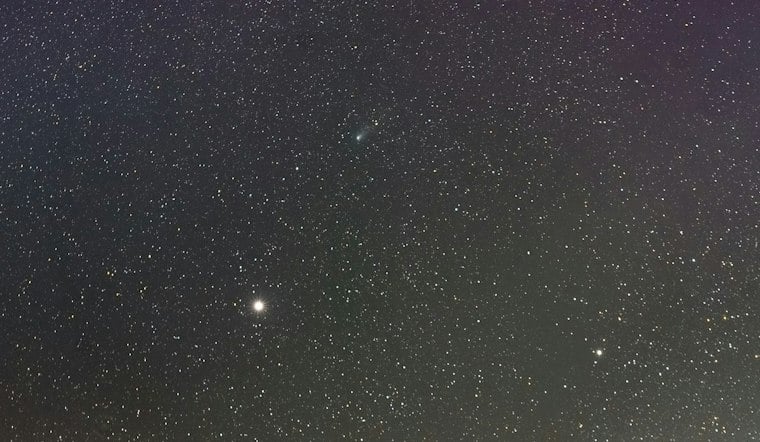
Unlike most major showers, which put on their best show after midnight, the Draconid radiant point in the constellation Draco stands highest in the sky right at nightfall, EarthSky notes. That makes the early evening hours just after sunset the primary viewing window, rather than the pre-dawn slog required for most showers. The shower is generated by dust and rock shed by Comet 21P/Giacobini-Zinner, a small periodic comet about 1.24 miles across that orbits the sun every 6.6 years, according to NASA Science.
Typically, the Draconids are a modest show, usually producing only a handful of meteors per hour, though the shower has occasionally erupted into hundreds of shooting stars per hour during past peaks, per the Sacramento Bee's report. Whether 2026 delivers a burst or a trickle, the dark evening skies mean whatever does streak across Draco should be easy to spot.
The Orionids Face a Bright Moon Obstacle
The Orionid meteor shower will be active from October 2 through November 7, with its peak arriving on October 21 and 22, according to NASA. NASA considers the Orionids one of the most beautiful meteor showers of the year, prized for their brightness and speed. The shower originates from debris shed by Halley's Comet, the roughly 9.3-by-5-mile periodic comet that swings through the inner solar system every 75 to 76 years and isn't due back until July 2061, according to NASA Science.
This time, the moon won't cooperate as generously. Stargazers hoping to catch the Orionid peak will contend with an 80% illuminated waxing gibbous moon, according to EarthSky.org, leaving only the pre-dawn hours after moonset as a genuinely dark viewing window. The Orionids typically produce about 10 to 20 meteors per hour, traveling at roughly 41 miles per second — fast enough that some can leave trains of incandescent debris in their wake or flare into fireballs, according to NASA. Orionid fireballs in particular can produce prolonged explosions of light, NASA notes.
Halley's Comet is one of the few comets responsible for two separate annual meteor showers, since Earth crosses its orbital debris trail twice a year — the Orionids in October and the Eta Aquariids each May, per NASA Science.
A Hunter's Moon Rises Between the Two Showers
Sandwiched between the two showers is October's full moon, widely known as the Hunter's Moon, a name that traces back to the 18th century when hunters tracked and killed prey to stockpile meat for winter, according to the Sacramento Bee. With fields traditionally reaped by late September or early October, hunters could more easily spot foxes and other animals gleaning fallen grain, per Universe Today. The Hunter's Moon is sometimes also called the sanguine moon or blood moon, and in years when the Harvest Moon slides into October instead, it can push the Hunter's Moon designation to November.
This year's Hunter's Moon reaches peak illumination at 9:11 p.m. Pacific Daylight Time on Sunday, October 25 (12:11 a.m. EDT on October 26), rising near sunset along the eastern horizon, according to Space.com. As it climbs, the moon will appear unusually large near the horizon thanks to the so-called Moon Illusion, an optical perception in which the moon looks bigger even though its actual angular size in the sky hasn't changed, Space.com explains.
Finding Dark Skies in California
For anyone chasing the darkest possible views, National Geographic recommends ideal stargazing locations that offer unobstructed views of the horizon, pointing to mountains, moorlands, deserts and remote islands as good choices thanks to their isolation, clear conditions and lack of light pollution. California has several official options built for exactly this: Death Valley National Park and Joshua Tree National Park are both certified International Dark Sky Parks under DarkSky International standards, which enforce lighting rules to preserve dark night skies away from urban glow, according to the National Park Service.
The Park Service also advises patience once you arrive: human eyes take 20 to 30 minutes to fully adapt to dark conditions, and skywatchers should rely on red flashlights or red cellophane covers rather than white light to preserve that night vision. Those same California parks have been part of the region's stargazing conversation all year — Hoodline previously covered San Diego County's dark sky festival and reported on the Perseid meteor shower peaking over Richmond under similarly moon-free skies in August.



