

























































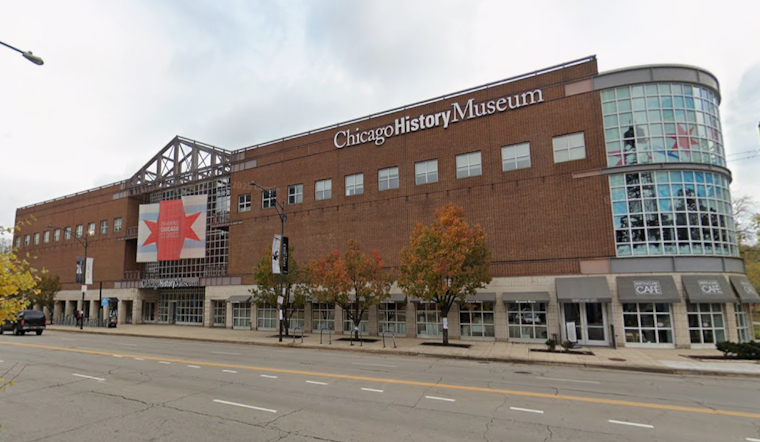
A black velvet coat George Washington wore to his second inauguration, two suits belonging to John Adams, and the cape and bonnet Mary Todd Lincoln had on the night her husband was shot are all heading into public view this fall at the Chicago History Museum. The Lincoln Park institution is opening a new exhibition built around the delicate, decades-long work of keeping these garments intact, and the pieces on display trace back to one of the more unusual chapters in the museum's own history.
The exhibition, titled Threads of a Nation: Preserving Presidential Clothing, opens October 24 and runs through July 17, 2027, at the museum's home at 1601 N. Clark St., according to the Chicago Tribune. The show is billed as a behind-the-scenes look at conservation rather than a straightforward artifact parade, and it will include photos and descriptions of the conservators' work alongside the garments themselves, the Tribune reports.
Much of what visitors will see traces back to Charles F. Gunther, a German immigrant and Chicago candymaker credited with popularizing caramels nationwide, who also served as 2nd Ward alderman and city treasurer, per the Tribune's reporting. Gunther spent years amassing presidential and Chicago-history artifacts, and the museum acquired his sprawling collection in 1920. That purchase is why a museum built to document local Chicago history ended up holding some of the most significant presidential garments outside Washington, D.C.
A Collection Born From Tragedy at the Chicago Fire
The museum's presidential holdings exist in their current form partly because of what was lost. Abraham Lincoln's handwritten draft of the Emancipation Proclamation, once held by the institution, was destroyed in the Great Chicago Fire of 1871, according to the Chicago History Museum. Lincoln had donated that draft to Civil War organizer Mary Livermore to help raise money for soldiers' medical care, the museum notes.
Gunther's collection helped rebuild what the fire destroyed, but it came with its own complications. Olivia Mahoney, who worked at the museum for nearly 40 years and retired as senior curator in 2018, told the Tribune that affidavits accompanying collection items require deeper research, and that the Gunther collection includes many inauthentic artifacts. Mahoney curated five Lincoln exhibitions at the museum since 1990 and also curated the 2024 exhibition Designing for Change, which focused on protest art of the 1960s and 1970s.
Washington's Coat, Lincoln's Top Hat, and the Limits of Display
Among the exhibition's centerpieces is the black velvet suit George Washington wore at his second presidential inauguration in Philadelphia in 1793, per the museum. Because of its age and material, the coat can only be displayed for a few months at a time before it must be swapped out or returned to storage, the Tribune reports — a limitation that will also apply to Lincoln's top hat once the exhibition is underway.
The museum's conservation approach has shifted in recent decades from restoration toward conservation, Mahoney told the Tribune, meaning any changes made to an artifact should be reversible and existing damage should remain visible rather than concealed. She said the goal of conservation work is to stabilize artifacts and minimize further deterioration, not to make them look new. That philosophy lines up with the roughly $454,607 Save America's Treasures grant the museum received from the National Park Service in October 2024, matched by $482,170 in non-federal funds, specifically to support conservation treatment for nine historic garments including clothing worn by Washington, Adams, Lincoln, and Mary Todd Lincoln, according to the Chicago History Museum.
The Story Behind Mary Todd Lincoln's Cape
One of the exhibition's most poignant items is the cape and bonnet Mary Todd Lincoln wore to Ford's Theatre the night her husband was assassinated. She gifted the bloodstained garments to Elizabeth Keckley, according to the Tribune's reporting, and Keckley later sold them to Gunther. Keckley was a formerly enslaved seamstress who purchased her own freedom in 1855, built a dressmaking business in Washington, D.C. that grew to employ 20 seamstresses, and served as Mary Todd Lincoln's confidante before writing the 1868 memoir Behind the Scenes, per Wikipedia.
The museum also owns a spyglass that belonged to George Washington, carried during the Revolutionary War by William Lee, the Tribune reports. Mahoney is set to address the displacement of Native Americans within the exhibition as well, and the museum plans to display a 1754 document concerning the division of enslaved people owned by Lawrence Washington. George Washington himself owned 100 enslaved people, according to the Tribune, and Martha Washington owned more than 100 enslaved people in her own right.
What Happened to Obama's Tan Suit
Not every presidential garment survives. Obama's famous tan suit is apparently lost, per the Tribune's reporting, an absence that underscores how much depends on donors, descendants, and institutions choosing to preserve — or simply hold onto — presidential clothing in the first place. John Adams's two suits featured in the exhibition, by contrast, came to the museum through descendants in Lake Forest, the Tribune notes.
Mahoney's own path back to the museum reflects how specialized this kind of work has become. After retiring in 2018, she returned as a freelance curator and has also provided freelance research help to the Museum of Science and Industry and the Obama Presidential Center, according to the Tribune. Her expertise sits alongside that of Lonnie G. Bunch III, now head of the Smithsonian Institution, who purchased a note written by Abraham Lincoln ordering William Henry Seward to affix his presidential seal to the Emancipation Proclamation back in 2002, the Tribune reports.
A Museum Repositioning Itself for the Semiquincentennial
Threads of a Nation is part of the museum's larger US at 250: Civic Action in Chicago initiative marking the nation's Semiquincentennial, according to the Chicago History Museum. That broader program includes lobby art installations responding to foundational documents such as the Declaration of Independence and the Thirteenth Amendment, the museum says. Over the past half-century, the institution has also pivoted toward collecting more city-centric artifacts even as it maintains its national-caliber presidential holdings, per the Tribune.
Founded in 1856 as the Chicago Historical Society, the institution moved into its current Georgian colonial building at Clark Street and North Avenue in Lincoln Park in 1932 — a structure designed by Graham, Anderson, Probst & White to mark the city's centennial — before officially adopting the name Chicago History Museum in September 2006, according to the museum. It now draws more than 150,000 visitors annually, including over 30,000 students on educational group visits, and in July 2026 named Michael J. Anderson, formerly its vice president of external affairs and development, as its permanent president and CEO following the January 2026 resignation of Donald Lassere.
Planning a Visit
Threads of a Nation: Preserving Presidential Clothing opens to the public October 24 and closes Mondays, running Tuesdays through Saturdays from 9:30 a.m. to 4:30 p.m. and Sundays from noon to 5 p.m., according to the Tribune. Adult admission runs $19, with $17 tickets for seniors and students, and free admission for visitors 18 and under.
The exhibition arrives as the museum's Lincoln holdings draw fresh attention elsewhere in the city; an 1855 Schomacker piano made for Lincoln's White House also sits in the museum's collections, part of a costume and textiles archive that spans more than 50,000 garments and accessories from the 18th century to the present.





