

























































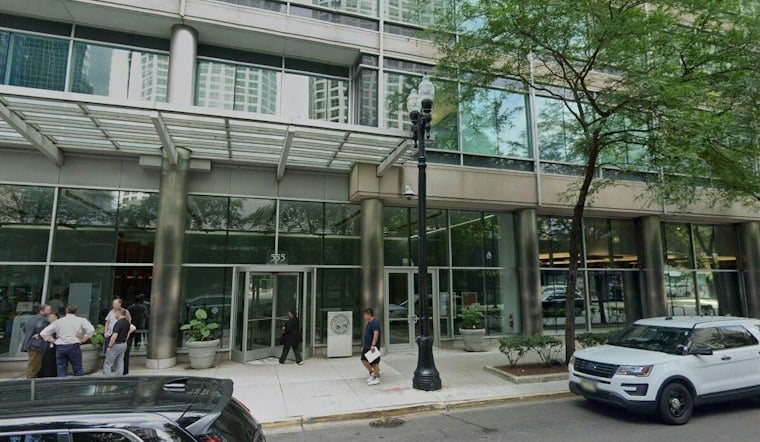
Nearly 50 people gathered outside Gov. JB Pritzker’s downtown Chicago office Thursday, marking Constitution Day with a pointed message: Illinois, they argued, is violating its own constitution by refusing to offer parole to people who have spent decades behind bars. The rally, held outside the Governor’s office and the Illinois Department of Human Rights at 555 W. Monroe St., called for lawmakers to revive a stalled bill that would restore earned-release hearings for long-serving prisoners.
The event, organized as part of a nationwide commemoration of the Sept. 17, 1787 signing of the U.S. Constitution, was headed by Parole Illinois, according to WTTW News. The advocacy group, alongside Citizens for Elder Parole, hosted the demonstration and used it to call on Pritzker and state lawmakers to pass Earned Reentry legislation, House Bill 2764, according to a Parole Illinois press release. The release confirmed the rally ran from 11 a.m. to 12:30 p.m. Thursday.
At the center of advocates’ argument is Article 1, Section 11 of the Illinois Constitution, which states that one objective of incarceration is restoring the offender to useful citizenship, per WTTW News. Advocates contend that Illinois’ determinate sentencing system, which requires people to serve their entire sentence without any chance at parole, directly contradicts that constitutional language, the outlet reported.
Illinois Abolished Parole in 1978
Illinois abolished discretionary parole in 1978, and with limited exceptions, nobody sentenced in the state since then is parole-eligible, according to Parole Illinois’ bring back parole page. Ronnie Carrasquillo, who was sentenced before that change and has since been released, spoke at Thursday’s rally in support of HB 2764. He told the crowd that without a chance at parole release, Illinois is violating the constitutional objective of restoring people to useful citizenship, per the same WTTW News report. Carrasquillo has appeared before the state’s Prisoner Review Board, according to the outlet.
Johnnie “Khalif” Veal, who heads Project Sound Off and was previously incarcerated, spoke in front of the Governor’s office Thursday and said people are serving 40 to 50 years in a state with no parole or chance for redress. Max Cerda, a former member of the Prisoner Review Board who was also previously incarcerated, echoed that message at the rally, saying that people can change and that communities and society can benefit when individuals have a chance to demonstrate redemption and rehabilitation, per WTTW’s account. Cerda voiced his support for HB 2764 during his remarks.
What HB 2764 Would Actually Do
HB 2764 would create a parole review process before the state’s Prisoner Review Board, allowing eligible people to be released before completing their sentences, the station reported. The bill requires at least 20 consecutive years of incarceration before a person can make a parole case. According to Parole Illinois’ bring back parole page, the eligibility window would phase in over three years — starting at 35 consecutive years served in the first year after passage, before eventually dropping to 20.
An Illinois Sentencing Policy Advisory Council study estimated that about 3,900 people could be eligible for earned reentry during the bill’s first three years of implementation, according to WTTW News. The bill failed to advance out of the Illinois House last legislative session, the outlet noted. State records show HB 2764 was assigned to the Judiciary - Criminal Committee before being re-referred to the House Rules Committee under Rule 19(a) on March 27, 2026, according to bill-tracking records from FastDemocracy. Those same records show Rep. Kelly M. Cassidy was added as the bill’s chief co-sponsor after it was filed with the House clerk by Rep. Carol Ammons.
Illinois Among States Without Broad Parole Access
Parole Illinois argues that the state’s no-parole policy has left it out of step with much of the country. The group’s press release states that Illinois is one of just 17 states without a discretionary parole system for the vast majority of people in prison, while a separate page from the same organization puts the figure differently, saying 16 states, including Illinois, only offer parole to people whose crimes predated its abolition. Parole Illinois’ bring back parole page also states that the state has no discretionary parole for well over 90% of its tens of thousands of incarcerated people, and projects that more than 5,000 people could grow old and die in prison without any review of whether continued incarceration serves a purpose.
The group points to other states that have reversed course on parole abolition. Mississippi abolished parole in 1995 and restored it by 2008, according to Parole Illinois. Maine, identified by the group as the first state to abolish parole in 1976, introduced legislation in 2023 to bring it back, with the same source noting that restoration bills have also been discussed in Florida and Virginia. Parole Illinois separately states that 34 states currently make parole available to people who commit crimes today, while its rally-day press release describes more than 30 states as having recognized the value of second chances through parole or similar policies.
Illinois has moved on a narrower front already. In 2023, the state became the 26th to abolish life-without-parole sentences for children, expanding parole eligibility for people who were under 21 at the time of their alleged crime, according to Parole Illinois. Advocates at Thursday’s rally made clear they see HB 2764 as the next step, pressing Pritzker and lawmakers to extend that same second-chance logic to the thousands of others serving decades-long sentences with no parole option at all.





