

























































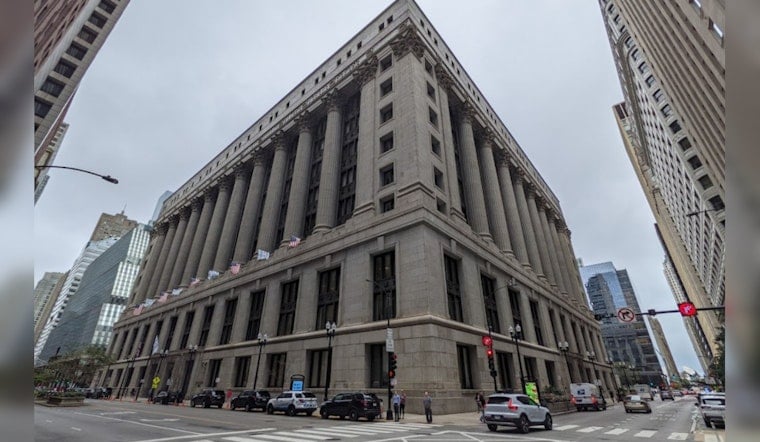
Chicago has come out on top of a new global ranking assessing how well 72 of the world's largest cities have prepared for climate disaster, while Ahmedabad, India, sits at the very bottom of the list. The findings, drawn from a geospatial artificial intelligence firm's sweeping analysis of flood risk, heat exposure, drought, wildfires and hurricane wind, point to a stark and widening divide between cities that have poured money into resilient infrastructure and those still struggling to catch up.
The report comes from AlphaGeo, described as a geospatial A.I. company that analyzes and predicts location risk, as reported by The New York Times. Founded by geographer Dr. Parag Khanna in 2020, the firm uses spatial machine learning and evolutionary principles to evaluate how resilient infrastructure protects municipal economic viability and real estate values as the climate grows more volatile, according to AlphaGeo. Khanna summed up the underlying formula: resilience equals risk minus adaptation, per the Times report.
According to the Times, AlphaGeo's methodology weighs a city's physical exposure to climate hazards against its adaptation capacity, meaning a city's resilience score is driven by both how low its physical exposure is and how high its adaptation to those risks runs. The firm considered early warning systems, governance, policy responses and infrastructure when assessing adaptation, the report notes, while its climate-risk checklist included inland flooding, coastal flooding, heat stress, drought, wildfires and hurricane wind.
Why Chicago Came Out on Top
Chicago's number one ranking rests partly on geography and partly on decades of infrastructure spending, the Times reports. The city benefits from a temperate latitude, good freshwater access and low hurricane risk, and it has invested heavily in climate adaptation efforts, including its long-term Deep Tunnel investment, which is meant to mitigate flooding and water pollution.
That system, formally called the Tunnel and Reservoir Plan, spans 110 miles of underground tunnels as deep as 300 feet and currently holds 11 billion gallons of stormwater capacity, according to the Metropolitan Water Reclamation District of Greater Chicago, which manages the project. A final stage centered on the McCook Reservoir is expected to expand total capacity to 17.5 billion gallons when it's finished in 2032, the district says.
Even that engineering marvel has shown its limits. Severe summer storms in July 2026 filled the 3.5-billion-gallon McCook TARP Reservoir to capacity six times within seven months, exceeding its total fill frequency from 2021 through 2025 combined, according to WTTW. The station's report illustrates how century-old local sewer connections can still bottleneck flood control even in a system built to handle extreme rain. Flood barriers and high-capacity drainage systems are the kind of adaptation infrastructure AlphaGeo credits with lowering exposure, though accelerating climate change means far more water gets released upstream than these systems were originally designed for, per the Times.
A Top-Ten List Spanning Four Continents
Chicago's closest competitors for climate resilience come from wildly different corners of the globe. Addis Ababa, Ethiopia, ranked second, followed by Melbourne, Australia, in third, and Barcelona, Spain, in fourth, according to the Times report. Ankara, Turkey, rounded out the top five, with Buenos Aires sixth, Paris seventh, Istanbul eighth, Bogotá ninth and Nairobi, Kenya, tenth.
Barcelona's placement reflects specific, measurable policy choices. The city expanded its network of climate shelters, or refugis climàtics, from 70 locations in 2020 to 368 by 2024, achieving 10-minute walking access for 92% of residents, according to PreventionWeb. The city has set a municipal target of universal five-minute walking access to those shelters by 2030.
Ahmedabad and South Asia Face the Steepest Climate Risk
At the other end of the spectrum, Ahmedabad, India, faced the highest climate risk among all 72 assessed cities and ranked first for low climate resilience, per the Times. The city sits on a riverbank, a geographic vulnerability compounded by thin adaptation infrastructure. Many of the least-resilient cities on the list are South Asian cities with extreme exposure to floods and monsoons paired with poor adaptation, the Times reports, a pattern reinforced last week when floods and mudslides struck Nepal and Tibet.
Hyderabad, India, ranked second-lowest, followed by Multan, Pakistan, in third, Dhaka, Bangladesh, in fourth, and Lahore, Pakistan, in fifth. Kolkata, India, Faisalabad, Pakistan, Karachi, Pakistan, Chittagong, Bangladesh, and Taipei, Taiwan, filled out the bottom ten, according to the report.
Ahmedabad's low ranking sits alongside a notable policy legacy. After a May 2010 heatwave caused more than 1,300 excess deaths, the city created South Asia's first citywide Heat Action Plan in 2013, which academic evaluations estimate has prevented an average of 1,190 heat-related deaths annually, according to a study published in the Journal of Environmental Public Health. It's a reminder that even the cities ranked as least prepared can pioneer adaptation policy that ripples far beyond their own borders.
Phoenix Leads U.S. Risk, Even as Heat Deaths Fall From Their Peak
Within the United States, Phoenix was named the highest-risk city, facing intense heat that has only intensified in 2026. Summer 2026 tied 2023 as the second-hottest summer on record in Phoenix, with a June-through-August average temperature of 97 degrees Fahrenheit, coming right after the city's hottest winter and hottest spring on record, according to KJZZ.
Maricopa County's heat-related deaths had actually dropped from a record 645 in 2023 to 427 in 2025, largely credited to expanded cooling centers. But confirmed heat deaths spiked to more than 136 by late August 2026, with over 600 more cases under investigation, the Los Angeles Times reports, coming just as federal ARPA funds supporting cooling center transportation expired. Strong electrical grids, the kind AlphaGeo credits toward adaptation scores, can remedy brownouts and blackouts caused by generator failures during extreme heat or cold, a risk factor that compounds heat exposure in cities like Phoenix.
A Global Financing Gap Behind the Rankings
The rankings arrive against a backdrop of enormous financial strain on lower-resilience cities. The United Nations Environment Programme's 2025 Adaptation Gap Report found that developing nations will require well over $310 billion per year by 2035 to adapt to climate change, while international public adaptation finance flows stood at just $26 billion in 2023, according to the UN Environment Programme. That imbalance helps explain why cities facing the highest exposure often have the least capacity to close the gap.
In the United States, federal mitigation funding has continued flowing even as local heat programs lose support. FEMA released $1.1 billion in flood mitigation funding opportunities in May 2026, including $600 million for its Flood Mitigation Assistance program and $500 million for Swift Current grants aimed at helping state and local governments reduce repetitive flood risks. As of June 30, 2026, FEMA reported that 21,451 local governments and 199 tribal governments have approved hazard mitigation plans, covering 77.7% of the U.S. population.
As AlphaGeo's report and Khanna's own framing make clear, a resilience score is less a fixed safety guarantee than a moving ratio between physical threat and adaptive investment. Chicago's decades of tunnel-building and Barcelona's shelter network show what sustained investment can buy, while Ahmedabad's and Phoenix's numbers show how quickly extreme weather can outpace even active policy responses.




