

























































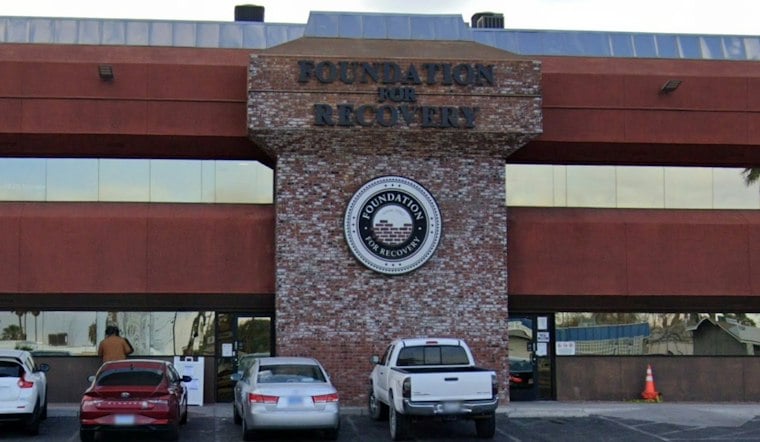
Tom Farley stood before a room of Foundation for Recovery clients this past weekend and told them something simple: people in recovery need each other. The brother of late comedian Chris Farley traveled to Las Vegas to kick off a push that sent more than 777 volunteers into alleys, bars and casinos across the valley, handing out 15,000 doses of free naloxone.
The visit, first reported by FOX5 Vegas, began at the Foundation for Recovery clubhouse, where Farley talked with clients before the effort moved into the streets. According to the station, Farley said he still needs to heal himself, and that sharing his story is part of how he does that. He told the clients that life can get better when people are not alone, and that no one should have to fight addiction by themselves.
Farley, who lives in Madison, Wisconsin, said he grew up in a family where drinking was normative, and that his brother Chris became more affected by addiction over time. Chris Farley, the comedian, died, and the biography The Chris Farley Show: A Biography in Three Acts identifies Tom Farley as its author. Per FOX5 Vegas, Tom Farley said his brother's death became a wake-up call, and he entered his own recovery years after Chris died before he started sharing his story publicly.
A Bus Tour Built to Meet People Where They Are
The Las Vegas stop was part of Mobilize Recovery's National Recovery Month programming, which included a storytelling session with Farley and Narcan at Night outreach, according to Mobilize Recovery. Farley partnered with the Foundation for Recovery and the Narcan at Night initiative for the trip, and a mobilized crew rode from the clubhouse to Substance nightclub, where volunteers gathered for a check-in, speeches and a DJ set before dispersing.
FOX5 Vegas reports the Narcan at Night bus, wrapped for the occasion, has been running its city-to-city tour for about two years, and the bus itself is meant to serve people who may never walk into a treatment center. Volunteer Sands said the bus symbolizes community connection, and organizers said the goal was to reach people in neighborhoods and on the streets rather than waiting for them to seek help. Twenty teams spread out from the nightclub meetup across the Las Vegas Valley, including Henderson, talking with people about overdose and treatment along the way.
Why Nevada Is Bucking the National Decline
The outreach lands in a state moving in the opposite direction of most of the country. CDC data reported in September 2025 showed Nevada overdose deaths rose 8% between March 2024 and March 2025, climbing to 1,600 fatalities, even as the national average dropped 25% over the same period, according to Utah Public Radio. Nevada was one of only three states where the trend moved upward while the rest of the nation improved.
Locally, the Southern Nevada Health District's surveillance found Clark County logged 802 confirmed overdose deaths in 2024, a nearly 16% jump over 2023, with opioids involved in 67.5% of those fatalities. The health district also reported that opioid-involved overdose deaths in the county rose 115% between 2018 and 2024. Compounding the risk, health officials at the Southern Nevada Substance Misuse and Overdose Prevention Summit warned in August that medetomidine, a potent veterinary sedative nicknamed Rhino Tranq, has entered the local drug supply — a non-opioid adulterant that naloxone alone cannot reverse.
Door-to-Door Efforts Already Underway
A joint canvassing initiative between the Southern Nevada Health District and Foundation for Recovery knocked on nearly 53,000 doors in high-overdose neighborhoods between July 2025 and February 2026, handing out free naloxone and drug-testing strips. That campaign runs alongside the bus tour's harm-reduction work.
Organizers say the event aims to make naloxone education common and to normalize carrying it in the same places people gather to drink and gamble. FOX5 Vegas reports Las Vegas has made improvements in destigmatizing naloxone use, but that the city still needs more work before it becomes as routine as calling for help. For Farley, the message he carries onto each bus stop is personal as much as it is public health: he hopes his story shows others that life can get better, and that recovery does not have to be a solitary fight.





