

























































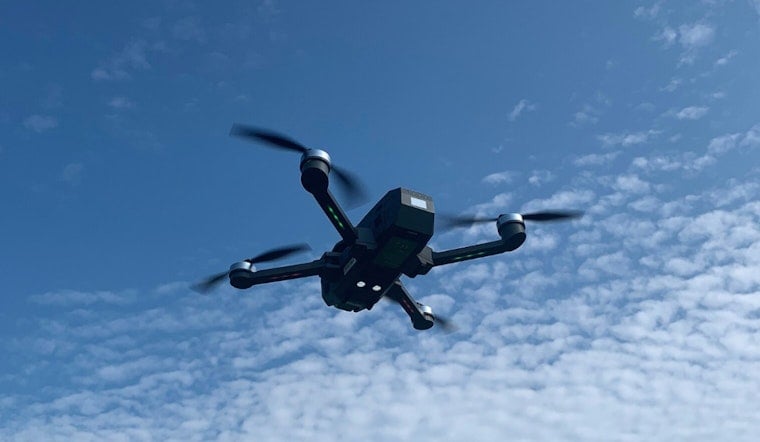
Chula Vista's police department has paused a proposal to bring in unmanned drones run by Flock Safety, stepping back from a deal that would have cost the city $400,000 in its first year and $700,000 annually after that. The pause comes as the department's existing Drone as a First Responder program, which already costs about $1.2 million a year to operate with sworn officer pilots, continues launching from the rooftop of police headquarters and beating patrol officers to the scene of calls.
According to NBC 7 San Diego, Chula Vista police say the department prioritizes building and maintaining community trust and support, and that the pause will give the telepresence marketplace time to evolve so potential vendors can bring similar technology to market. The department began searching for unmanned drone options back in January 2026 as a way to reduce staffing costs, and it presented its recommendation of Flock to the city's Privacy Protection and Technology Advisory Commission in July. Officials say they are not moving forward with Flock's automated drones for now, have no timeline for revisiting the vendor, and will keep using current drones until available technologies and potential alternatives can be evaluated. Chula Vista police declined NBC San Diego's interview request, and Flock also declined to be interviewed for that report.
A Program Built on a Border Airspace Pilot
Chula Vista became the first U.S. city authorized to fly drones beyond visual line of sight in response to 911 calls back in 2018, a milestone made possible when the Federal Aviation Administration authorized the launch under its Unmanned Aircraft System Integration Pilot Program, tied to an International Border Airspace designation covering the entire city, according to the City of Chula Vista. Two years later, the department partnered with drone maker Skydio to secure an FAA Close Proximity, Low Altitude waiver, allowing low-altitude flights near obstacles during tactical emergencies, per Skydio. As of May 2026, the city reports its drones have logged more than 25,000 total missions since the program's 2018 launch, with over 4,600 calls resolved without a ground officer response at all, responding to more than 22,000 calls for service along the way, per the same NBC 7 San Diego report.
Federal Rules and a $300 Million Acquisition Reshape the Vendor Market
Part of what is pushing Chula Vista to shop for a replacement is federal pressure on Chinese-made hardware. In December 2025, the Federal Communications Commission added foreign-made Unmanned Aircraft Systems to its Covered List, according to SkyTrade, piling compliance pressure on departments like Chula Vista's that have historically relied on DJI drones built in China. Flock Safety entered the automated drone market largely through its $300 million acquisition of drone startup Aerodome in October 2024, developing autonomous systems like the Flock Alpha that can read license plates from as high as 2,000 feet, per CNET. Nationally, the shift toward autonomous drone response has been accelerating since May 2025, when streamlined FAA waiver procedures pushed approved Drone as a First Responder waivers up by roughly 125 per month, exceeding 1,000 new approvals over a six-month stretch, according to Vertical Magazine.
Privacy Board Chair Warns Everyone Should Be Concerned
Flock is best known for its automated license plate readers, technology that faces nationwide backlash over data sharing and mass surveillance concerns. Tim Blood, who chairs San Diego's privacy advisory board, warned that surveillance technologies create privacy, civil rights and civil liberties problems, telling NBC 7 San Diego that everyone should be concerned about privacy and that jurisdictions using surveillance technology should establish guardrails for how it is used. DeFlock has tracked more than 100 jurisdictions nationwide that deactivated ALPR cameras or canceled Flock contracts since the start of 2026.
Legal Fights and Equity Concerns Add to the Pressure
Chula Vista's drone program is also caught up in an ongoing public-records fight. In August 2025, the California Supreme Court rejected the city's petition for review in *Castañares v. Superior Court*, cementing a statewide precedent that police departments cannot issue blanket denials to public records requests for drone footage, according to StateScoop — a case Hoodline first flagged for review last year. City officials calculated in court proceedings that manually reviewing and redacting just one month of drone footage to comply with records requests while protecting privacy would take 1,833 hours, or nearly 229 workdays, for a full-time staff member, per Liebert Cassidy Whitmore. Separately, an analysis of nearly 10,000 Chula Vista drone flight records between July 2021 and September 2023 found that lower-income neighborhoods experienced higher exposure to aerial drone flights than wealthier areas, with drones regularly dispatched for non-violent incidents like loud music or shoplifting, according to a report cited by Slashdot.
Oversight Rules Shaped the Flock Review
Any decision to bring in Flock's drones would have had to clear the same municipal oversight structure that flagged these concerns in the first place. Chula Vista adopted its Privacy Protection and Technology Transparency Policy in November 2022 and formally established its Privacy Protection and Technology Advisory Commission in July 2023 to require independent public review before the city acquires surveillance technology, according to city records. That commission was the body that heard the Flock recommendation in July, and its scrutiny sits alongside the city's current contract, which expires at the end of 2026 — leaving Chula Vista police to keep monitoring and evaluating replacement options in the meantime.





