

























































Charlotte-Mecklenburg Schools students stood before the school board this week and made a financial pitch as much as an environmental one: build schools that use less energy, and the district could save real money on a budget already strained by rising utility bills. Students, parents and energy experts argued that expanding rooftop solar and designing more efficient buildings could meaningfully offset one of the district's fastest-growing costs.
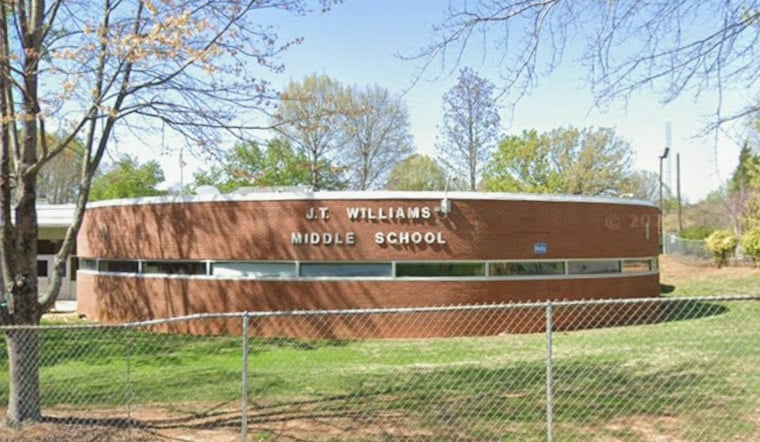
Connolly Baxter, a 10th grader at JT Williams Secondary Montessori School, told the board plainly that CMS has no future without a planet, according to WFAE. Baxter was among the students, parents and energy experts who made the case that going green in Charlotte-Mecklenburg Schools carries a dollars-and-cents argument, not just an environmental one.
Sophomore Corinne Staples said expanding rooftop solar systems could save a large portion of the district's annual budget, per the same account. That budget pressure is real: CMS has budgeted nearly $1.5 million for rising utility costs, and utility bills already rank as the district's second-largest expense after salaries and benefits.
The Case for Building Efficiency Over Just Solar Panels
Susan Rodriguez-McDowell, a county commissioner, argued that net-zero buildings should be designed from the ground up rather than created by simply bolting solar panels onto existing structures, the station reported. Net-zero buildings work by reducing greenhouse gas emissions closer to zero, with remaining emissions potentially offset through purchased carbon credits or financed clean-energy projects like solar or wind farms.
Allen Nelson, a member of the school district's community capital and bond committee, said energy-efficiency improvements could include changes as granular as window pane depth or HVAC sizing. He added that schools do not need to reach full net-zero status to save on energy costs, and that getting close would still represent a win.
Students want stronger climate action from their school board, and part of their ask centers on process: they say the CMS school board needs to implement an energy action plan that allows the county to factor energy savings into design choices before construction begins, the article notes.
A Budget and Bond Backdrop Already in Motion
The timing matters. CMS Superintendent Crystal Hill proposed a $1.95 billion operating budget for the current fiscal year out of a total $2.1 billion district budget request, according to WFAE, with utility expenses again flagged as the district's second-highest operational cost behind staff compensation.
Meanwhile, Mecklenburg County voters in November 2023 approved a record $2.5 billion bond package — the largest local government bond in North Carolina history — to fund 30 high-priority CMS capital projects, including three new schools and the replacement of 18 existing facilities over five to ten years, per the North Carolina Department of State Treasurer. That bond program is currently financing replacement schools across the district, including land recently secured for a new Berryhill campus in the River District, as Hoodline has reported.
CMS already operates under Board Policy O-ESS, its Environmental Stewardship and Sustainability policy, which established seven core environmental focus areas — including resource conservation and sustainable development — and requires an annual progress report from the superintendent, according to Charlotte-Mecklenburg Schools. Students argue that policy needs to be strengthened and more directly tied to how new buildings get designed.
Local Governments Are Already Moving Toward Net-Zero
CMS is not operating in a vacuum. Mecklenburg County's Environmental Leadership Policy and Action Plan commits all county facilities to net-zero carbon energy sources by 2035 and requires net-zero-capable designs for new construction, according to the county's own Environmental Leadership Policy and Action Plan. The City of Charlotte, meanwhile, updated its Strategic Energy Action Plan in May 2025, setting goals of powering municipal buildings with 100% zero-carbon electricity by 2030 and reaching net-zero community-wide by 2050.
But CMS operates under its own board governance, and per WFAE's reporting, the district must formally integrate energy action plans into its architectural choices before county funding can be steered toward net-zero design features. That gap between city and county climate goals and CMS's own building decisions is precisely what the students who spoke at this week's board meeting are trying to close.
Federal Money and a Regional Precedent
Federal incentives could help fund the shift. Under the Inflation Reduction Act's direct pay provision, public school districts can now claim direct cash refunds from the IRS covering 30% or more of the cost of rooftop solar, heat pumps and energy storage installations, according to the BlueGreen Alliance. That provision opened a financing door that didn't exist for tax-exempt districts before.
North Carolina already has a working example. Sandy Grove Middle School in Hoke County opened in 2013 as the state's first net-zero energy public school, using rooftop solar and geothermal HVAC systems to generate 30% more energy than it consumes while saving millions in utility costs, per Spotlight Solar. Regulatory changes complicate the math elsewhere, though: Duke Energy solar customers who interconnected after October 2023 now receive lower avoided-cost rates for excess generation and must navigate time-of-use rate structures, according to the Database of State Incentives for Renewables & Efficiency, meaning school retrofits may need to lean more heavily on deep efficiency measures than on exporting solar power back to the grid.
Local momentum for solar has been building regardless. Last September, the Solarize Charlotte-Mecklenburg campaign — a joint effort by the city, county and regional partners — reported that local property owners had signed contracts for 244.8 kW of solar capacity and 364.5 kWh of battery storage, as Hoodline previously reported. Whether that same appetite extends to CMS's own construction pipeline is now the question sitting in front of the school board.



