

























































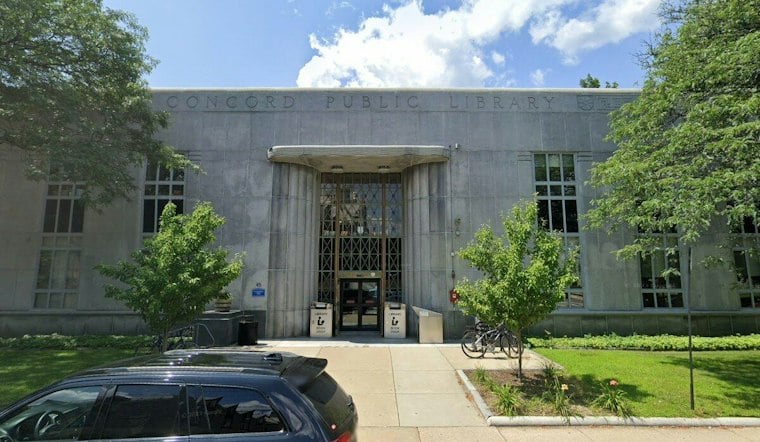
A patron identified only as John walked into Concord Public Library with a magazine that was 48,220 days overdue — a September 1894 issue of The Century Illustrated Monthly Magazine that had been sitting in his house for decades. Under the library's theoretical fine schedule, he would have owed $12,055. Instead, he owed nothing.
John did not know where the magazine had originally come from, but he told the library it had been in his house for decades, according to a library social media post cited by WBAL Newsradio. What finally prompted him to return it was reading a local newspaper report in the Concord Monitor about the library's new fine freeze, according to a Concord Public Library social media post. The library, located in Concord, New Hampshire, has been encouraging visitors to return overdue materials as it rolls out the program.
A Fine Freeze With Fine Print
Concord Public Library announced a freeze on fines for overdue materials starting September 1, 2026, suspending outstanding fees for a full year while it evaluates fine-free operations, according to CBS News. The freeze isn't a blanket amnesty, though — fees still apply for lost items, damaged materials, or for patrons holding more than five overdue items at once, the outlet reports. The library is using the pilot year to examine what happens when it stops charging fines on overdue books, and library officials say John does not have to pay the $12,055 fine he'd technically accrued.
Because the library was founded in 1873, it was only about 20 years old when the magazine was originally checked out in September 1894, per the same CBS News account. The Century Illustrated Monthly Magazine, published in New York by The Century Co., was a leading American literary periodical of its era — it serialized major national literature, including Mark Twain's Pudd'nhead Wilson between 1893 and 1894, according to the Wikipedia entry on The Century Magazine. So this wasn't some obscure pamphlet gathering dust — it was a nationally read magazine of the Gilded Age, missing from circulation for 132 years.
Crayon Clues From a Century-Old Household
An inspection of the returned issue turned up crayon markings inside, suggesting a child may have handled or drawn in the periodical at some point during its long absence, according to a segment noted on Apple Podcasts. It's a small, human detail — evidence that at some point across those decades, the magazine wasn't just sitting untouched on a shelf, but was part of somebody's household life.
The library will not put the magazine back into general circulation. Instead, it may add it to the Concord Room, a specialized local history archive at 45 Green Street that houses city records, historic photographs, and local maps dating back to 1827, according to the City of Concord. Concord Public Library received the 132-year-old return as an object worth preserving rather than lending out again.
How Concord's Case Stacks Up
Century-old library returns aren't unheard of in New England. In July 2023, a copy of James Clerk Maxwell's An Elementary Treatise on Electricity that had been checked out from the New Bedford Free Public Library in Massachusetts in 1903 was returned 119 years later after turning up in West Virginia, with late fees capped at just $2, according to Business Insider. Concord's case beats that timeline by more than a decade, though it still falls well short of the record books.
The all-time record for the most overdue library book belongs to a 1609 German text borrowed in 1667 or 1668 from Sidney Sussex College, Cambridge, and returned 288 years later in 1956 without penalty, according to Guinness World Records as reported by Smithsonian Magazine. And while Concord's theoretical fine ran into five figures, the largest fine actually ever paid for an overdue library book was $345.14, handed over in 2002 after a poetry book checked out from Kewanee Public Library in Illinois in 1955 came back 47 years late, according to a piece on Medium.
Part of a Broader Shift Away From Fines
Concord's fine freeze fits into a wider national trend. In January 2019, the American Library Association Council adopted a resolution declaring monetary fines a form of social inequity that creates economic barriers to access, a stance that has pushed public library systems across the country to eliminate late fees, according to the American Library Association. Hoodline has covered similar moves elsewhere, including Anoka County's fine abolition.
What remains unclear is the exact chain of custody for the magazine over the past century — how it moved from the library's shelves into a private home where it apparently sat for generations. It's also not yet known whether Concord Public Library will make its fine-free policy permanent once the one-year evaluation period wraps up, per CBS News. For now, the library is treating John's return as a case study in what happens when the fear of a bill disappears.





