

























































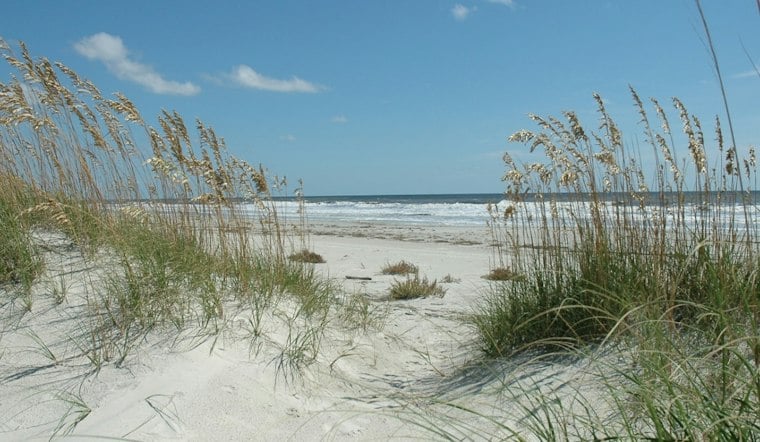
A proposed federal land exchange on Georgia's largest barrier island would trade federal property for private parcels, with the National Park Service saying the deal would bring environmentally sensitive land into public ownership. The proposal also could allow large private homes near Cumberland Island's wilderness beaches. Park officials presented the draft plan in St. Marys on Wednesday; conservationists and longtime visitors have raised concerns about its effects on the island.
Two Exchanges, Dozens of Acres in Play
According to Savannah Morning News, the National Park Service is considering two exchanges. In one, the agency would receive a 10-acre private parcel inside designated wilderness and transfer 20 federal marsh-side acres, where up to two single-family homes could be built on four acres. The other would trade a 119.3-acre private tract for 60 federal acres. Accounts differ on what the draft assessment allows there: Savannah Morning News describes up to four homes on 12 acres, while the Center for Biological Diversity says it allows eight 15,000-square-foot homes on the island's south end. The discrepancy has not been resolved.
Under either version, two private families who are descendants of industrialist Thomas Carnegie would receive federal property along Old House Road on the island's southern end, while the park service would acquire private parcels on Cumberland Island's northern end. The National Park Service says the goal is to consolidate land ownership and remove private enclaves from federally designated wilderness, expanding public parkland by roughly 50 acres overall, per Atlanta News First.
Why Private Parcels Remain—and What the Law Says
When Congress established Cumberland Island National Seashore in 1972, some private land was left outside the seashore, mostly parcels belonging to Carnegie and Candler descendants, WABE reported. The U.S. Code says the National Park Service must manage park-system use in ways that conform to each unit’s fundamental purpose; that general statutory standard does not itself determine whether this draft proposal meets it, according to the U.S. Code. The draft assessment and public-comment process for the Cumberland proposal are described below.
Easements and Home Limits Remain Contested
The park service says permanent conservation easements would apply to all land transferred to private ownership, barring subdivisions, docks and commercial use and protecting sensitive coastal habitats, according to Atlanta News First. One Hundred Miles says the easements would limit development to 20% of each property's acreage and prohibit land disturbance on the remaining 80%.
The scale of construction remains a point of concern. Atlanta News First's account of the draft Environmental Assessment says it allows up to eight single-family homes, each with a footprint of as much as 15,000 square feet and a height of up to 35 feet. The outlet noted that footprint exceeds that of Greyfield Inn, the island's only hotel and a former Carnegie estate. The Center for Biological Diversity says the proposal would also reserve a privately owned beach pavilion and private road to the beach for exclusive use by the development.
Visitors and Conservationists Question Development
Mitch Leff, an Atlanta scout leader who has taken youth troops to Cumberland Island for 20 years, told Atlanta News First that large residential footprints could change the island's character. He questioned whether such homes belong on a national seashore.
Will Harlan, southeast director and senior scientist with the Center for Biological Diversity, opposes the exchange. More than two-thirds of Cumberland Island is federally designated wilderness, and the island accounts for 30% of Georgia's loggerhead sea turtle nests, according to the Center for Biological Diversity. Harlan warned that the proposal could set a precedent in Georgia's leading loggerhead nesting habitat, a concern also reported by Atlanta News First.
Some Advocates Want Smaller Homes, Not a Canceled Deal
Some coastal advocates support consolidating public wilderness corridors but want the permitted homes made much smaller, Atlanta News First reported. Megan Desrosiers, president and CEO of One Hundred Miles, said reducing home sizes could make the proposal a major win for the island. She cited Sapelo Island's 1,550-square-foot home-size cap as a possible model.
The Camden County Commission declined in March to sign a letter supporting the exchanges, citing a lack of transparency, Atlanta News First reported. The outlet said that decision complicates the park service's ability to use Land and Water Conservation Fund money to help finance the deal.
How to Weigh In Before the October Deadline
The public comment period opened Sept. 9, and, per One Hundred Miles, runs through Oct. 16. Georgians can submit formal comments online through the NPS PEPC portal or by mail to Cumberland Island National Seashore, Attn: Proposed Lands Exchange EA, 101 Wheeler St., St. Marys, GA 31558, according to Atlanta News First. The draft assessment is not finalized and remains subject to revision based on public feedback, the outlet reported.
The current fight echoes a broader pattern of scrutiny facing island land deals. A separate visitor-use proposal reported by The Current would increase daily ferry passengers from 300 to 700, while the Sierra Club has said a related visitor-use management plan would quadruple visitor numbers and allow major increases in commercial activity and boat traffic, according to the organization. The Center for Biological Diversity has also noted that this Cumberland Island proposal followed a similar land swap and private-access plan pitched for Yosemite National Park less than two weeks earlier.




