

























































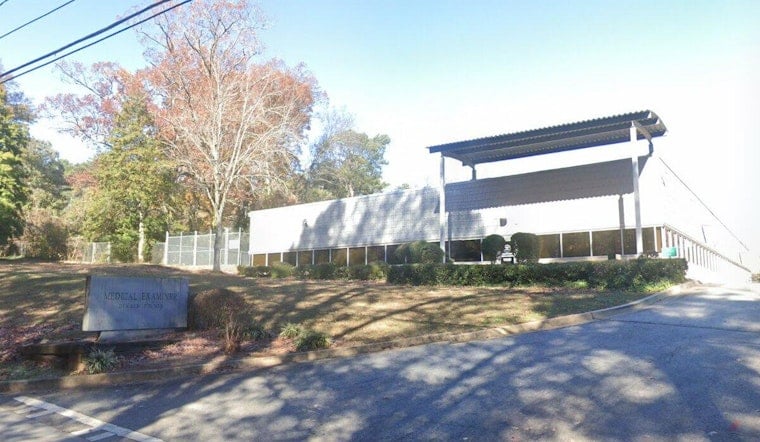
The DeKalb County Medical Examiner's Office and Morehouse School of Medicine have launched the nation's first forensic pathology fellowship program housed at a historically Black college or university, pairing hands-on autopsy training with an urgent push to diversify a field with vanishingly few Black doctors. The inaugural class has exactly one member: Dr. Oluwaseun Ogunbona, who came to DeKalb County after working as a neuropathologist in Texas and now trains in locating bullets and describing wounds during forensic examinations.
According to CBS Atlanta, Ogunbona is the first and only fellow in the program's opening year, receiving hands-on training in death investigations and forensic autopsies under DeKalb County Chief Medical Examiner Dr. Gerald Gowitt, who directs the fellowship and personally leads classroom and laboratory instruction. Gowitt told the outlet the United States has roughly 700 practicing forensic pathologists, but the country needs closer to 1,500 to properly staff its medical examiner and coroner offices. That shortfall underscores the need for more forensic pathologists nationwide.
Learning to Read a Body's Story
Much of Ogunbona's training is procedural and exacting. Per CBS Atlanta, X-rays are used to determine where a bullet is located in a body and how many bullets it contains before an examination begins, and Ogunbona must then perform the exam, describe the wound, and retrieve the bullet from wherever it lodged. Blood collected during an autopsy is sent for toxicology testing to check for alcohol and drugs, a step that feeds directly into the office's broader work tracking overdose deaths. According to the Georgia Department of Public Health, opioid-involved overdose deaths have been rapidly increasing in Georgia since 2010, beginning with increased use and misuse of prescription opioids.
Ogunbona, who is from Lagos, Nigeria, told the outlet, “I've always wanted to do a forensic pathology fellowship.” He said he hopes to eventually become a medical examiner and forensic neuropathologist — a doctor who diagnoses diseases affecting the nervous system, building on the neuropathology work he already completed in Texas before starting the one-year fellowship in DeKalb County.
A Regional Hub Built for Training
DeKalb County's medical examiner's office was a natural fit for this kind of program because it already operates at a volume most offices don't see. The office recorded 153 homicides countywide in 2024, according to Hoodline's earlier coverage of a deadly pre-dawn shooting in the county. The office's work also includes cases within its jurisdiction. An April 2025 11Alive video covered a cold case.
That caseload runs up against national accreditation standards, which place limits on autopsy workloads. Offices facing that kind of volume, without enough hands to share the load, are exactly the ones a national shortage hits hardest.
Federal Grants Paved the Way
The fellowship's accreditation didn't happen overnight. The program received formal accreditation from the Accreditation Council for Graduate Medical Education on April 24, 2025.
The curriculum built on top of that accreditation sends fellows well beyond DeKalb County. Per Morehouse School of Medicine, trainees complete a one-week rotation at the University of Tennessee Anthropological Research Facility, known informally as “The Body Farm,” and a one-week forensic toxicology rotation at NMS Labs. The DeKalb office is also investigating 27 unidentified individuals as part of cold-case DNA work, according to FOX 5 Atlanta, giving fellows exposure to long-unsolved cases alongside fresh ones.
Closing a Stark Diversity Gap
Beyond easing the workforce shortage, the program is designed to increase diversity within forensic pathology. It is meant to create a more direct pipeline for Black physicians into a subspecialty where they are underrepresented.
Looking ahead, the fellowship's recruitment process is set to change for future classes. Starting with the 2027-2028 application cycle, Morehouse will move candidate recruitment onto the Electronic Residency Application Service, according to the school, aligning it with the standard national process used across medical residencies. For now, the program remains a class of one, with Ogunbona's year in DeKalb County serving as the test case for whether other HBCUs might eventually replicate the model in municipal medical examiner and coroner offices elsewhere in the country.




