

























































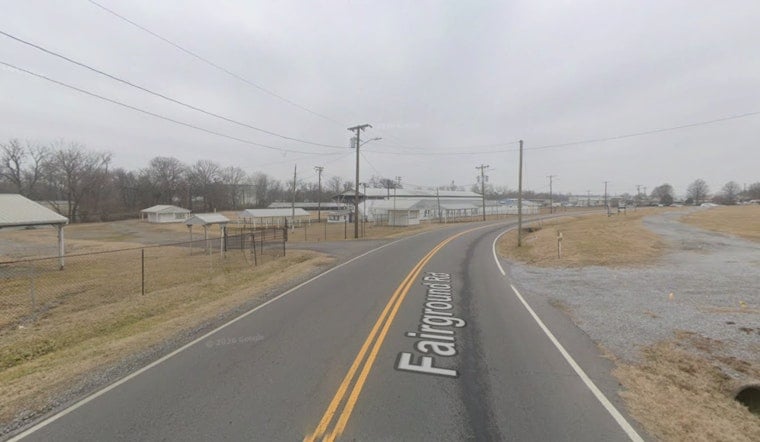
Demolition and excavation crews tore through the Sumner County Fairgrounds in Gallatin, Tennessee, on Wednesday, wiping out nearly every remaining structure from a property that hosted the county fair for more than seven decades. Almost none of the old fairground buildings are still standing, and the site's next chapter remains a mystery even to the people closest to the sale.
The Sumner County Fair ran at the Gallatin fairgrounds from 1946 until 2023, when the annual event held its final year at the location, according to WKRN News 2. The Sumner County Fair Association, which owned the fairground property, sold it to an investor, but the association's treasurer has not shared information about the new owner and says he does not know what the property is being turned into. The fair association called the sale “an unfortunate thing,” per the same report.
Ryan Baker, executive director of the Sumner County Museum, is trying to make sure the site's history doesn't disappear along with its buildings. Baker recalled that a building attached to the grandstands once hosted prize competitions for fruits and vegetables, part of a slate of fairground exhibits that drew locals every summer. He said the fair was a summer highlight before school resumed each year, and he wants residents to submit their own fairground memories and photos so the museum can preserve them alongside the old photos and programs it already holds.
A Site Divided Between Public and Private Interests
The property that once made up the full fairgrounds spans roughly 16 acres across 221 and 222 Fairground Road, and it was first listed for sale in 2024 with an asking price of $7.9 million, according to Main Street Media of Tennessee. A 9.62-acre lower portion at 222 Fairground Road sold separately in December 2024 for $1.1 million, splitting the tract before the rest of the site met the wrecking crews this week. The remaining open fairground land still up for sale is about six acres, and the City of Gallatin has been attempting to purchase it, per WKRN News 2's report.
That municipal effort has already played out at the local level. In July, the Gallatin City Council voted 5-2 to submit a $1.8 million offer for the remaining 6.23 acres, even though the seller had set an asking price between $3.5 million and $4.1 million, according to a report cited by Unlocking Nashville. City officials have discussed using the site for a new police headquarters or a public park, and floated selling the city-owned Langley property to help fund the purchase, per Main Street Media of Tennessee's coverage from earlier this year.
Commercial Zoning Looms Over the Remaining Acreage
If the city's offer doesn't pan out, the remaining 6.23-acre parcel at 221 Fairground Road is zoned General Commercial, and it has already undergone preliminary surveying for a proposed six-lot commercial subdivision, according to a LoopNet listing from August. The property carries more than 1,500 feet of frontage along Fairground Road along with access on Maple Street near central Gallatin, making it an attractive target for developers regardless of who ultimately buys it.
The pressure on the site reflects broader growth across the area. Gallatin's population has grown to over 50,000 residents, a surge that has driven commercial expansion and rising land values throughout central Sumner County, according to the City of Gallatin. That growth helps explain why a centrally located, decades-old fairground tract is now caught between a city government seeking public use and private buyers eyeing commercial subdivision.
A History Stretching Back to the Civil War Era
The fairgrounds' 1946 opening featured 14 mules lined up before the grandstands, marking the start of a location tradition that ran for more than 70 years, according to the Sumner County Museum. That run wasn't uninterrupted — fair organizers cancelled the Sumner County Fair in April 2020 due to the COVID-19 pandemic, the first time in the event's history that it had been called off, Main Street Media of Tennessee reported at the time.
The 1946 fairgrounds also followed an earlier, historically significant local tradition. Before that site was established, Gallatin was home to the Gallatin Colored Fair, founded in 1866 immediately after the Civil War as one of the first African American-established county fairs in the nation, according to WPLN News.
As bulldozers worked through the site this week, people across social media shared photos and memories of their time at the fairgrounds, filling in gaps that official records can't capture alone. Baker said preserving the history and stories of the people who were there is important, noting that he often reviews old photos and programs from the museum's collection to spot historical advertisements and long-gone local businesses. What replaces the fairgrounds is still undecided, but for now, the site's legacy is being kept alive in scrapbooks, museum archives, and social media posts rather than in any standing building.





