

























































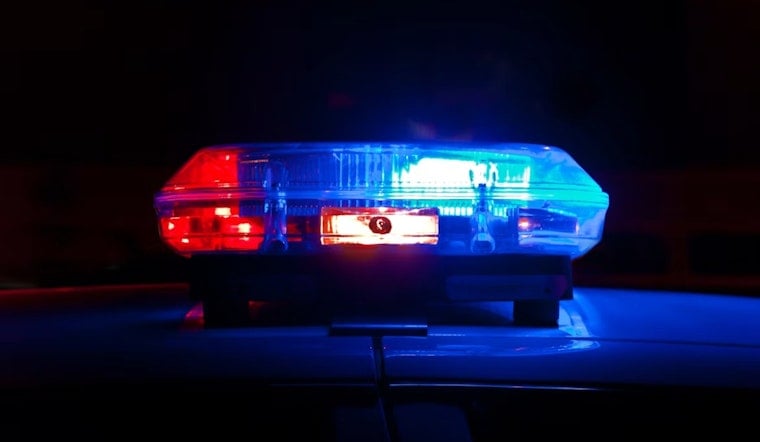
Unmarked vehicles bearing Montana license plates have been spotted flashing red and blue lights while directing traffic at construction sites across the Denver metro area, and the company behind them is now facing scrutiny from state troopers, a former contractor, and at least one worker who has already pleaded guilty to a felony over the practice. Denver Metro Security, based in Lakewood and Wheat Ridge, is accused of using emergency-style lighting that Colorado law reserves for police, fire, and specifically authorized vehicles, while registering its fleet out of state to sidestep Colorado's vehicle rules.
The allegations were detailed in an investigation by Denver7, which found that Denver Metro Security vehicles carried Montana plates while using red and blue lights typically associated with law enforcement. Colorado resident Jordan Shaw told the station he noticed the red and blue lights on cars bearing Montana plates and said the purpose or authority of the vehicles was unclear to him. Shaw photographed several of the vehicles and said the use of the lights misrepresented the company's authority, according to Denver7's reporting.
Denver Metro Security operations manager Nate Boyd told the station the company believed it had permission to use red and blue emergency lights because a POST-certified officer was in the car. Colorado State Patrol disputed that reasoning, telling Denver7 that a POST-certified officer in a vehicle does not grant a private company the authority to use red and blue emergency lights. Kevin Heely, who worked for Denver Metro Security as a contractor for 10 years before leaving the company earlier this year, said false information had been put out and disputed the claims Boyd made about the lights.
What Colorado Law Actually Requires
Under Colorado Revised Statutes § 42-4-238, only sworn peace officers, chief-approved emergency vehicles, or permitted volunteer responders may legally display or operate red or blue lights visible from the front center of a vehicle, a violation classified as a misdemeanor. Private vehicles can only use red and blue lights if they carry a state-issued emergency vehicle equipment authorization, commonly known as a Red Dot Sticker, which requires signed approval on a state form from a police chief, sheriff, fire chief, or Colorado State Patrol commander and is valid for two years, according to the Colorado Department of Motor Vehicles.
The Colorado DMV told Denver7 that Denver Metro Security once had that emergency vehicle equipment authorization but no longer holds current authorization. Colorado State Patrol trooper Hunter Matthews told the station the vehicles had to be registered to a law enforcement or government agency to use red and blue lights, calling the lights on Denver Metro Security's cars law enforcement lights. Matthews warned that continued use of the lights could bring repercussions and said the company must stop using them.
The Montana LLC and a Fort Collins Case
Boyd told Denver7 the company rented cars from Montana, while the station's reporting also found Denver Metro Security set up a Montana LLC under owners John and Susan Perry's names, which launched in December 2024 and uses a Lakewood address associated with the company. Setting up a Montana LLC to title and register vehicles typically costs around $1,000 in formation and service fees and appeals to out-of-state buyers because Montana charges no state sales tax, has low flat registration fees, and requires no annual emissions testing, according to 9News. Colorado law requires businesses operating in the state or residents of 90 days to register their vehicles in Colorado within that window, and failing to do so can trigger monthly late fees and tax evasion investigations.
The stakes go beyond paperwork. Court records show a Denver Metro Security worker faced criminal charges in Fort Collins in August 2025 for allegedly using red and blue lights in an unmarked car with Montana plates. That worker later pleaded guilty to attempting to influence a public servant and illegal use of emergency lights, and received a deferred sentence and probation, per Denver7's review of the case. Attempting to influence a public servant through deceit is a Class 4 felony under Colorado law, carrying two to six years in prison and fines of up to $500,000.
A Pattern Beyond One Company
The Montana registration loophole isn't unique to this case. Attorney Don Mayer told Denver7 the practice is becoming more common and said it effectively shifts road and bridge maintenance costs onto taxpayers who do register their vehicles properly in Colorado. State revenue departments in Colorado and nationally are increasingly using automated license plate readers and interagency data sharing to identify vehicles registered to Montana LLCs that actually operate locally, a trend also flagged by KSM Insights, which notes that tax authorities treat such registrations as sham structures when a vehicle's primary use and garaging occur in the home state. Hoodline previously reported on a similar dynamic playing out among Bay Area supercar owners dodging taxes through Montana plates, illustrating how the workaround has spread well beyond one industry or state.
Attorney Dwight Berry told Denver7 the Montana plates were used to circumvent Colorado's registration process and said Denver Metro Security was misleading clients and the public. Berry added that the company thought it was above the law. Kevin Heely, who has his own emergency vehicle equipment authorization and displays a valid permit on his personal car, said he left Denver Metro Security earlier this year.
Company Response and Recent Changes
Denver Metro Security's owners denied interview requests from Denver7. The owners did tell the station that the company updated its practices after being notified of Colorado's requirements, and Denver7 reported that the company's vehicles switched to Colorado license plates in recent days. However, the station also found that Denver Metro Security vehicles continued using red and blue lights even after making that switch to Colorado plates, according to its reporting.
Denver Metro Security, incorporated in October 2012, provides armed and unarmed private security, construction site monitoring, traffic control, and mobile patrol services, and is listed as a certified woman-owned small business with Susan L. Perry as President and Nathan Boyd as Business Manager, per the Better Business Bureau. Under Colorado's Move Over Law, motorists are required to slow or yield for stationary emergency vehicles displaying flashing red, blue, or white lights, meaning unauthorized use of those lights by a private security fleet risks creating dangerous confusion for drivers who believe they are encountering law enforcement.





