

























































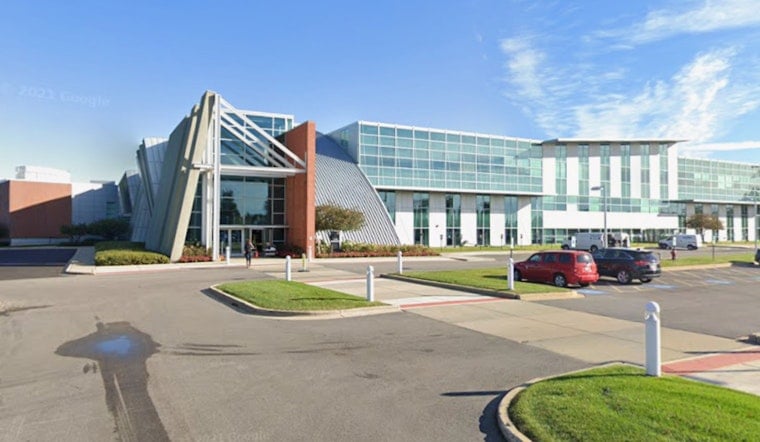
Digital Realty is paying $81.5 million for the 40-acre Atrium office campus at 3800 Golf Road in Rolling Meadows, Illinois, a deal set to close Friday that lands just days after the Austin-based company finalized a separate $90 million purchase of the 119-acre Hawthorne Race Course property in Stickney. The two acquisitions, made within the same stretch of days, show a real estate giant racing to lock down suburban Chicago land as it chases the region's booming appetite for data centers.
The Rolling Meadows purchase was first reported by The Real Deal, which described Digital Realty as doubling down on suburban Chicago even as the region grapples with power and zoning fights over the industry. The 485,000-square-foot office building at the Atrium sits on land that Brennan Investment Group, a Rosemont-based industrial developer led by Michael Brennan, bought out of foreclosure in 2023 for more than $27 million. According to the outlet, Brennan sold the land to Digital Realty without ever breaking ground, pocketing roughly triple its original purchase price.
Brennan had originally announced plans to redevelop the Atrium site into a $100 million warehouse campus, branded the Rolling Meadows Commerce Center, envisioned as a 600,000-square-foot industrial facility. Instead, the land is now headed toward a very different use. The Atrium's office building had already been bleeding tenants: the Federal Aviation Administration terminated a 116,000-square-foot lease there, and Capital One had put 165,000 square feet up for sublease, per the same report.
A Familiar Playbook in Stickney
The Rolling Meadows deal echoes how Digital Realty landed its Stickney property. The 119-acre Hawthorne Race Course site was acquired out of Chapter 11 bankruptcy, following the track's collapse after state regulators suspended its harness racing license amid $580,000 in bounced checks to horse owners and stalled plans for a long-promised “racino,” as Hoodline previously reported. People familiar with that transaction believe the Hawthorne property's zoning would allow a data center project to proceed by right, according to the same account.
At the Atrium site, the prior ownership chain also collapsed under financial strain. Spear Street Capital bought the complex for $29.5 million in 2010, but Spear Street Capital and Partners Group later defaulted on a $30 million loan against the office building, prompting Ares Management to file to foreclose. That foreclosure cleared the way for Brennan to buy the land in 2023 before flipping it to Digital Realty this week, the report notes.
Suburban Office Glut Meets Data Center Scarcity
The math behind these deals reflects a stark divide in Chicagoland real estate. Suburban Chicago office vacancy hit a record 33.4% in the first quarter of 2026, according to JLL data cited by The Real Deal, with total suburban office inventory shrinking to 93.2 million square feet as buildings are demolished, foreclosed on, or converted to other uses. Suburban office space has lost 5.2 million square feet of occupied space since 2020 due to corporate downsizing.
Data centers are the opposite story. Chicago ranked as North America's fourth-largest primary data center market by inventory in the first half of 2026, with primary vacancy dropping to a record-low 1.4% as AI and hyperscale demand absorbed new capacity almost as fast as it was built, according to a report from CBRE. That scarcity has pushed developers like Digital Realty toward land-rich, distressed suburban assets that already come with power and fiber connections rather than starting from scratch.
Power Delays and a State Tax Pause Loom
Digital Realty already anchors the region's data center infrastructure through its 1.13 million-square-foot Lakeside Technology Center at 350 East Cermak Road in Chicago, a carrier hub that ranks as Commonwealth Edison's second-largest electricity customer in the state behind O'Hare International Airport. But new projects across Northern Illinois face steep hurdles: ComEd-serviced developments are facing grid delivery delays extending to 2032 or later, and the utility now requires 10-year letters of credit for transmission revenue on projects of 50 megawatts or more, according to CBRE's local market analysis.
Financial incentives are also drying up. Governor JB Pritzker directed the Illinois Department of Commerce and Economic Opportunity to pause all new agreements under the state's Data Center Investment Program starting July 1, 2026, after 27 projects had already collected more than $983 million in tax exemptions between 2020 and 2024, per the Small Business Advocacy Council. The 2019 program, created under Public Act 101-0031, had offered qualifying facilities 20-year sales tax exemptions in exchange for $250 million in investment and at least 20 full-time jobs paying 120% of county median wages.
Local Pushback Could Slow the Build-Out
Even with the land secured, Digital Realty faces resistance close to home. Stickney trustees cited power grid strain, water consumption, and noise pollution as concerns when they passed a six-month moratorium on data center development in that suburb, a move Hoodline detailed in its coverage of the suburban tax pause fight. Stickney is far from alone: communities including Aurora, Sugar Grove, and Naperville have enacted moratoria or tightened zoning rules over the past two years, with Aurora adopting decibel-limit performance standards and Naperville rejecting a proposed server complex outright, as Hoodline reported in its piece on Sugar Grove's zoning freeze.
Chicago itself is moving toward tighter oversight as well. The city's Data Center Working Group issued a report last month recommending an end to energy secrecy rules for the city's 39 operating data centers, along with a dedicated permitting program requiring environmental impact studies and noise monitoring, according to Hoodline's report on the panel's findings. Data centers in Chicago have historically been classified as offices under zoning rules, which has exempted them from public utility disclosure requirements.
Digital Realty did not respond to requests for comment before publication, nor did Brennan Investment Group or the Rolling Meadows economic development office, according to The Real Deal. With the Rolling Meadows sale closing Friday and the Stickney deal already finalized, how quickly either site can clear the permitting and power hurdles now facing the industry remains an open question.





