

























































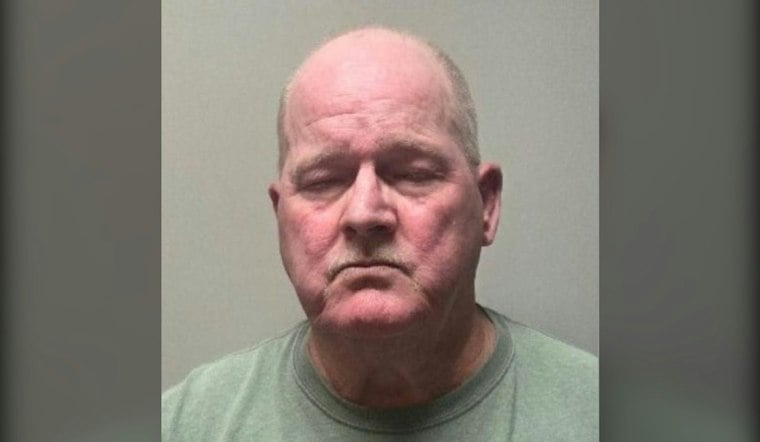
For 39 years, the killing of James Chafin sat unsolved in a Glendale police file, a disabled Korean War Navy veteran and local roofer found dead at Resthaven Park Cemetery with his throat cut and stripped down to his socks. Now, DNA evidence has finally identified a suspect in his killing: Gary Wayne Billups, a 68-year-old man who lived in Glendale at the time of the murder and died by suicide in June 2026, days after police questioned him and obtained a DNA sample.
A Body Found at Dawn, a Killer Who Slipped Away
Chafin, 54, was discovered at 4:11 a.m. on August 8, 1987, at Resthaven Park Cemetery on West Northern Avenue, according to 12News. A group reported seeing an unidentified sedan speed away from the cemetery, a detail documented by the Glendale Police Department. Investigators recovered beer bottles and cigarette butts from the scene, along with loose coins scattered on the ground near Chafin's body, even though he had been stripped of his clothing except for his socks.
The night before he was killed, Chafin had been drinking at a bar near 59th and Glendale avenues, where patrons told police he had withdrawn money from his bank account, flashed cash, and talked about an upcoming trip to Laughlin, Nevada, before leaving with an unidentified male, per the Glendale Police Department's cold case files. Loose change was scattered near his body, raising questions about whether he was killed for money.
Decades of Dead Ends Before DNA Caught Up
Forensic testing on evidence from the scene eventually produced three male DNA profiles, but for decades those profiles languished when run against the FBI's CODIS database, per 12News. Traditional CODIS searches only resolve 13% to 16% of cold cases because they require a suspect's profile to already exist in law enforcement databases, according to Hoodline's reporting on forensic genetic genealogy trends. Glendale police had reopened the case and issued a public appeal for help, according to the Glendale Daily Planet.
The real breakthrough came after Arizona Attorney General Kris Mayes established a dedicated Cold Case Homicide Unit in January 2025, reallocating department resources to help local police departments apply advanced DNA and investigative genetic genealogy tools to unsolved killings, according to Courthouse News Service. The unit relies on specialized forensic genealogy software and university laboratory partnerships to build family trees from public consumer DNA databases, a method that resolves cold cases at a rate near 50%, far beyond what CODIS alone can achieve, per KTAR News.
A Suspect Identified, Then Gone
Chafin's case was formally reopened in 2025, and by 2026 investigators had zeroed in on Billups, who reportedly lived in Glendale in 1987 but had never been interviewed at the time of the murder, per 12News. Police questioned Billups in 2026; he denied knowing Chafin. He is from Wittman, Arizona, and provided a DNA sample to law enforcement days before he died by suicide in June 2026. That sample matched DNA recovered from the 1987 homicide scene.
Two other people investigated in connection with the murder had also died by the time the DNA match was confirmed, the station reports. Because criminal indictments cannot be brought against deceased individuals, the post-mortem match allows the Arizona Attorney General's office and Glendale police to officially close the investigation without any court proceedings, according to 12News. The Chafin case now joins a string of other Arizona homicides resolved through the same technology, including the March 2026 identification of a Glendale resident charged in the 1987 stabbing death of Northern Arizona University student Ina Claire Langstaff, as Hoodline previously reported.
For a case that once relied on bar patrons' memories and a fleeing sedan's headlights, the resolution ultimately came down to a lab match nobody could have run in 1987. With Billups dead and two other persons of interest also gone, the Chafin file will close not with a trial, but with a name finally attached to a killing that outlasted nearly four decades of silence.





