

























































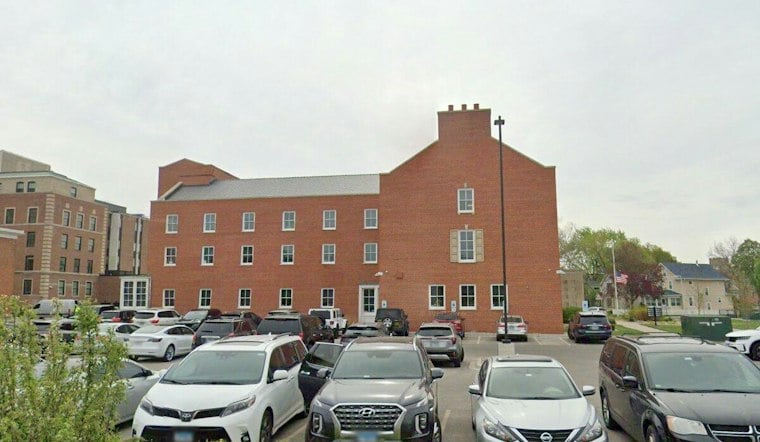
East Aurora School District 131's school board has signed off on a $272.4 million budget for the 2026-27 school year that plans for about $6.8 million more in expenses than revenue, a deficit that follows a balanced budget just one year earlier. The board's vote locks in spending nearly $10 million higher than the previous year, even as the district's enrollment continues to shrink and its share of new state aid gets squeezed.
The 2026-27 fiscal year, which runs from July 1, 2026 through June 30, 2027, projects $272.4 million in expenses against $265.6 million in expected revenue, according to the Chicago Tribune. That marks a sharp reversal from the district's 2025-26 fiscal year, when it operated on a balanced budget of roughly $263 million in projected expenses against $263.3 million in expected revenue. State funding accounts for about two-thirds of District 131's total projected revenue, with the rest coming from local and federal sources, per the same report.
Salaries and employee benefits account for a substantial portion of the new budget, the outlet notes. The district also plans $9 million in capital projects, which it intends to fund by selling lease certificates rather than drawing directly from operating dollars. Officials say healthy existing fund balances, along with savings from not replacing retiring staff with new hires, are helping the district absorb the shortfall for now.
A Funding Tier Downgrade Complicates the Picture
Part of the district's financial squeeze traces back to a shift in how Illinois distributes new education dollars. District 131 was designated Tier 1 under the state's Evidence-Based Funding formula before being adjusted to Tier 2 in 2025, according to the district's budget filing as reported by the Tribune. Evidence-Based Funding, which became law in 2017, combined multiple school-district grant programs and aims to steer equitable funding toward districts in low-income communities using a distribution formula with tiers ranging from 1 to 4 — the lower the tier, the more state assistance a district needs and receives.
That reclassification matters because of how the money actually flows. Under the statutory formula (105 ILCS 5/18-8.15), the state directs 99% of new tier-based funding to Tier 1 and Tier 2 districts that fall below their adequacy targets, with Tier 1 districts receiving 50% of that pool and Tier 2 districts receiving 49%, according to Stand for Children Illinois. A Tier 2 designation means District 131 now competes for a smaller slice of that incremental pot than it did as a Tier 1 district.
More than 60% of District 131's enrolled students come from low-income households, according to Illinois State Board of Education data cited in Hoodline's earlier back-to-school coverage, underscoring how much the district leans on state aid formulas designed around income levels.
Enrollment Keeps Falling While Staffing Stayed Flat
Enrollment has been sliding for years. District 131 counted just over 12,000 students in 2025, down from more than 14,000 students in 2019, the Tribune reports. Staffing levels, meanwhile, increased even as enrollment declined. The district is bringing paraprofessionals in-house and pursuing grants as it looks for structural fixes rather than one-time patches.
Superintendent Bob Halverson, who took over the district on July 1, 2025 after previously serving as executive director of finance and grants — where he managed more than $50 million in annual grant funds, according to Patch — has discussed right-sizing and preserving fund balances. Michael Engel, the district's associate superintendent and chief financial officer, has been central to walking the board through the numbers, per the Tribune's report.
Community Fundraising and Regional Comparisons
Even as the operating budget tightens, philanthropic support is helping fill some gaps outside the general fund. In September, the Aurora East Educational Foundation presented $135,200 in total gifts to the district, including a $125,000 donation earmarked for a new scoreboard project at East Aurora High School, according to a district announcement. Separately, the district recognized students from its STEM Ignition after-school robotics program — funded through the Wong Center for Education and the Dunham Foundation — after they qualified for international and regional competitions in Puerto Rico and California.
District 131 is not alone in navigating this financial squeeze. Neighboring Indian Prairie School District 204, which serves Naperville and Aurora, voted in August to cut pay for retired substitute teachers by 35%, from $310 to $200 per day, as part of efforts to address its own $5.6 million deficit, Hoodline previously reported. The pattern reflects a broader post-pandemic funding cliff hitting suburban Illinois districts as enrollment shifts and temporary pandemic-era aid runs dry.
The city's own budget pressures have already touched District 131 families this year. In March, the City of Aurora terminated Aurora's Promise, a kindergarten college savings account pilot serving 68 District 131 families, citing municipal budget shortfalls and low participation after spending $130,000, according to Hoodline's earlier reporting. Founded in 1836 as Illinois' first public school district, District 131 created the state's first free public school system through a special act of the legislature in 1851 — a historic distinction now paired with a distinctly modern fiscal challenge as officials work to keep the district solvent without repeating this year's deficit.





