

























































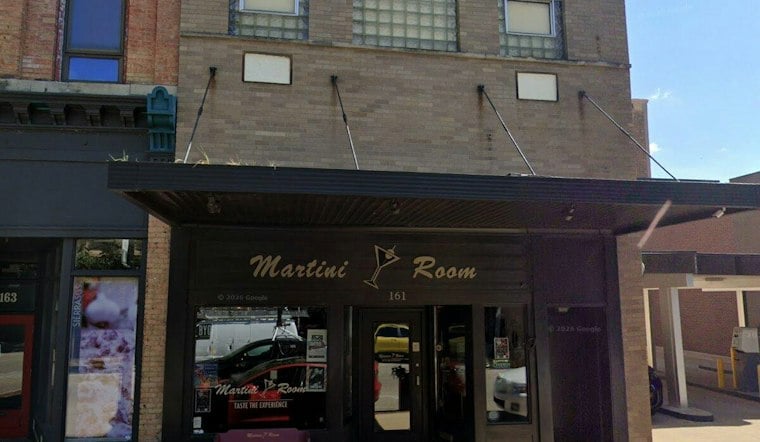
More than 80 dance, theater, music, comedy and magic performances take over five downtown Elgin venues this week as the Elgin Fringe Festival marks its 13th year. The festival runs Wednesday through Sunday, opening at 5 p.m. on Wednesday, September 23, with a lineup that includes 22 local acts and 12 touring acts spread across stages at Side Street Studio Arts, Elgin Public House, Habitat for Humanity, the Martini Room and Elgin Art Showcase.
Getting in requires a $4 festival button, which grants access to venue box offices for both free and paid performances, according to the Chicago Tribune. Individual show tickets range from free to $12, or festivalgoers can buy a $95 festival pass covering events at all five venues. Elgin's artist-payout model has historically sent ticket revenue to performers: a 2019 City of Elgin announcement said 100% of ticket and art sales went directly to artists, while the Daily Herald described the festival as uncurated and uncensored.
How Elgin's Model Compares
There is no single national financial or programming model for fringe festivals. According to United States Association of Fringe Festivals guidelines, individual festivals set their own approaches to artist selection, finances and business operations, including whether to return 100% of box-office income to artists. That means comparable U.S. festivals cannot be assumed to use the same payout structure as Elgin. The available official Elgin records provide a historical benchmark rather than a complete year-by-year comparison. A City of Elgin announcement for the festival's sixth year, in 2019, said it had more than 100 performances in walkable venues and sent 100% of ticket and art sales directly to artists. The current festival's ticket prices and five-venue footprint are documented above, while the older announcement helps show how the event's scale and artist-first economics have been described over time.
The festival schedule is organized by day, genre and venue, allowing visitors to plan a night of hopping between stages. The format is designed to encourage audiences to see more than one show during the Wednesday-through-Sunday run.
A Preview Party and a Cabaret Kick Off the Week
Things get rolling Wednesday evening with a preview party at the Martini Room, followed by the New Fringe Cabaret at 7 p.m., hosted by Jose Alfredo. The week builds toward an almost-closing party at 10:30 p.m. on Saturday, September 26, before wrapping with an official after party at 5 p.m. on Sunday, September 27, that the Tribune notes will celebrate the festival's successes and failures alongside awards for touring artists.
This year's more than 80 offerings include The Snake Oil and Skullduggery Show, Tap Into Time, Twilight-ish the Musical, A Play I Wrote in Fourth Grade, Weird Jazz, Closing Arguments and Cabaret Chaotique.
A Chicago Storyteller Brings Her Fringe Debut to Elgin
Chicago storyteller Lauren Kee is bringing her one-woman show Dealbreaker to Elgin Public House on September 24 and 26, examining how herpes has shaped her life, including dating. Kee made her fringe debut at the Harrisburg Fringe Festival in Pennsylvania this past July, according to the Tribune's report, and describes Dealbreaker as a blend of comedy, storytelling, vulnerability and sex education.
Dealbreaker combines comedy, personal storytelling, vulnerability and sex education, using Kee's experience to examine dating and the stigma surrounding herpes. The show reflects the festival's broader emphasis on giving artists room to present unconventional, personal and challenging work.
How Elgin Built a Regional Fringe Hub
The Elgin Fringe Festival traces back to a late-2013 collaboration between Side Street Studio Arts, the Elgin Cultural Arts Commission and Janus Theater Company, which led to the inaugural festival in September 2014, according to the Daily Herald's reporting at the time. Side Street Studio Arts, the festival's nonprofit producer, is now developing a new riverfront facility at 62 S. Grove Ave. that will quadruple its programmatic space, a project supported by the Reva & David Logan Foundation.
The festival is also plugged into a national network, holding membership in both the United States Association of Fringe Festivals and the Canadian Association of Fringe Festivals, with Mataragas serving as vice president of the Canadian association as of this year, according to the Elgin Fringe Festival.
The City of Elgin's Cultural Arts Commission co-sponsors the festival and separately offers local arts grants of up to $10,000 for organizational projects and $2,500 for individual artists, according to the City of Elgin. Side Street Studio Arts also runs other downtown events, including the AREA 22 Arts, Crafts, & Oddities Fair on Riverside Drive, which held its third annual outing in August, as reported by Patch.
Part of a Global Movement That Started in Edinburgh
The fringe concept itself dates back to 1947, when eight uninvited performing groups staged alternative shows on the margins of the official Edinburgh International Festival in Scotland, a history detailed by Time Out. That original fringe eventually grew into the world's largest arts festival, and its uncurated, artist-first ethos now underpins more than 20 active fringe festivals operating across the United States, per Side Street Studio Arts. Elgin's version of that model remains on full display this week, five venues, more than 80 shows and a button that gets you in the door.



